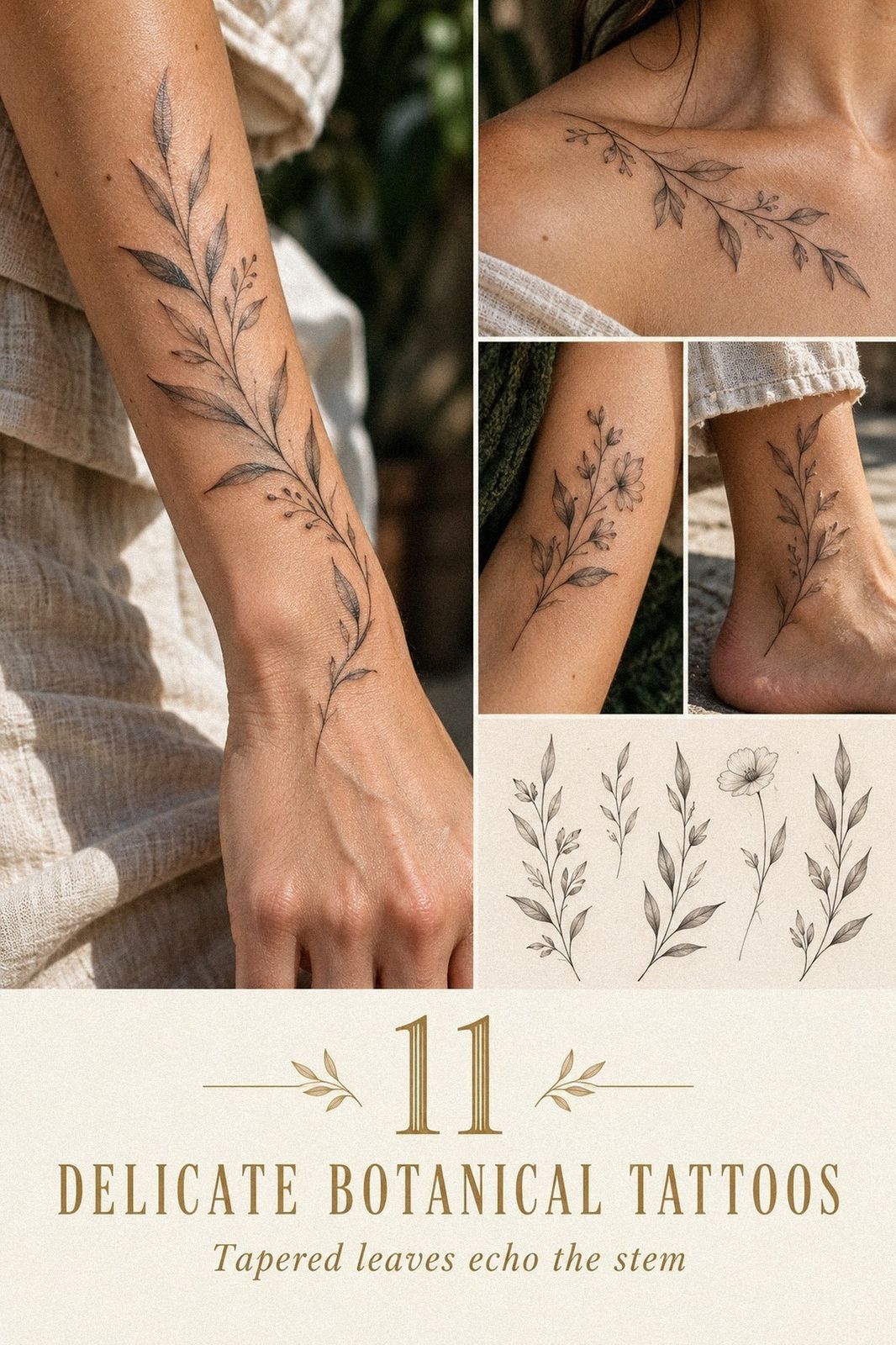
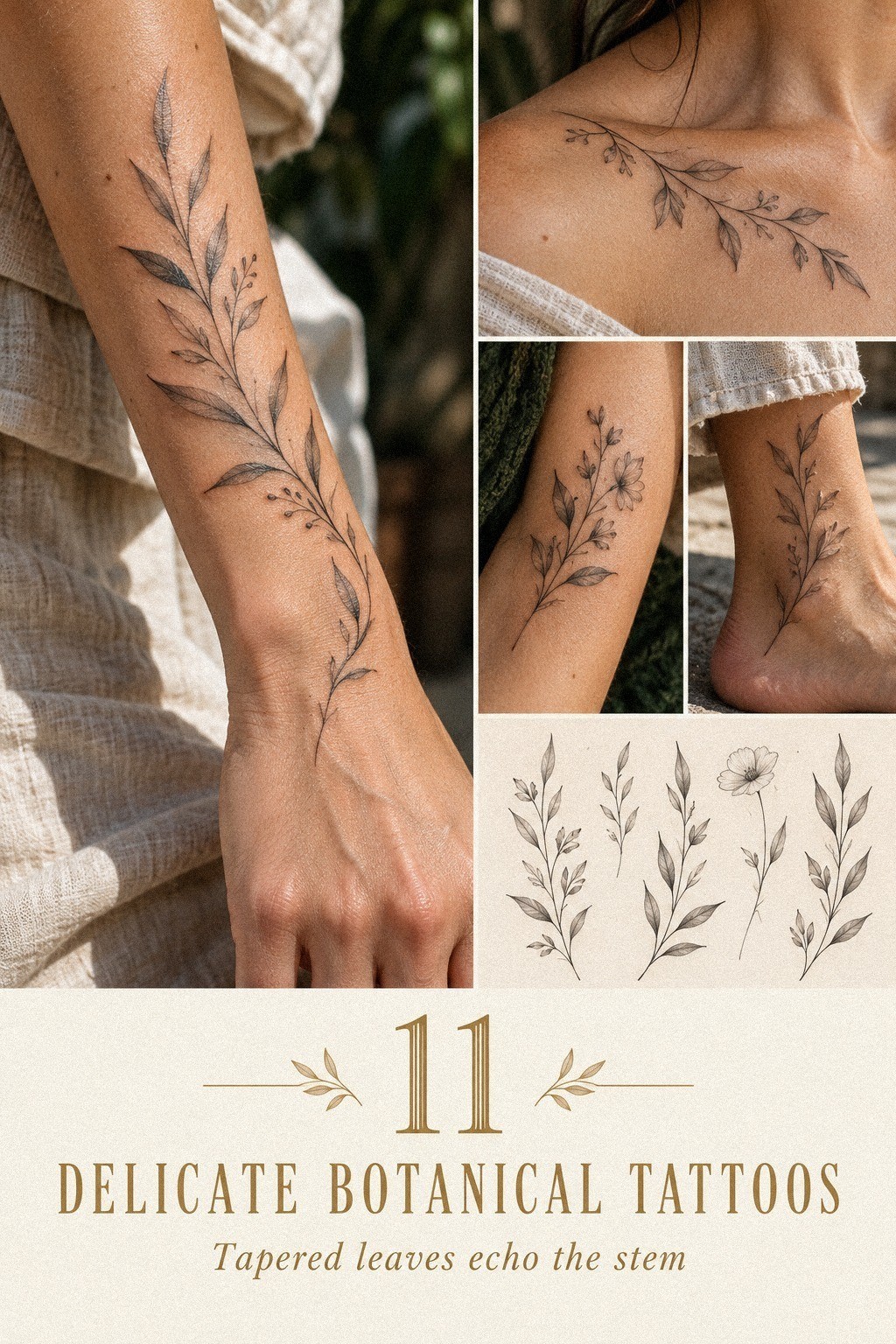
Delicate botanical tattoos can hurt less in one sitting when you choose a tolerable placement, compact design, and artist with a light hand. I learned that after rushing a rib piece I wasn’t ready for. Your flower can still look intricate and personal without becoming an endurance test. Placement matters most!
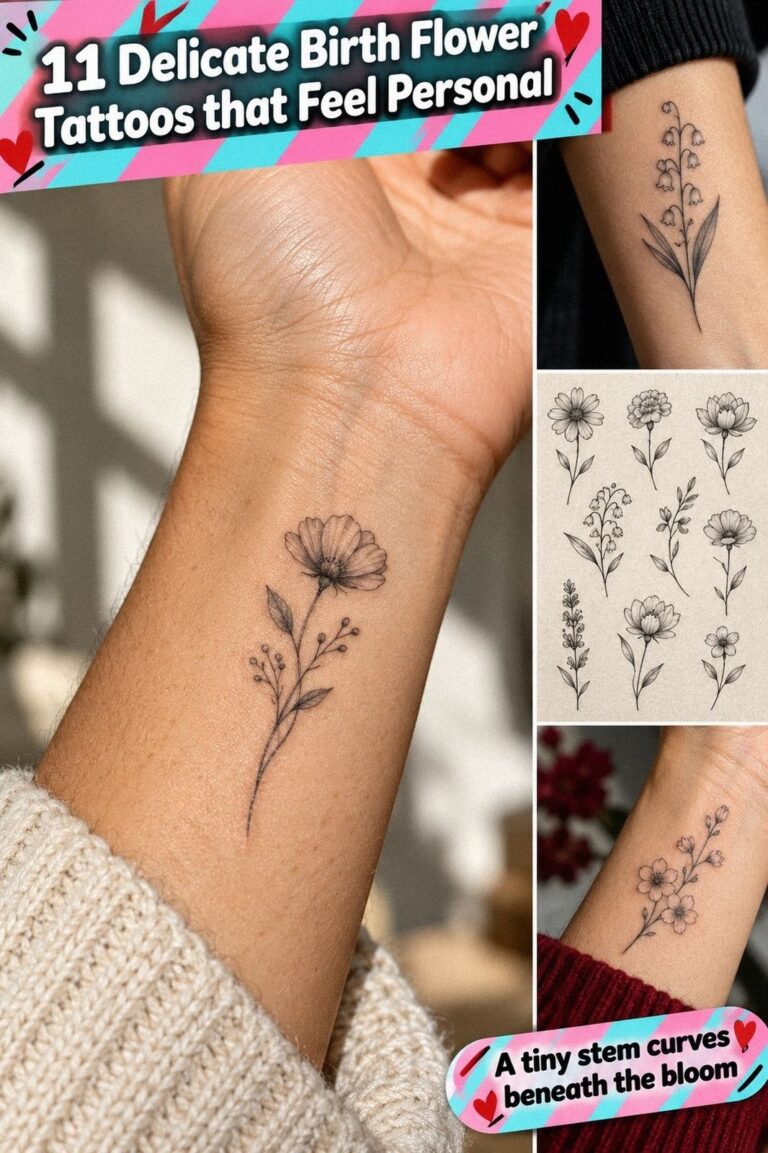
- Follow a Fine Stem to the Wrist
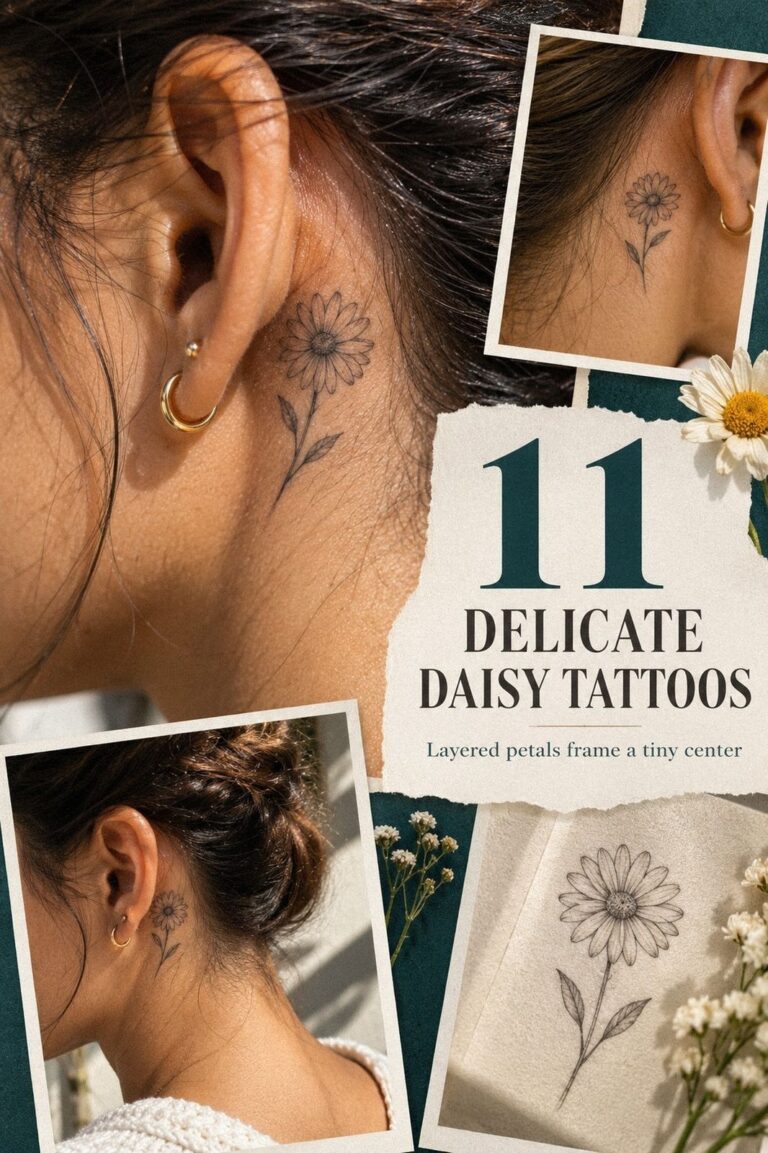
- Can a Tiny Sprig Hide Behind the Ear?
- Ferns Along the Ribcage: Beautiful, But Sensitive
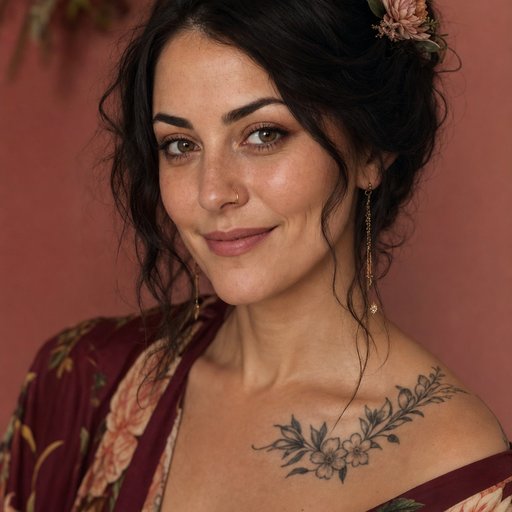
- Let the Collarbone Bouquet Drift
- Lavender at the Ankle
- Fine Lines, Fierce Finger Placement
- Which Birth Flower Belongs on Your Forearm?
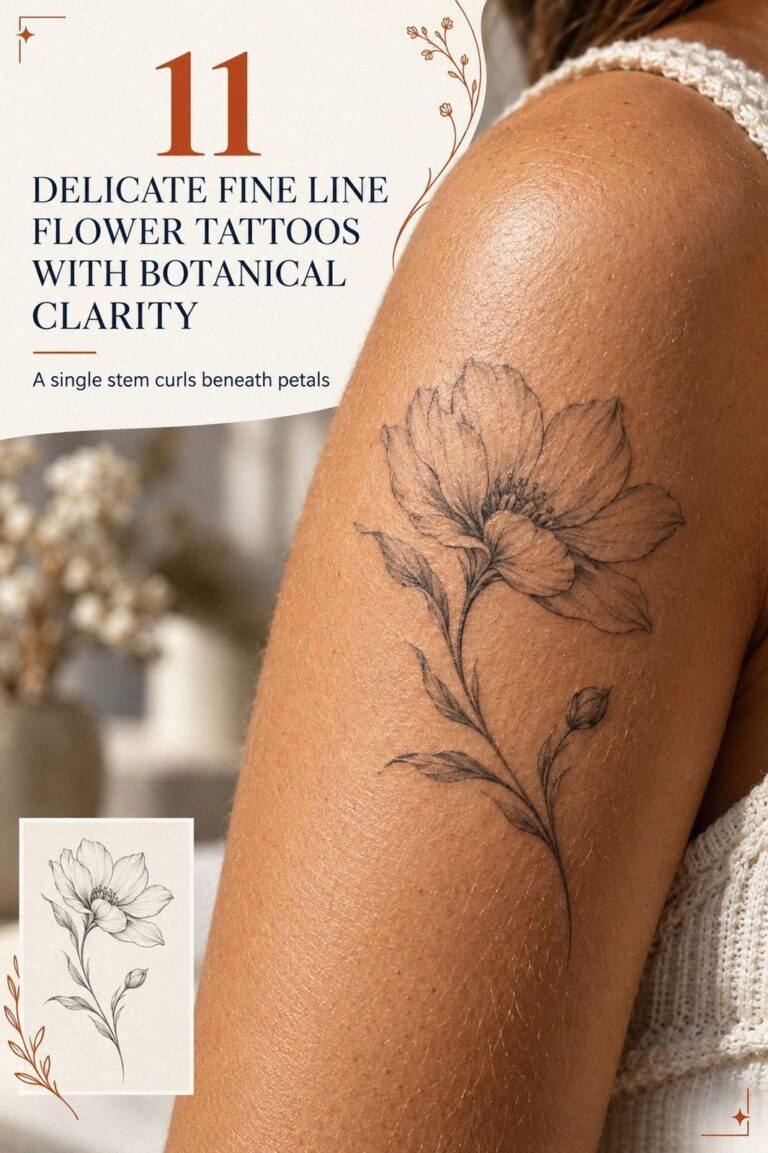
- Wrap the Shoulder With a Botanical Vine
- The Pressed Flower Shoulder Blade
- Spine or Sternum? Choose the Herbarium Line
- A Wildflower Hand Poke, Done Slowly
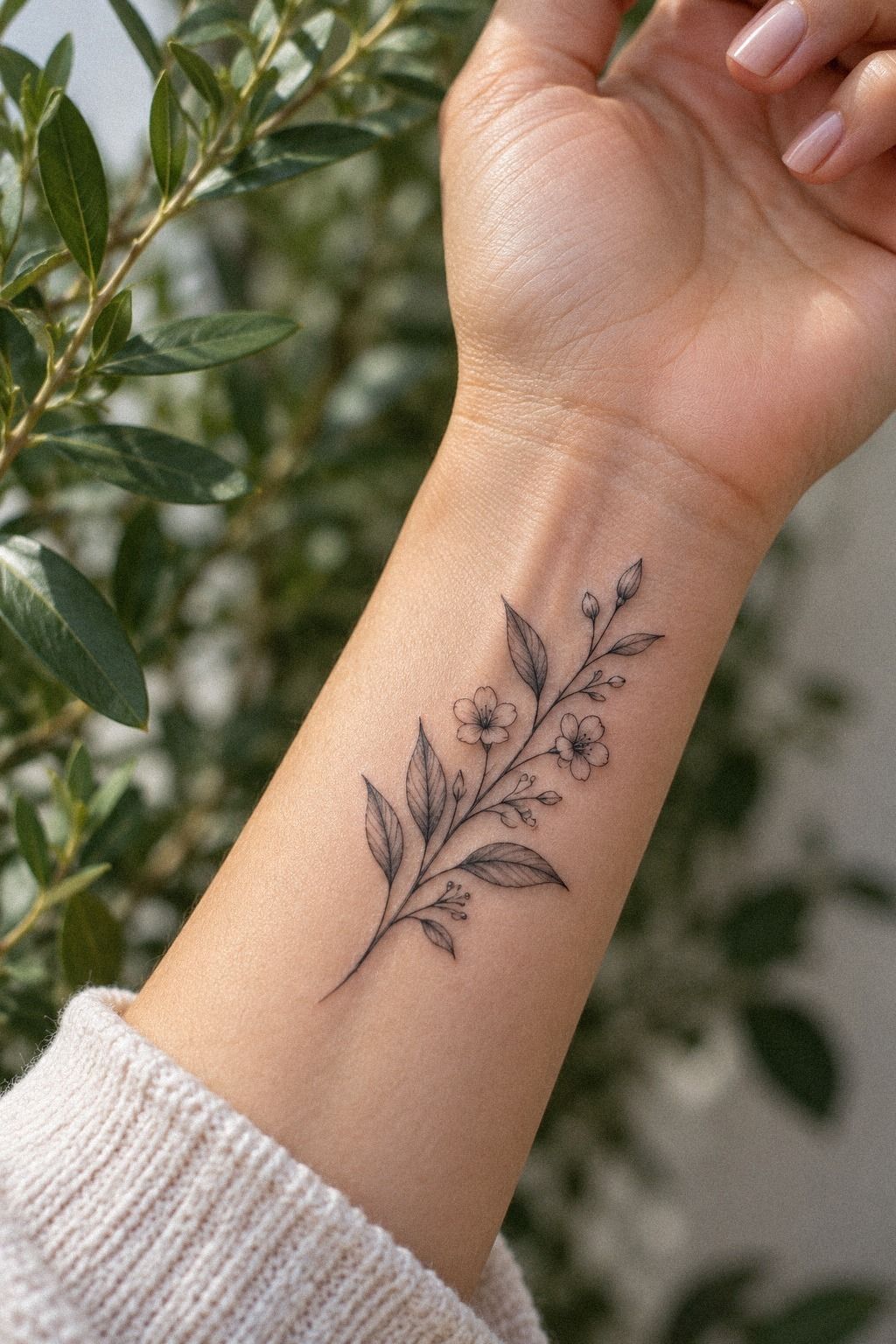
1Follow a Fine Stem to the Wrist
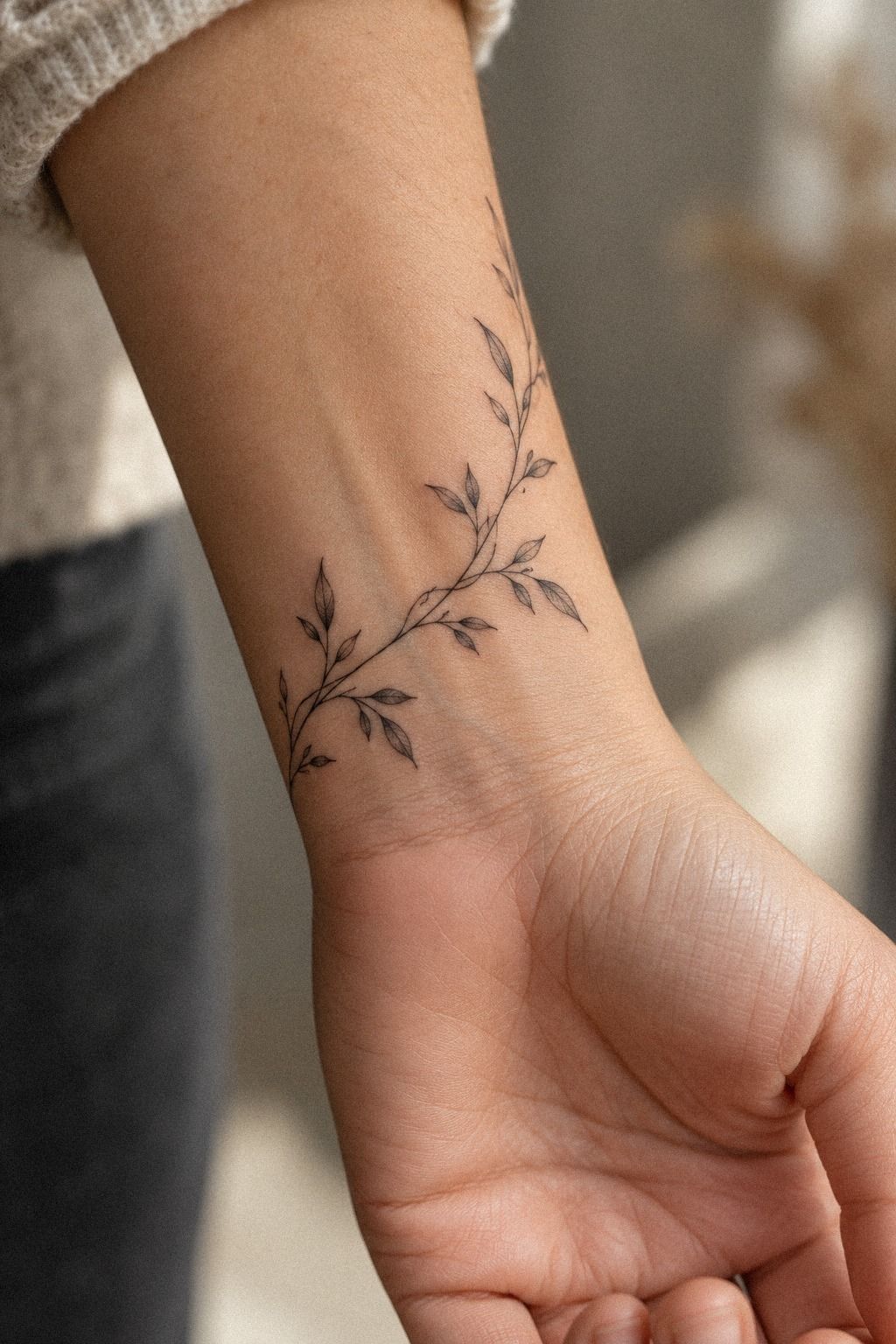
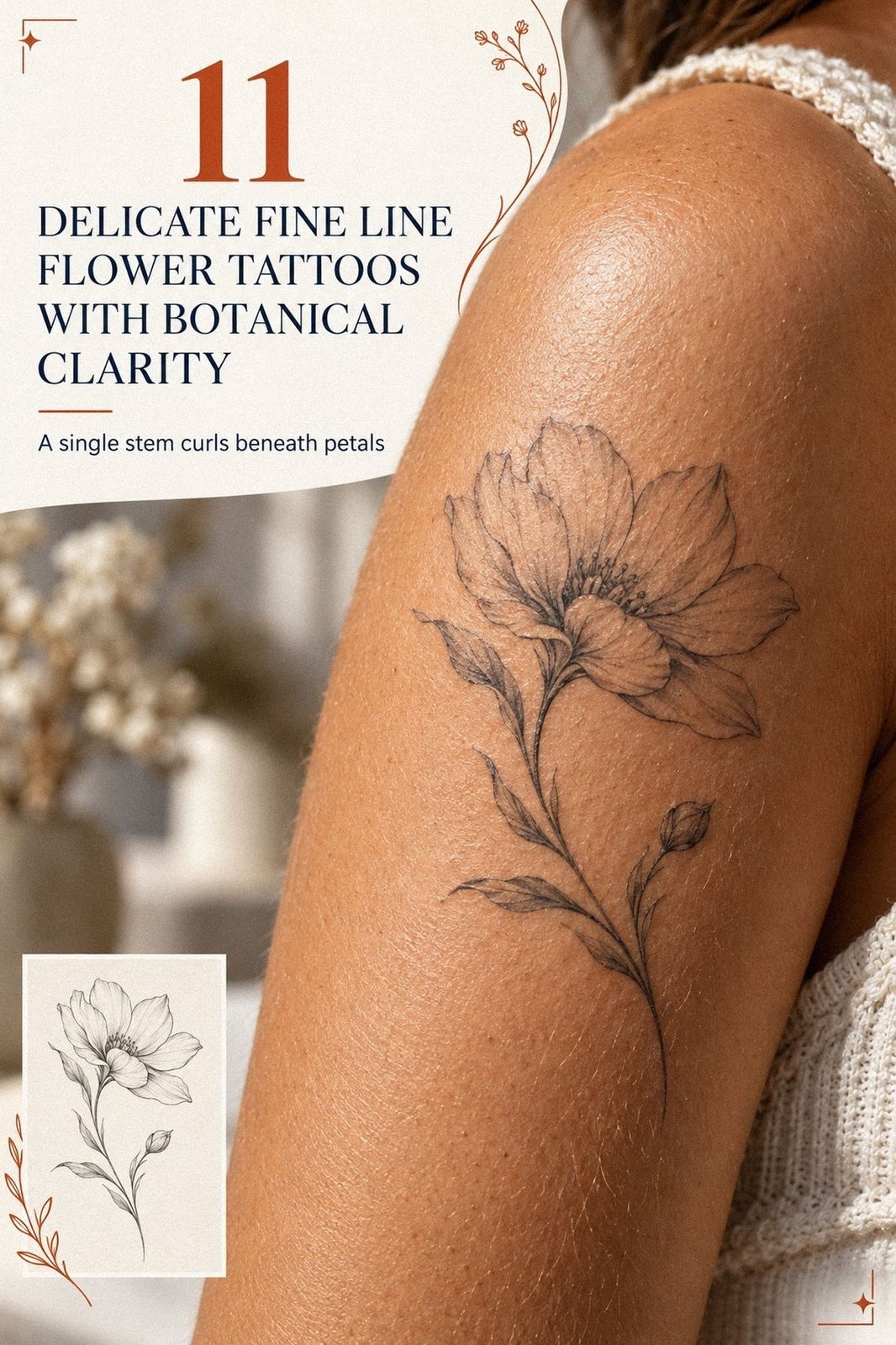
A single stem on the wrist gives you a striking botanical tattoo with little visual noise. I’d keep the flower narrow and let the stem breathe. That keeps the result graceful and personal.
Ask your artist for crisp terracotta-and-olive linework with open skin between the petals. Warm pigment can read clearly here, but the smallest details shouldn’t be pushed too far.
A birth flower, poppy, or tiny cosmos could work. The composition feels more romantic when one bloom leads the eye instead of several competing for attention.
The wrist is often more tolerable than ribs, feet, or sternum. Everyone’s pain level differs, though. You won’t want to book this before heavy lifting or repeated wrist movement.
If you’re comparing proportions, browse this delicate wildflower tattoo with a longer stem and more negative space. A small change in scale can make the same flower feel edgy or understated.
2Can a Tiny Sprig Hide Behind the Ear?
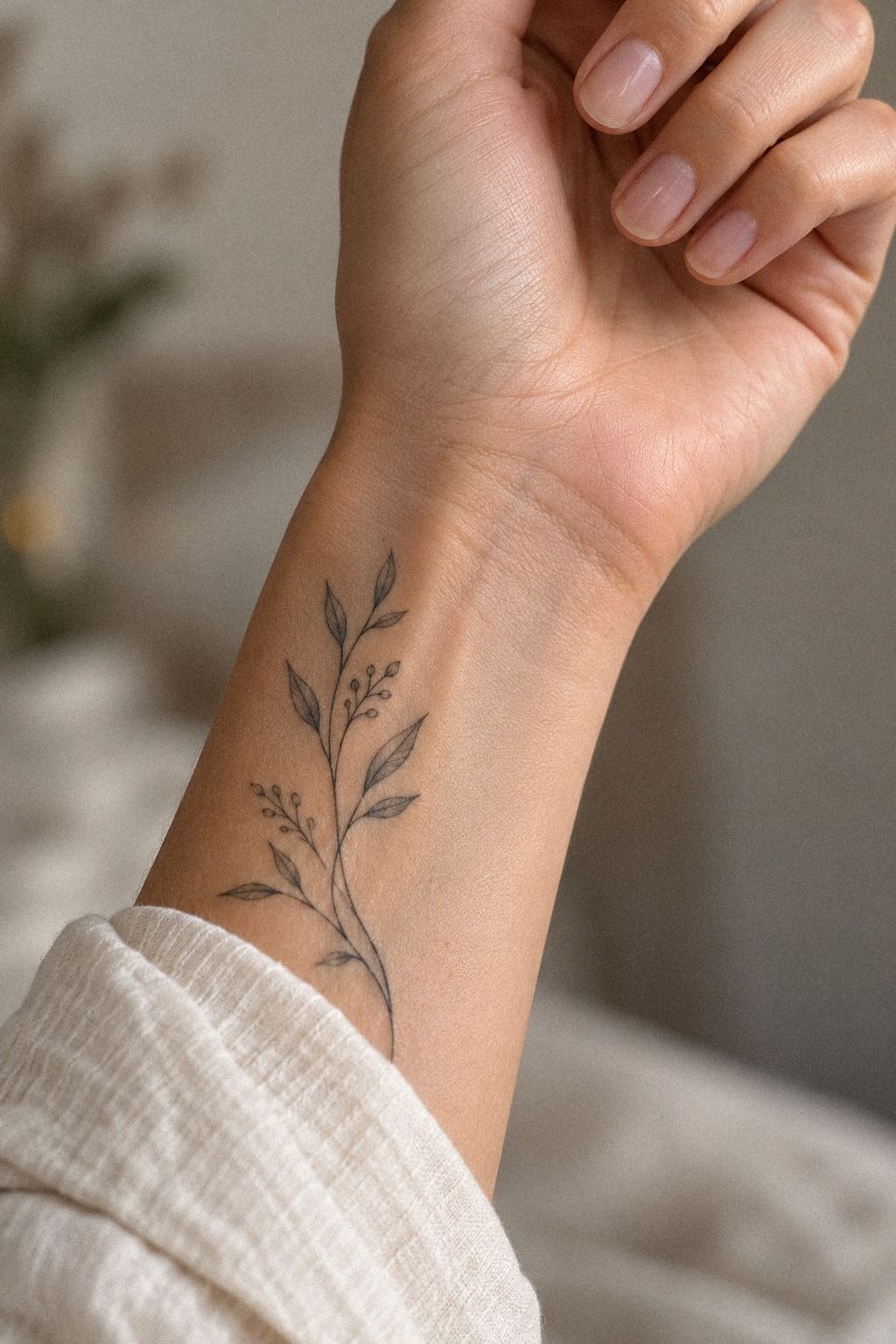
Behind the ear is a playful choice because you can reveal the sprig or hide it with your hair. I’d choose one curved stem with two or three leaves, not a miniature bouquet.
Your artist needs room to protect the single-needle linework. It can create an ethereal result, but it shouldn’t become microscopic.
Ask to see healed examples. Fresh pigment often looks bolder and sharper than it will later. That comparison can save you from choosing a design that’s too fragile.
You might feel more vibration behind the ear than expected. The sound can make the appointment feel intense, but it doesn’t mean the tattoo will be unbearable.
Eat beforehand and bring a calm mindset. You’re allowed to pause. That’s the point!
3Ferns Along the Ribcage: Beautiful, But Sensitive
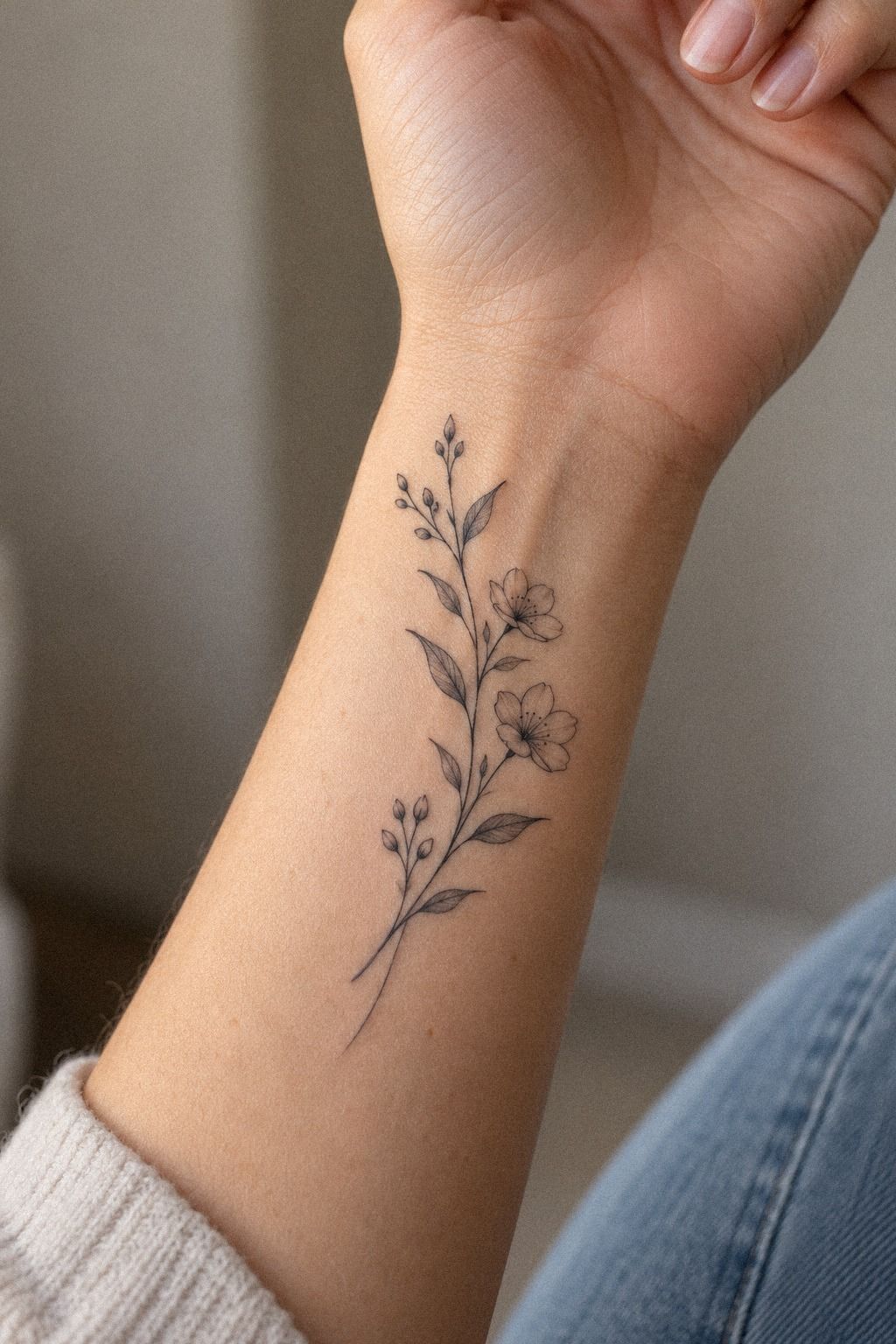
A fern along the ribs looks flowing and organic.
4Let the Collarbone Bouquet Drift
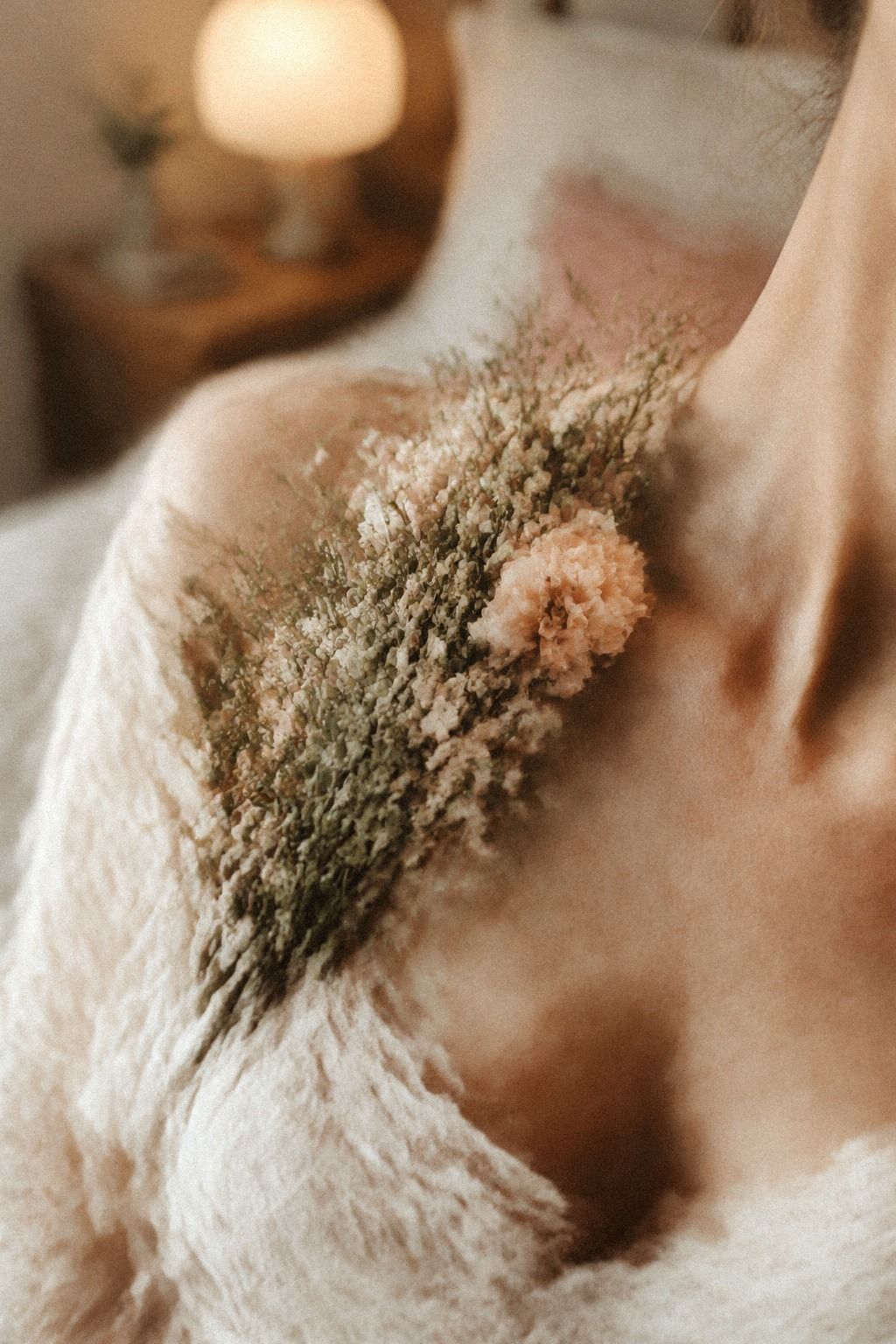
A botanical bouquet along the collarbone gives you a bold outline without heavy shading. I’d keep the arrangement asymmetrical, with one stem leaning toward the shoulder.
That direction makes the composition feel expressive rather than stiff. It also gives each flower a little breathing room.
Your artist can use thin stencil paper to test the curve before tattooing begins. Look at the stencil while standing, sitting, and lifting your arm.
If the flowers bunch together when your shoulder moves, the final tattoo may feel cramped. A small adjustment can protect the shape.
The collarbone can feel sensitive where skin sits close to bone. It’s often more tolerable than the ribs or sternum, though.
Wear a clean top that gives the artist access. You’ll also want fabric that won’t rub against fresh work.
For a softer arrangement, compare this with delicate flower tattoos for women. The same botanical language can become feminine, masculine, or neutral. Less drama, more clarity!
5Lavender at the Ankle
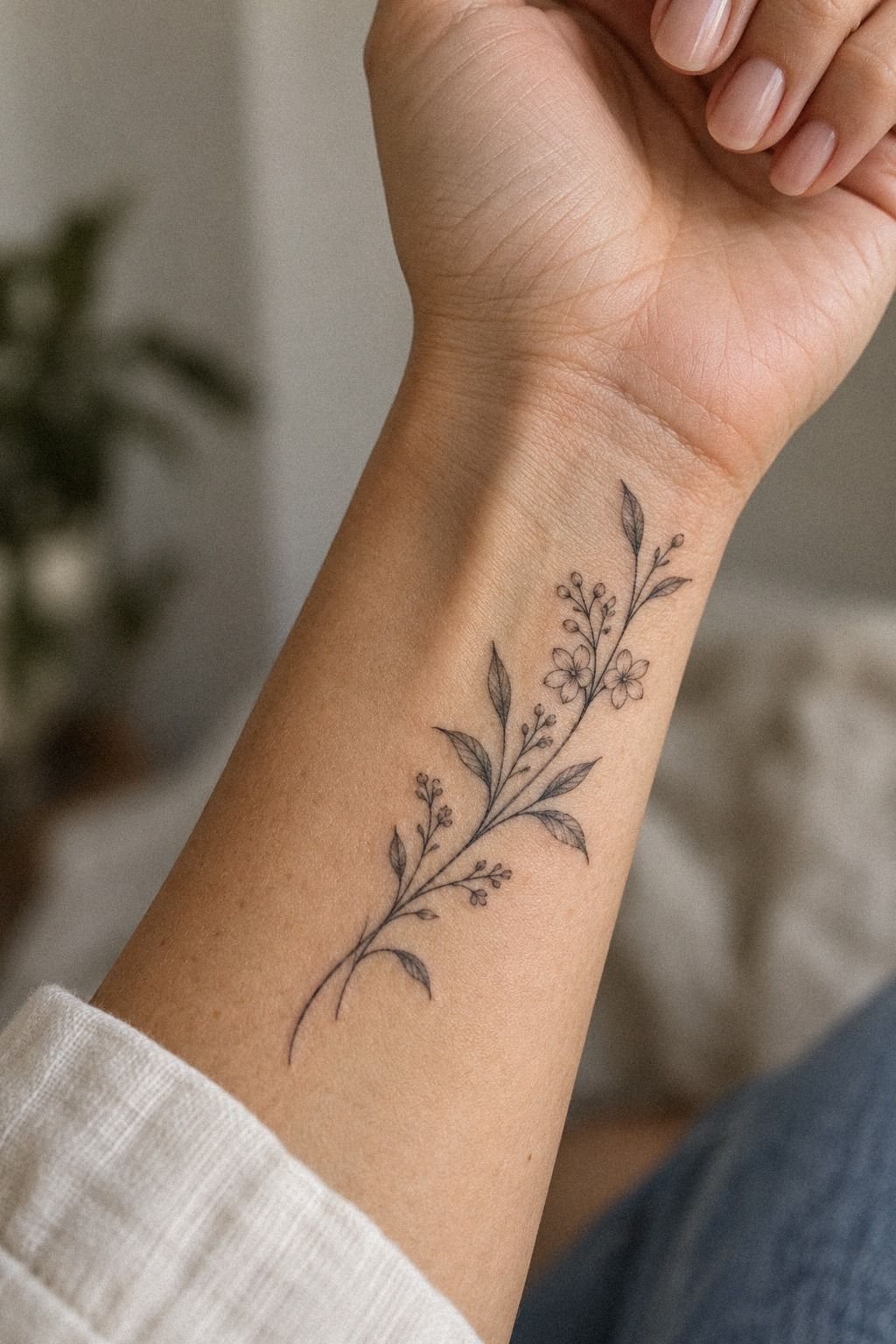
Lavender gives the ankle a dainty tattoo shape without demanding a crowded composition. I’d use one angled stem with a few clustered buds.
The natural rhythm already feels whimsical and symbolic. You don’t need extra ornament to make the flower readable.
The ankle has limited room and plenty of movement. Ask your artist to protect the lavender stem silhouette from becoming too faint.
A line that’s too light may lose definition. An overly detailed cluster can also blur at a glance.
Ankle tattoos can feel sharper than forearm tattoos, especially near bone. Socks, shoes, and walking can affect the first days of healing.
You’ll need to consider a possible touch-up appointment. That doesn’t make the placement a bad value, but it does make planning important.
If you love the flower but want stronger long-term readability, compare these small flower tattoo ideas with forearm and shoulder placements. Moving the same lavender a few inches can change the result.
6Fine Lines, Fierce Finger Placement
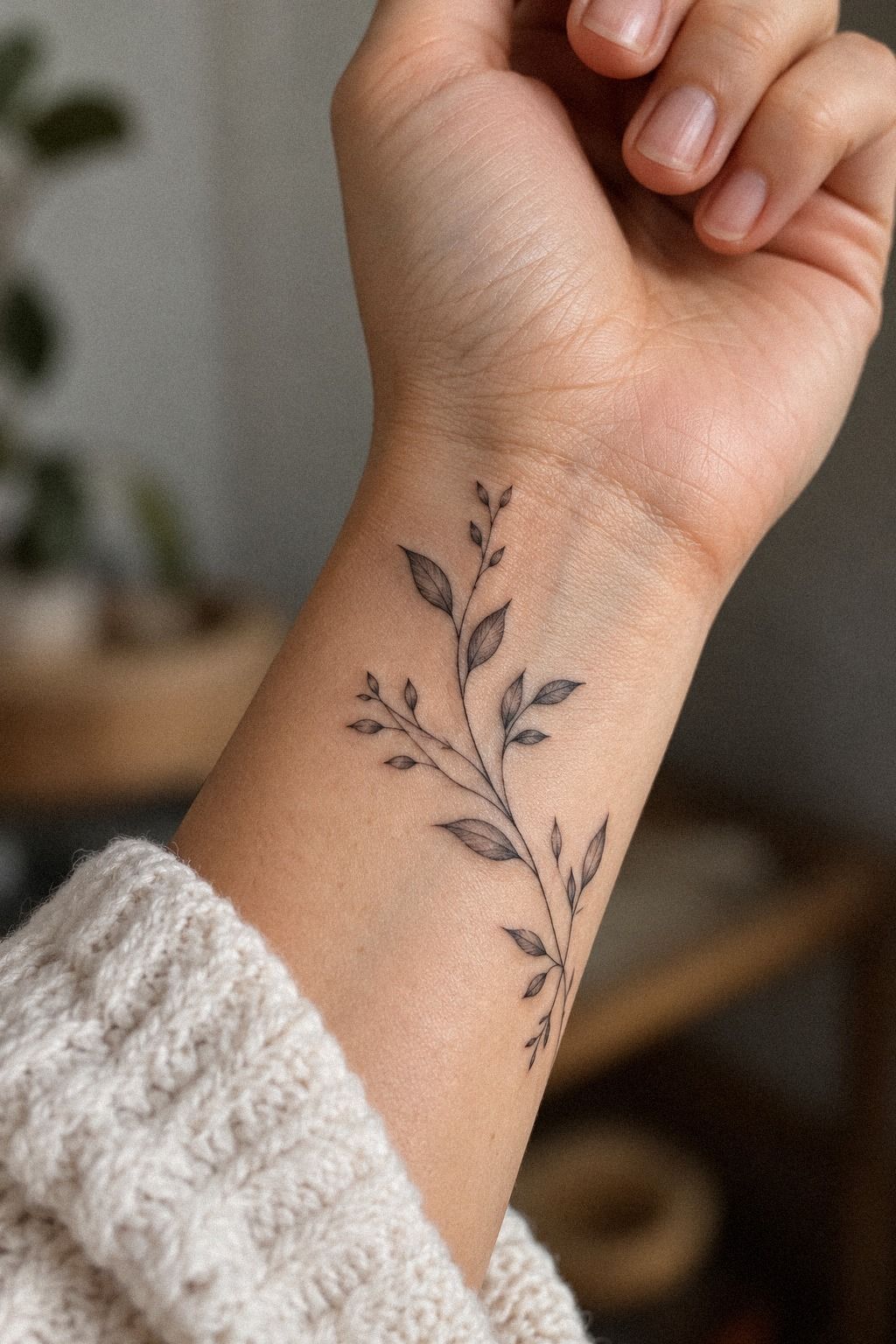
A fine floral finger tattoo can look daring and delicate at the same time. I’d choose one flower with a visible stem rather than several tiny blooms.
Your finger doesn’t offer much room for complicated detail. A minimal outline will usually stay easier to recognize.
Ask your artist how they approach forest-green and rust ink on your skin tone. Request healed portfolio photos in similar lighting.
The strongest design will have clean edges, open spacing, and a silhouette you can identify without leaning close. That readability matters more than adding another leaf.
Hands and fingers tend to fade faster. Washing, friction, and sunlight all play a part.
You’ll need to accept that a touch-up budget may become part of the long-term plan. I wouldn’t choose this as a first piece if you want minimal maintenance.
For a less demanding version, look at a small botanical tattoo on the forearm or upper arm. You’ll keep the dainty character while giving the design more stable skin.
7Which Birth Flower Belongs on Your Forearm?
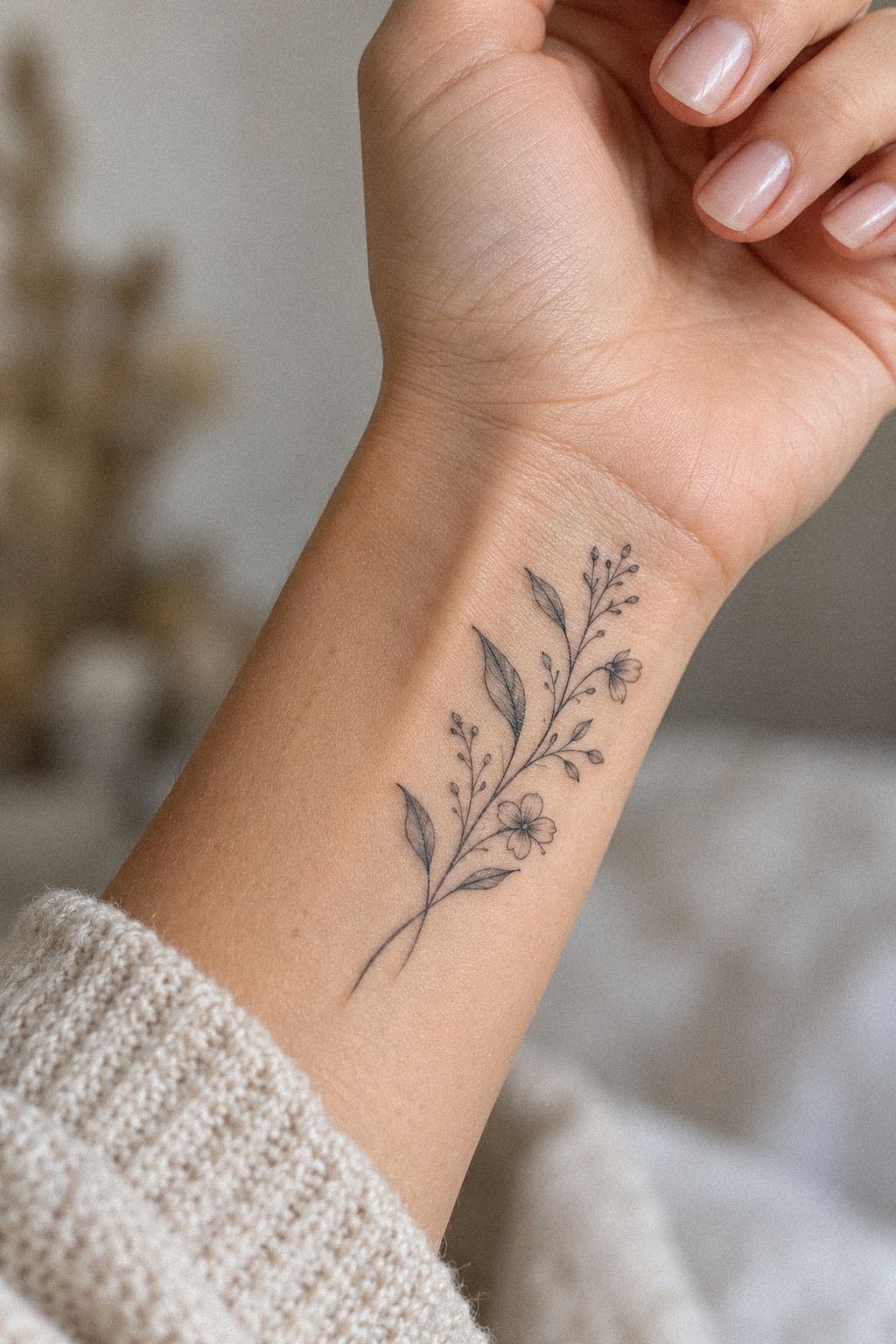
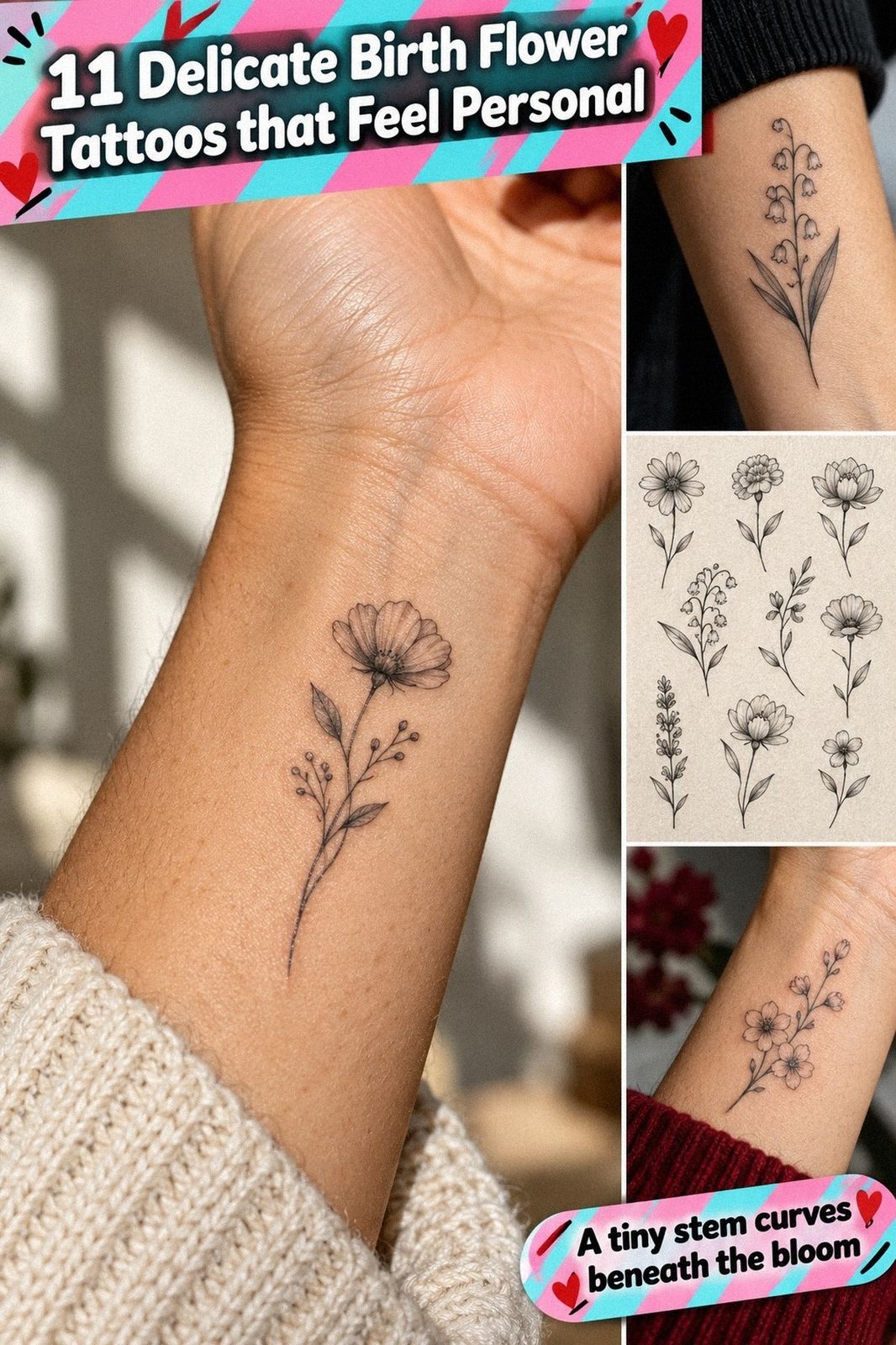
A birth flower on the forearm can carry real meaning without looking overly literal. I’d start with your birth month, then test whether the flower’s natural shape works at a small scale.
Symbolism shouldn’t excuse an unreadable design. The flower still needs a clear symbolic silhouette.
Your artist can build the shape around charcoal linework with dusty-rose accents and a few intentional overlaps. Leave the center open if the petals are already intricate.
You’ll see this forearm tattoo often. Imagine it with your wrist relaxed, your arm turned, and your sleeve pushed up.
The outer forearm is usually more tolerable than ribs, feet, hands, or sternum. That makes it a strong choice for a first tattoo.
You’ll still want to follow every aftercare instruction carefully. Good!
A delicate flower tattoo can give you more ideas if your birth flower feels too dense. A simple symbolic stem often says more than a crowded arrangement.
8Wrap the Shoulder With a Botanical Vine
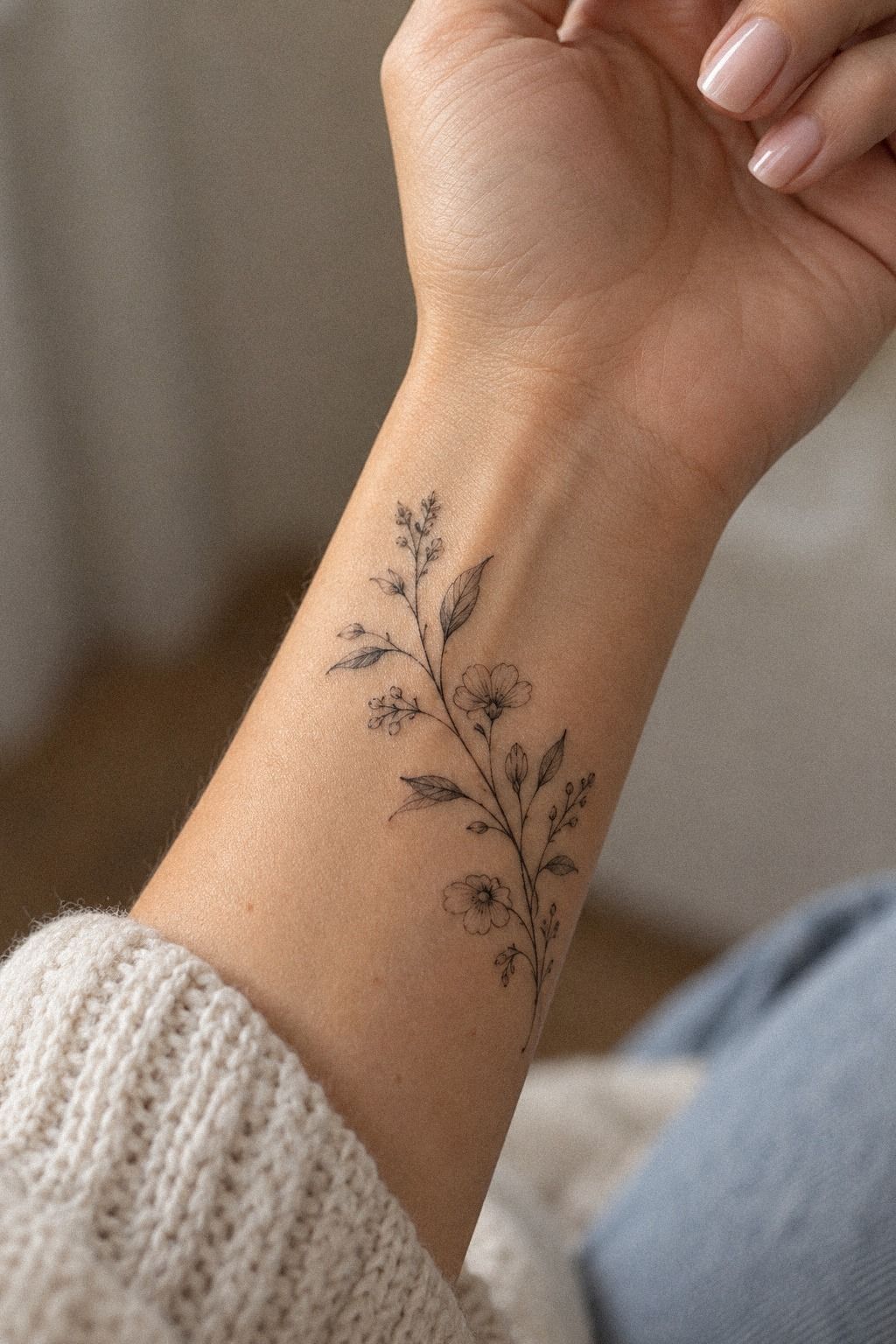
A vine around the shoulder gives your tattoo movement. That’s why the idea feels whimsical rather than static.
I’d let the vine travel naturally and stop before it becomes a full wrap. A partial arc is more understated and easier to read.
Use delicate botanical linework with leaves that change direction gradually. The movement should feel intentional, not tangled.
Your artist can place the stencil while you move your arm. You’ll see whether the vine stretches or bunches before anything permanent happens.
The shoulder is generally more tolerable than the ribs or hand. The upper shoulder can still feel sharp near bone, though.
You won’t need an ornate composition to make the placement work. One winding stem, three leaf clusters, and a small bloom can look polished.
If you like this movement but want a more sacred floral shape, compare it with a delicate flower crown tattoo. Curves can create a romantic feeling without heavy shading.
9The Pressed Flower Shoulder Blade
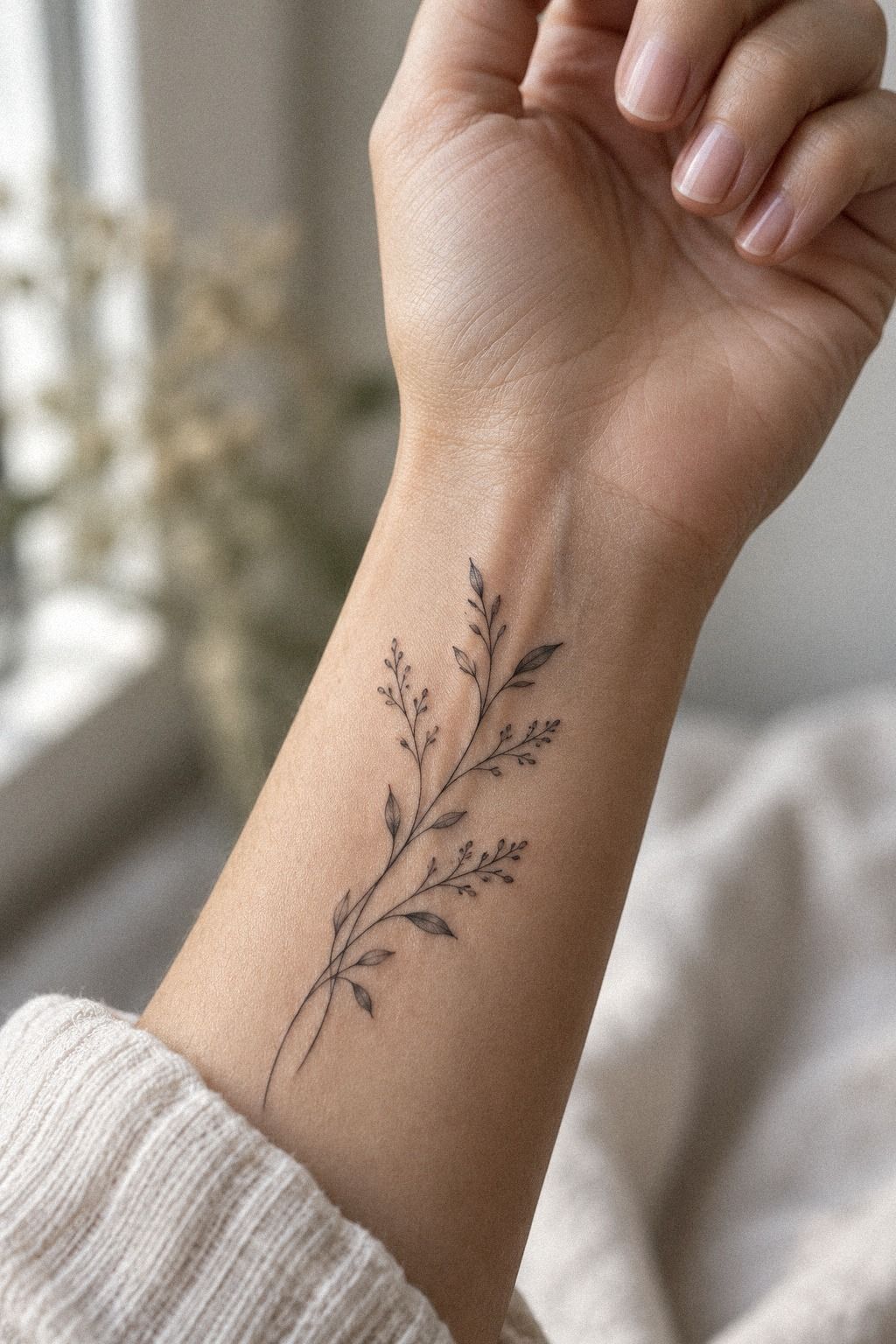
The pressed flower idea has an elegant, almost archival quality. A single stem across the shoulder blade can feel like something saved between book pages.
I’d avoid excessive realism. Simplified flower structure will usually age better than a tiny study packed with fragile marks.
Intricate doesn’t have to mean crowded. Open petals can carry more impact than a mass of fine marks.
Midnight-blue shading with copper accents can be beautiful when it’s controlled. Your primary shape should come from clear linework, not faint shading that may disappear.
Ask to see healed work before choosing subtle detail. Fresh contrast can hide future weaknesses.
The shoulder blade is usually more tolerable than the ribs. Machine vibration can still feel strange over bone.
Keep bra straps and shirt seams away during healing. You should also consider whether a backpack will rub the area.
A delicate peony tattoo can show how layered petals translate into this placement. Choose clear negative space, not simply the version with the most petals.
10Spine or Sternum? Choose the Herbarium Line
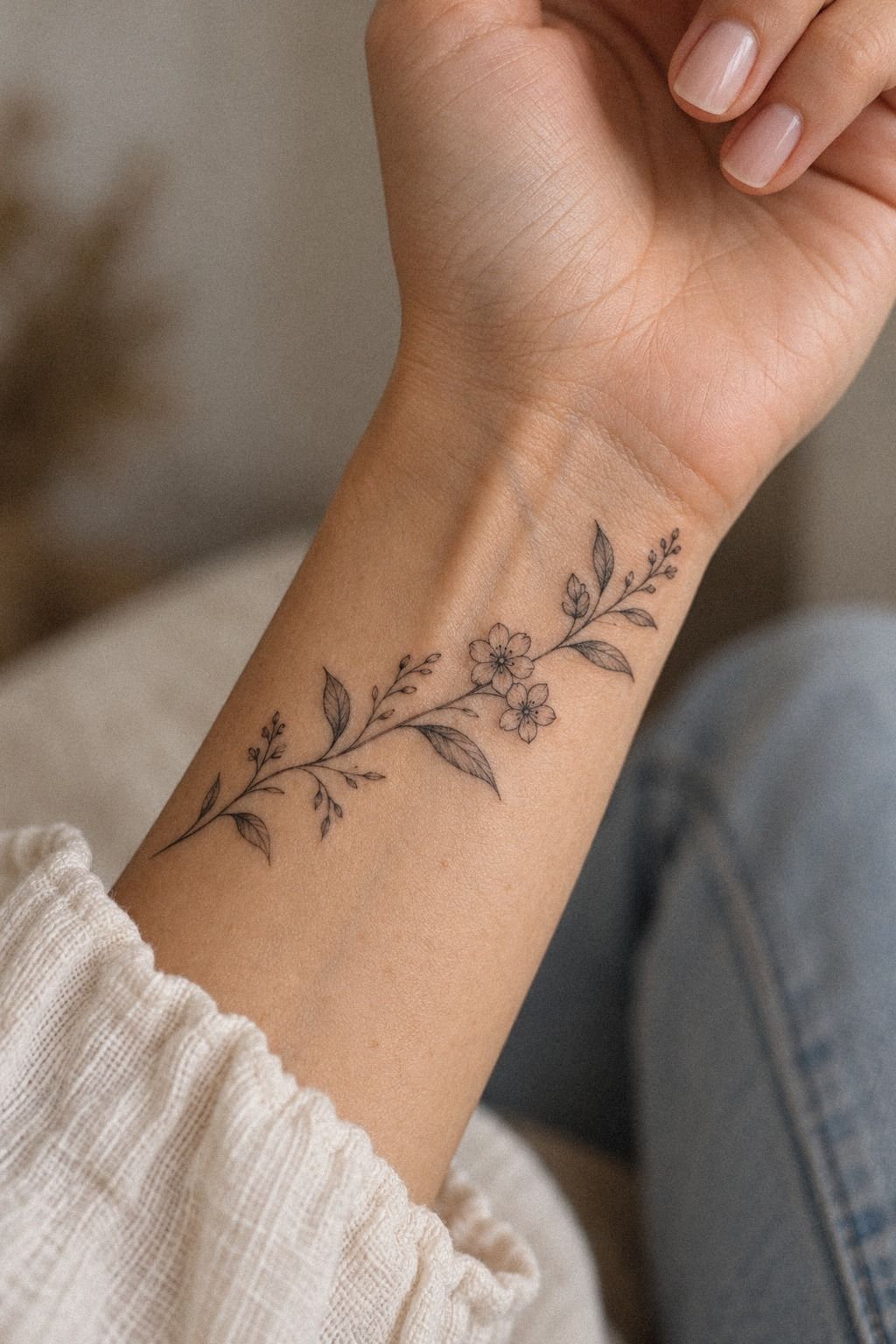
A spine tattoo benefits from a narrow vertical composition.
11A Wildflower Hand Poke, Done Slowly
A hand poke wildflower can feel raw, personal, and quietly bold. Because the marks are placed one at a time, the process may feel more measured than a machine appointment.
It still depends on placement, artist experience, and your pain tolerance. A slower process isn’t automatically painless.
Ask whether the artist has healed examples of hand poke botanical work on skin similar to yours. That will tell you more than fresh photos alone.
A simple stem, one open bloom, and two leaves can look more expressive than a dense cluster. The shape has room to speak.
The hand is exposed to frequent washing, sunlight, and friction. Fading is part of the conversation.
You’ll want to include possible touch-ups when comparing the overall cost. That’s especially important if the design uses very light marks.
If you want the same personal feeling with greater stability, compare this idea with the wildflower tattoo meaning guide. The forearm may give you more room without losing the symbolic quality.
Why Fine Botanical Tattoos Still Feel Personal in 2026
I’ve watched delicate botanical tattoos move from a niche style into a lasting visual language. The best ones still don’t look mass-produced.
The difference isn’t the flower alone. It’s the way your artist chooses scale, line weight, and placement for your body.
I’m less impressed by extreme fineness than I used to be. A line can look exquisite when fresh and become faint after healing.
That doesn’t mean delicate work is a mistake. It means you should choose an artist who understands skin movement and long-term readability.
Your tattoo budget matters, but the cheapest appointment isn’t always the best value. A lower price can become expensive after an early touch-up.
Regret can also make a small tattoo costly. Spending more on planning may protect the final result.
Start With Readability, Not Microscopic Detail
The most striking delicate tattoos usually have one clear idea. A fern, vine, lavender stem, or birth flower should be identifiable before anyone notices the tiny details.
I’d rather see a crisp, slightly stronger line than a ghostlike design that photographs beautifully for one week. Readable line weight gives your tattoo a better chance of staying expressive.
Ask yourself whether the design still works from normal conversation distance. If it only feels meaningful when someone holds a phone inches from your arm, the scale may be too ambitious.
A delicate wildflower tattoo can help you compare open spacing, stem length, and flower size. That reference is useful when deciding what to remove.
Compare Cost, Value, and Touch-Up Risk
Typical US pricing varies by artist and region. A boutique minimum may be about $50 to $100, hourly rates often sit around $100 to $250, and a small delicate piece may cost about $100 to $300.
These are planning ranges, not promises. Artist experience can raise the price, but it may also improve stencil placement and line consistency.
I’d compare the quote with healed work, communication, hygiene standards, and the touch-up policy. Paying more can be worthwhile when the design is personal.
A small botanical tattoo can help you compare how scale affects complexity. A smaller tattoo isn’t always a simpler job.
Build a One-Sitting Plan You Can Tolerate
A one-sitting tattoo should be compact enough to finish without rushing. You’ll want to discuss estimated time, expected pain, breaks, and the final size.
My own rule is simple: choose the placement you can care for properly, then choose the flower. Aftercare instructions matter just as much as the appointment itself.
The surface may look healed in two to three weeks. Complete healing can take two to three months.
You’ll need gentle washing, light hydration, and protection from sun and swimming while the skin settles. Your artist’s instructions should guide the details.
That patience is part of the tattoo, not an annoying extra. If you’re planning around travel, workouts, or a special event, timing can affect the real cost.
A delicate wildflower tattoo can help you test whether the design is compact enough. Keep one main idea, then remove anything that weakens it.
What I’d Ask Before Booking
I’d ask to see healed examples, confirm the artist’s minimum, and discuss how the design will be adjusted for your skin and placement. You’re not being difficult by asking direct questions.
You’re protecting a permanent decision. Start with the healed-work portfolio, not only the freshest photos.
Ask whether the artist recommends that line weight for your desired placement. Fresh tattoos can look sharp and saturated, while healed tattoos reveal whether spacing and contrast succeeded.
I’d also ask how many details can realistically fit in one sitting. A polished, timeless piece may require removing a few leaves or enlarging the flower.
That’s often a better value than forcing every idea into a tiny area. Clear choices usually create a stronger result.
Finally, ask what happens if the tattoo needs a touch-up policy. Communication about timing, price, and healing expectations can make the process feel less intimidating.
FAQ: Pain, Price, and Healing
How much does a delicate botanical tattoo usually cost?
A delicate botanical tattoo typically costs about $100 to $300 in the US, though artist experience and region change the range. A studio may charge a boutique minimum of about $50 to $100.
Hourly pricing often runs about $100 to $250. I’d confirm the full quote before booking.
Are delicate botanical tattoos a good idea for a first tattoo?
Yes, they can be a meaningful first tattoo when you choose a tolerable placement and readable scale. I’d consider an outer forearm, shoulder, or thigh before ribs, feet, hands, or sternum. Your artist should show healed work and help you choose a clear silhouette.
How do I choose a tattoo artist for delicate botanical work?
Choose an artist with clean linework, healed photographs, and experience with botanical designs on skin tones like yours. I’d ask about studio hygiene, stencil placement, touch-ups, and how they adapt fine lines to movement.
You don’t need the most elaborate portfolio. You need consistent work.
How much do delicate botanical tattoos hurt?
Pain varies, but ribs, feet, hands, and sternum are commonly more painful than the forearm, thigh, or shoulder. I’d tell your artist if you’re struggling. You’re allowed to pause, breathe, and adjust the plan.
A tolerable placement can make the experience feel far less daunting.
How long does a delicate botanical tattoo take to heal?
The surface usually heals in about two to three weeks, while complete healing can take about two to three months. I’d wash gently, use the recommended fragrance-free cleanser, avoid picking, and protect the area from sun and swimming until the artist says it’s ready.
What’s the best placement for delicate botanical tattoo designs?
The best placement depends on your pain tolerance, visibility preference, and daily habits. I’d choose an outer forearm or shoulder when readability and easier aftercare matter most. A hand or ankle can still be meaningful, but long-term readability and touch-up costs deserve honest consideration.
Where I’d Start First
If I had to pick one, I’d start with the birth flower forearm tattoo. The placement is usually more tolerable, the symbolism is personal, and the skin gives fine lines a fair chance to stay readable.
Pin that idea for later and compare it with this delicate wildflower tattoo guide before booking. Your best choice doesn’t need to be the most ornate one.
It needs to feel meaningful, readable, and genuinely yours.