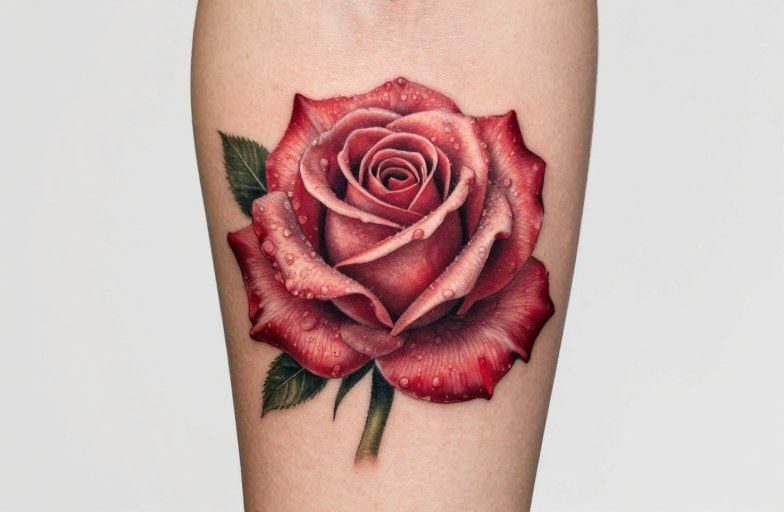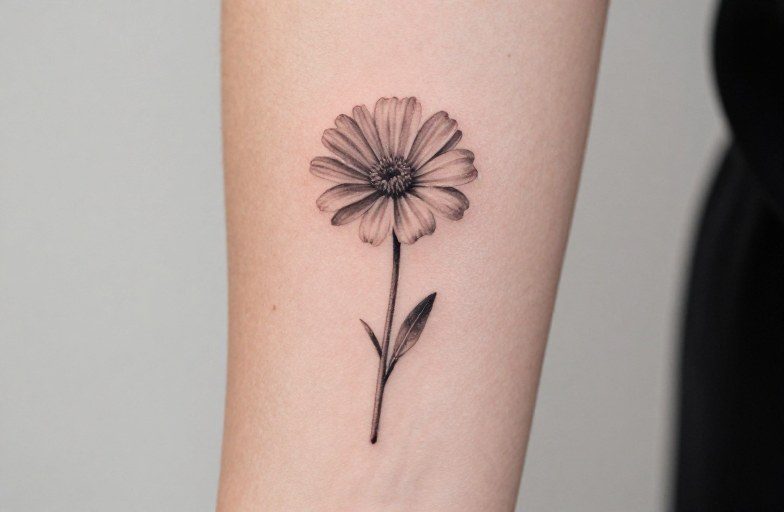
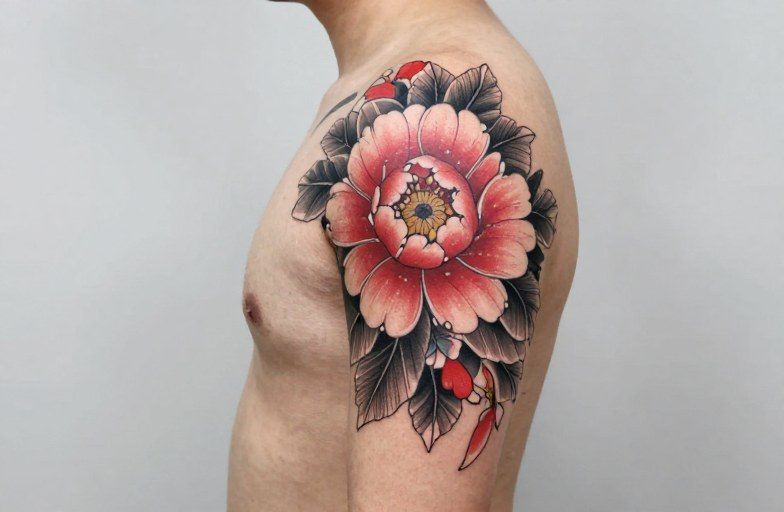
An Asian floral tattoo typically draws from peonies, cherry blossoms, lotuses, or chrysanthemums, flowers long tied to prosperity, impermanence, spiritual awakening, and noble character across Chinese, Japanese, and Korean traditions. The specific flower, its stage of bloom, and what accompanies it (leaves, buds, falling petals) all shift the meaning significantly. A closed lotus bud reads differently than one in full open bloom; a peony heavy with dew and surrounded by leaves signals wealth more directly than a single stem.
Symbolism & Core Meaning
Peony: Prosperity and Bold Beauty
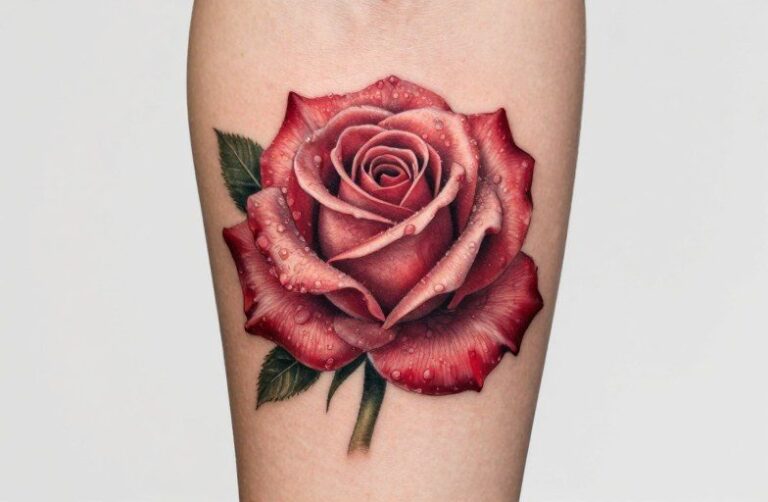
The peony, called mudan in Chinese, carries the strongest association with wealth, honor, and high status. In Japanese tattooing, it often pairs with lions or dragons to soften the masculine energy with abundant, almost overwhelming natural beauty. The flower’s many layered petals make it technically demanding, good peony work shows clear separation between petal layers even at a distance. Color matters: deep reds and pinks dominate traditional interpretations, while black-and-grey peonies read more contemporary and slightly more somber.
Cherry Blossom: Impermanence and Presence
Sakura blooms briefly and falls deliberately, making it the clearest visual metaphor for mono no aware, the Japanese sensitivity to life’s transience. Falling petals, buds about to open, and full clusters all carry different weights. A branch heavy with fresh bloom reads youthful and hopeful; scattered petals on wind suggest something already passing. This makes cherry blossom particularly meaningful for memorial pieces or markers of significant life transitions.
Lotus: Emergence and Spiritual Growth
Rising clean from muddy water, the lotus connects to Buddhist and Hindu concepts of purification through struggle. Eight-petaled lotuses reference the Noble Eightfold Path; thousand-petaled versions reference spiritual completion. The lotus also carries strong associations with resilience, surviving, even thriving, in difficult conditions. Its symmetrical structure makes it adaptable to almost any placement size.
Chrysanthemum: Longevity and Noble Character
The chrysanthemum holds particular weight in Japanese culture as the imperial seal and a symbol of autumn, perseverance, and the ideal of a life lived with integrity. Its many fine petals require steady hand speed and consistent needle grouping, sloppy chrysanthemum work ages into muddy confusion faster than almost any other flower.
How It Ages on Skin
Line Weight and Petal Definition
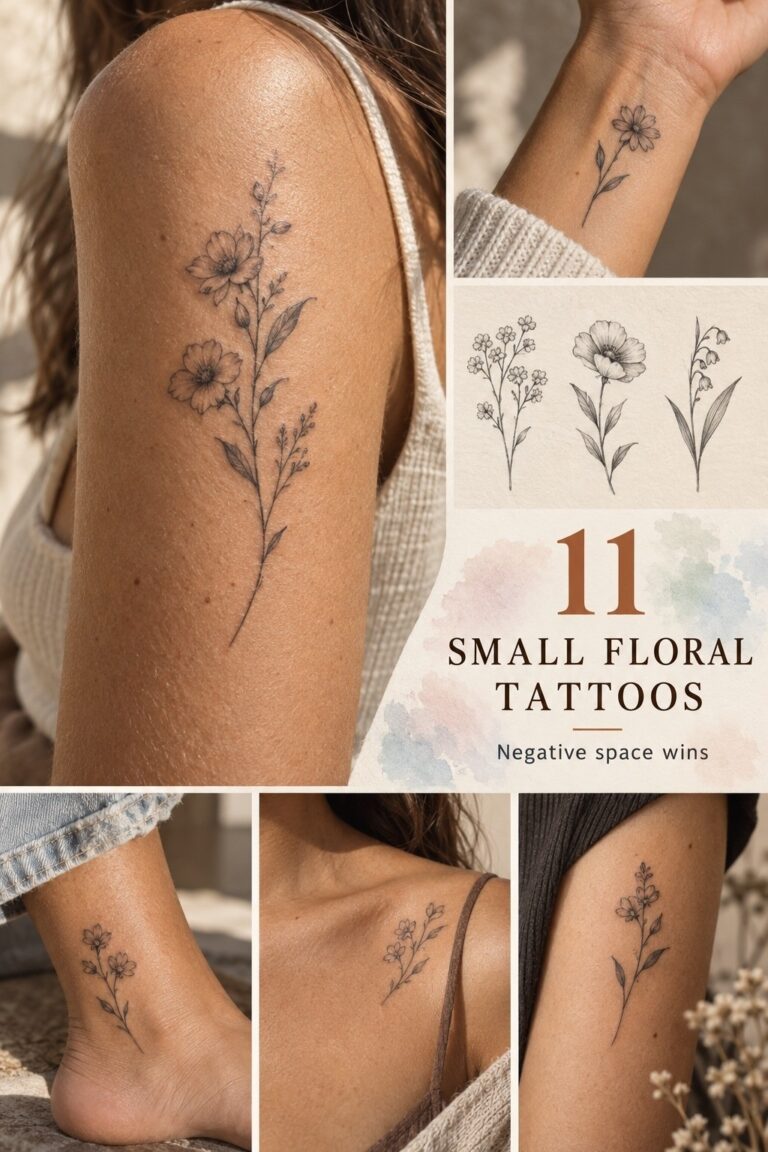
Asian floral tattoos live or die by their line quality. Fine, hair-thin outlines common in watercolor-style interpretations blur within five to seven years, turning distinct petals into soft pink or grey blobs. Traditional Japanese approaches use bolder linework, often triple-needle outlines or heavier single-pass lines, that hold definition for decades. The gap between petals must be wide enough; adjacent colors bleed together over time, so negative space functions as insurance against future muddying.
Color Longevity Specifics
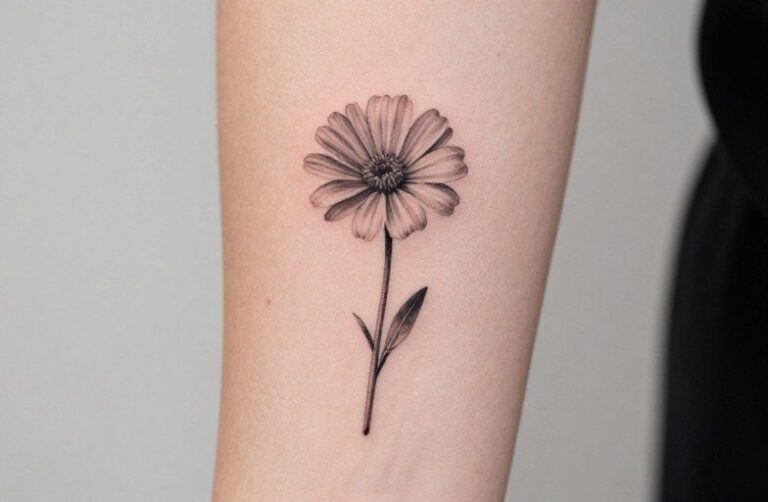
Peony reds and pinks, derived from organic pigments, tend to hold reasonably well but shift toward orange or salmon tones with sun exposure. Lotus purples often fade fastest, sometimes requiring refresh within eight to ten years. Black-and-grey florals age more predictably, softening uniformly rather than patchily, but can lose the subtle gradations that make petals read as dimensional. Yellows and pale greens in leaves and stems frequently disappear almost entirely, leaving “ghost leaves” that suggest form without defining it.
- Heavy black backing behind flowers helps lighter colors stay visible longer
- Petals with internal shading (not just flat color) maintain their roundness as skin texture changes
- Areas with frequent friction, inner forearms, collarbone region, age faster on slender individuals
- White highlights, popular for “dew drop” effects, rarely survive beyond five years
History & Cultural Roots
Floral motifs in East Asian tattooing trace to multiple, sometimes overlapping sources. Japanese irezumi developed elaborate floral backgrounds and focal points during the Edo period (1603-1868), when decorative tattooing flourished among urban working classes despite official prohibition. The full-body suit format demanded flowing elements, waves, wind, and flowers, to connect larger figurative pieces. Peonies and chrysanthemums became standard vocabulary through ukiyo-e woodblock prints, which tattoo artists often referenced directly.
Chinese tattooing, often linked to southern coastal traditions and certain folk practices, incorporated peonies and lotus through textile and ceramic decorative patterns rather than a continuous tattoo-specific lineage. Korean tattoo history remains less documented, though floral imagery appears in shamanic and folk contexts, with lotus and chrysanthemum carrying Buddhist associations through temple arts.
The modern global popularity of these motifs emerged partly from post-WWII American servicemen bringing Japanese tattoo influence westward, and partly from 1990s-2000s tattoo tourism to Japan. Contemporary Asian floral tattoos may draw on this history respectfully, ignorantly, or somewhere between, execution quality and understanding of symbolic context vary enormously.
Best Placements
Flowing with the Body
Asian floral designs typically follow organic curves rather than fighting them. Peonies work exceptionally well on outer thighs, upper arms, and ribs, areas with enough flat or gently curved surface to let the flower open fully. Cherry blossom branches excel along collarbones, down the side of the torso, or wrapping the upper arm, following the body’s natural lines. Lotus, with its radial symmetry, centers beautifully on chests, upper backs, or the sternum area.
Size and Detail Thresholds
Below three inches in diameter, most Asian florals lose their distinguishing characteristics, peonies become generic roses, lotus reads as a simple star shape. Five to eight inches allows proper petal layering and the inclusion of leaves or secondary elements that contextualize the flower. Full sleeves or large back pieces permit the “wind-bar-water” combinations of traditional Japanese composition, where flowers interact with waves, clouds, or other natural forces.
- Forearm: excellent for single large blooms with visible detail; heals relatively predictably
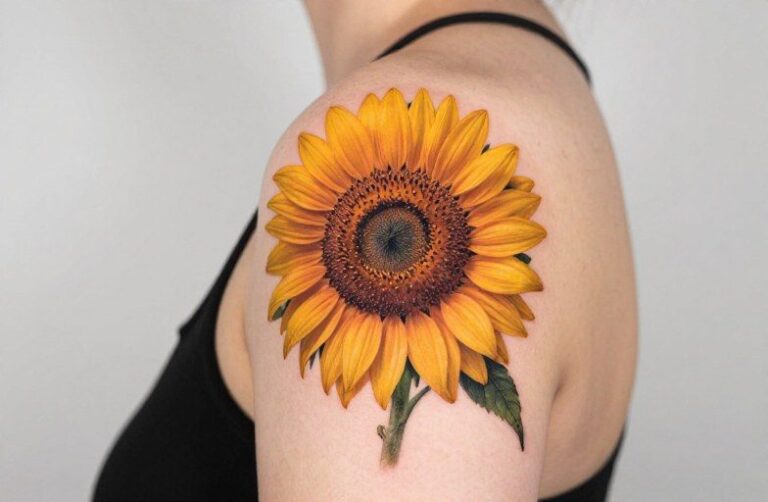
- Shoulder cap: traditional placement for peony or chrysanthemum; ages well with muscle definition
- Side/rib: suits vertical branch compositions; significant pain during application
- Thigh: large surface area allows complex, multi-flower arrangements
- Hand/finger: generally inadvisable; fine petal detail disappears quickly, cultural weight requires consideration
Who Chooses This Tattoo
People drawn to Asian floral tattoos often arrive with specific cultural connections, heritage, travel, spiritual practice, or with purely aesthetic attraction to the visual tradition. The latter isn’t inherently problematic, but it benefits from research. Someone with Japanese ancestry choosing cherry blossom carries different weight than someone without, though both can result in beautiful, meaningful work. The distinction matters most in how the piece is contextualized and discussed.
Women and men both choose these designs, though the surrounding composition often differs. Men in traditional Japanese tattooing more commonly receive florals as background or complementary elements to dragons, tigers, or heroic figures. Women increasingly choose standalone florals, particularly lotus and peony, as primary rather than supporting imagery. Non-binary and gender-fluid clients often gravitate toward cherry blossom for its explicit connection to transient states and transformation.
Memorial applications are common, cherry blossom for lost youth or potential, lotus for recovery from hardship, chrysanthemum for elders passed. The flower’s established symbolic vocabulary lets it communicate without requiring additional text or explicit explanation.
Personal & Modern Meanings
Contemporary wearers frequently layer personal significance onto traditional symbolism. A lotus might mark sobriety or mental health recovery, extending beyond its Buddhist roots. Peonies sometimes commemorate entrepreneurial success or financial independence rather than inherited status. Cherry blossom increasingly marks gender transitions, the brief blooming period mapping onto moments of becoming visible and authentic.
Modern stylistic hybrids also shift meaning. Watercolor techniques, despite their aging challenges, introduce spontaneity and emotional immediacy that traditional tight rendering doesn’t. Dotwork and geometric framing create tension between organic subject and rigid structure. Single-needle blackwork florals feel more intimate, sometimes melancholic, compared to the celebratory fullness of traditional color approaches.
Placement on visible versus hidden skin changes function too. A large back piece remains largely private; forearm or hand placement makes the symbol part of daily social interaction. Some choose concealment to maintain personal sacredness; others choose visibility as commitment to the values the flower represents.
The Takeaway
Asian floral tattoos offer genuine symbolic depth when the specific flower, its cultural context, and its visual treatment are chosen deliberately rather than picked from a flash sheet. They age best with bold linework, adequate size, and strategic use of negative space. The tradition behind them deserves respect, research your artist’s understanding of the vocabulary, and be prepared to explain why this particular flower, in this particular form, belongs on your particular body. Done well, these pieces remain legible and beautiful for decades; done carelessly, they become indistinct decorative blurs that waste both skin and potential meaning.
Frequently Asked Questions
Do Asian floral tattoos have to be done in color to be authentic?
Black-and-grey execution has its own long history in Japanese tattooing, particularly in certain regional styles. Color isn’t required for authenticity, though it does change the symbolic weight, red peonies specifically signal prosperity in ways greyscale cannot.
Is it cultural appropriation if I’m not Asian?
Context and execution matter more than ethnicity alone. Research your specific flower’s significance, choose an artist who understands the tradition, and avoid combining sacred symbols casually. Respectful engagement differs from thoughtless borrowing.
How much should I expect to pay for a quality Asian floral piece?
Large-scale work from specialists in Japanese or Chinese tattooing typically runs several hundred dollars per session, with complex pieces requiring multiple sessions. Small, simple florals might start around $300-500, but the style rewards investment in technical skill.
Can I mix different flowers from different cultures in one tattoo?
Technically possible, but symbolically complex. Japanese cherry blossom with Chinese peony creates a hybrid that may not read coherently without thoughtful composition. Discuss intention thoroughly with your artist rather than assembling elements arbitrarily.