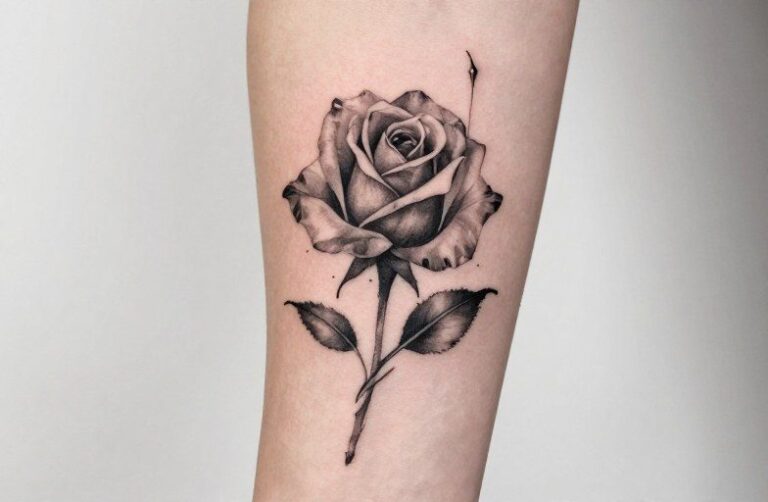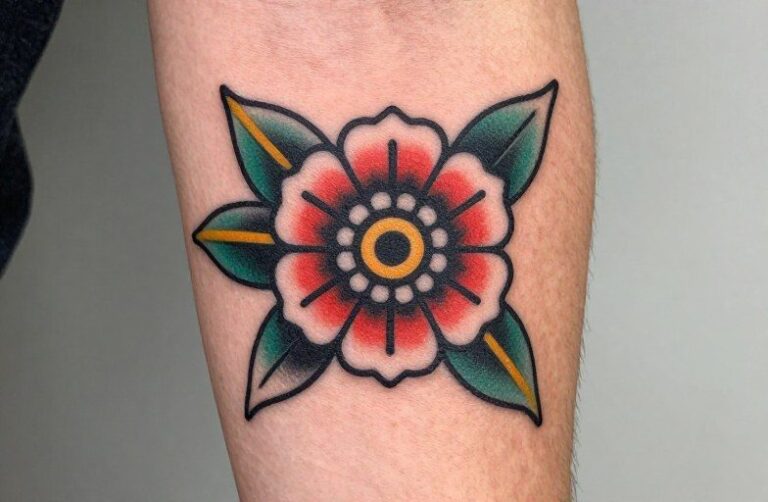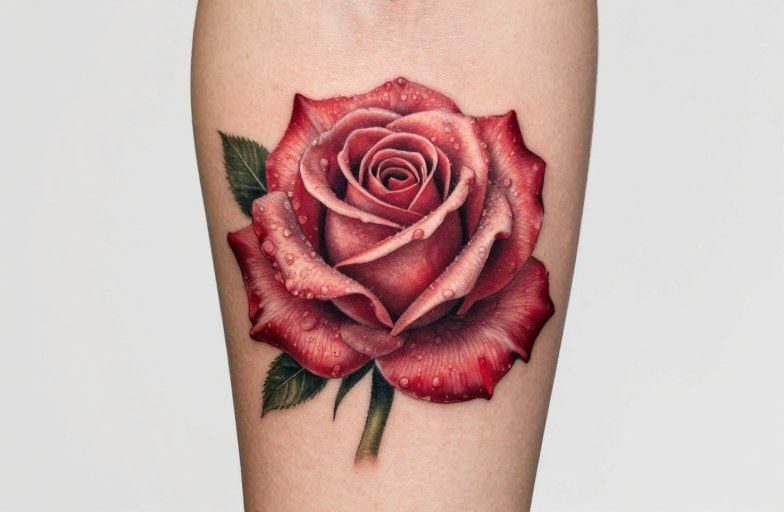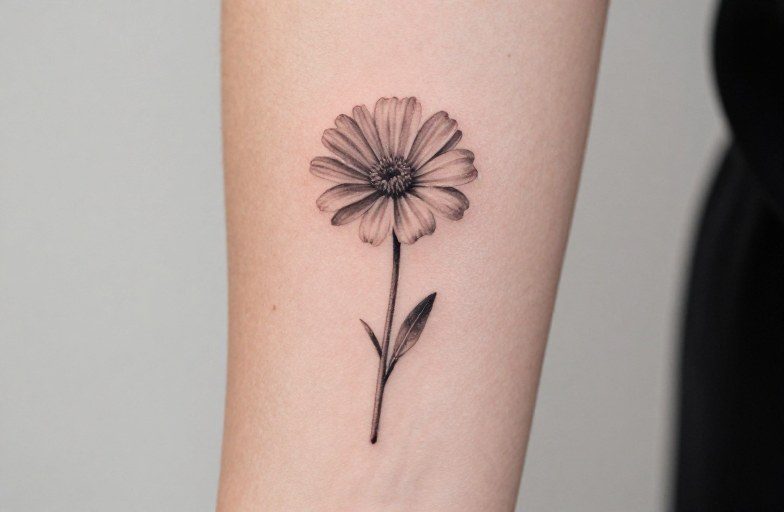
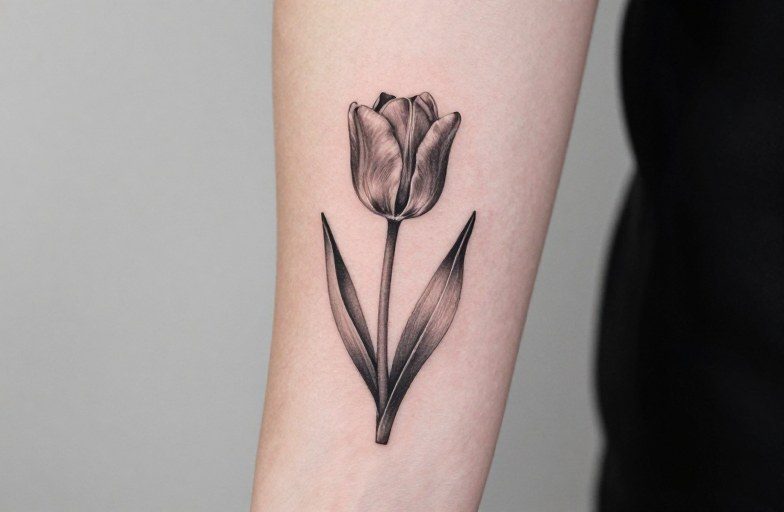
A single tulip, stripped to its essentials, carries surprising weight. The flower’s natural architecture, a cupped bloom, a slender stem, two simple leaves, translates cleanly into fine line work. That structural honesty is why the minimalist tulip has become a staple in contemporary tattooing. It works across styles, from single-needle botanical studies to bold geometric reductions, and it ages better than more cluttered floral designs. The key is knowing which simplification to choose and where to place it so the line quality stays crisp and the shape reads instantly.
Standout Design Ideas
Single Stem, Maximum Impact
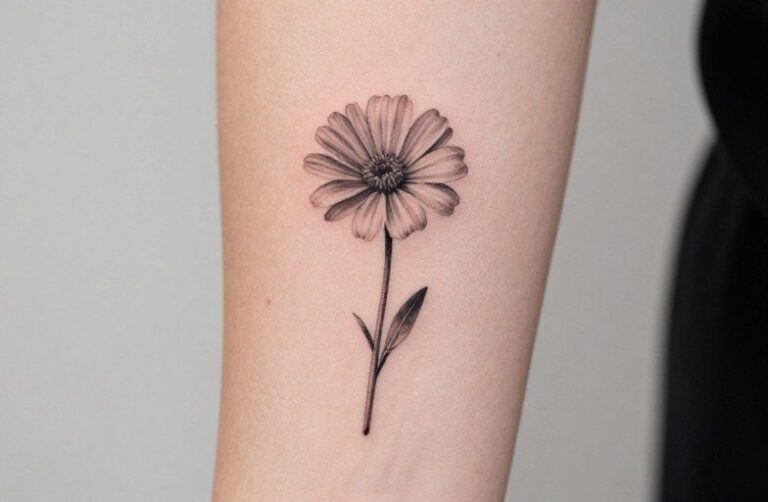
The most effective minimalist tulips often isolate one flower on a long, unbroken stem. This vertical format draws the eye upward and fits naturally along the inner forearm, the side of the ribcage, or behind the ear. A single needle (typically 1RL or 3RL) produces hair-thin lines that stay legible without overwhelming small areas. The bloom itself can be rendered as an open contour, just the outer petal edges, or given a slight solid fill in one tone of black-grey wash to suggest depth without shading complexity.
Negative Space Blooms
Some of the strongest minimalist tulips use the skin itself as the flower. The artist outlines the stem and leaves in solid black, then defines the tulip shape by leaving the interior untouched, perhaps ringed by a thin contour line. This technique demands confident line work, any wobble in the petal edge becomes obvious, but the result feels light and modern. On darker skin tones, the contrast reads differently; a skilled artist may reverse the approach, filling the bloom slightly and leaving the stem as line work.
- Open contour tulip: outer petal lines only, no fill, relies on line weight variation
- Silhouette tulip: solid black bloom, thin stem, high contrast, reads well at small sizes
- Geometric reduction: angular petals, straight stem, sometimes a single leaf, almost icon-like
- Dotwork center: minimal line bloom with a cluster of dots where stamens would sit
Trending Variations
Botanical Accuracy vs. Stylization
Current flash books show a split between tulips that reference actual species, pointed petals for lily-flowered types, ruffled edges for parrot tulips, and those that reduce the flower to a generic symbol. The botanical approach suits collectors who want the tattoo to read as a specific flower; the stylized version works better for pairing with other minimal icons or text. Both are valid, but mixing them in the same composition usually looks disjointed.
Color in Minimalist Work
Traditional Dutch tulip imagery leans heavily on saturated reds and yellows, but minimalist interpretations increasingly use limited color. A single petal edge in muted rust, or a stem washed in pale green, can define the form without breaking the restraint. Watercolor-style bleeding is generally avoided in true minimalist tulip work; the color sits inside clean boundaries or is omitted entirely. Yellows and light reds fade fastest in skin, so placement matters, areas with less sun exposure preserve these tones longer.
Tips for Choosing
Not every minimalist tulip translates well from paper to skin. Flash designs often look crisp because they’re drawn at three inches and viewed on flat paper. Your body moves, stretches, and curves. A design with petals too close together may blur into a solid blob over five to ten years as ink spreads slightly in the dermis. Look for versions with deliberate gaps between elements, or ask your artist to adjust spacing for your chosen placement.
Line weight should be consistent with the size. A tattoo under two inches tall needs uniform thin lines; anything heavier starts looking crude. Above four inches, the artist can vary line weight, thicker stem, thinner petal edges, to create visual hierarchy without adding detail. Always request to see healed photos of similar work from your artist, not just fresh tattoos. Fresh minimalist lines look sharper than they will in six months.
Matching & Pairing Ideas
With Other Florals
Minimalist tulips pair cleanly with similarly reduced flowers. A small daisy, a single poppy, or a sprig of lavender rendered in matching line weight creates a cohesive bouquet without crowding. The tulip’s verticality contrasts well with rounder blooms; place the tulip highest in a cluster to lead the eye. Avoid pairing with highly detailed realistic flowers, the stylistic mismatch undermines both.
With Text and Numbers
The tulip’s stem functions as a natural baseline for small lettering. A date, initials, or a short word tucked beneath the bloom reads as integrated rather than tacked-on. Script should match the line quality: thin, unshaded, possibly from the same needle grouping. Block letters or heavy gothic styles fight the delicacy. Some collectors place the text inside the bloom itself, using the negative space; this requires careful sizing so the letters don’t distort the flower’s silhouette.
- Tulip + birth month flower: two minimal stems, small scale, often placed on opposite wrists or ankles
- Tulip + crescent moon: stem curves to meet the moon’s arc, popular on upper ribs
- Tulip + fine line butterfly: both rendered as outline only, common on collarbone or shoulder
- Tulip + coordinates: stem extends into a thin line that becomes the coordinate numbers
How to Personalize It
Personalization in minimalist work happens through placement, orientation, and subtle detail rather than obvious symbolism. A tulip tilted to the left reads differently than one standing upright; the drooping posture often associated with wilting can be controlled by a slight bend in the stem. Some artists add a tiny insect, a single fine-line bee or ant, near the base, small enough that it doesn’t shift the overall minimal feel.
The number of leaves carries meaning for some. Traditional botanical illustrations often show two leaves; a single leaf further reduces the form. No leaves at all produces a floating bloom that feels more abstract, less grounded. Your artist can adjust these elements based on what you want the tattoo to emphasize: stability, growth, simplicity, or something else entirely.
Size & Scale
Small but Legible
The minimalist tulip’s strength is its scalability. At one inch, a silhouette version still reads clearly as a tulip, not a generic cup. At five inches, the same design becomes a bold graphic statement. The practical limit for fine-line detail is roughly two inches, below that, interior elements like stamen dots or petal division lines become risky. For very small placements (finger, behind ear, inner wrist), choose the simplest version: solid silhouette or open contour, no interior marks.
Placement and Aging
Areas with frequent friction or sun exposure degrade fine lines faster. The side of the foot, the palm-side of fingers, and the center of the chest above the sternum all see more wear. A minimalist tulip on the outer upper arm, the back of the calf, or the upper ribcage (beneath the bra line for those who wear them) holds its clarity longer. The inner bicep and thigh age reasonably well but may soften slightly as the skin changes over decades.
What to Remember
A minimalist tulip succeeds when the line work is confident and the spacing is deliberate. The design should look intentional at the size you want, not like a larger piece shrunk down. Research artists who specialize in fine-line botanical work; this style punishes shaky hands and inconsistent depth. Ask about their needle preferences and how they handle line weight at your chosen scale.
Healing matters especially for thin lines. Follow your artist’s aftercare precisely, over-moisturizing can cause ink to leach, under-caring leads to scabbing that pulls pigment out. The first two weeks determine how those delicate edges settle. A well-executed minimalist tulip, properly cared for, stays readable for years without the touch-ups that heavier styles often need. Choose simplicity with purpose, and the result holds its quiet presence long after the appointment ends.
Frequently Asked Questions
Do minimalist tulip tattoos fade faster than bolder styles?
Thin lines do soften over time, but proper placement on low-friction skin and consistent sun protection slow this significantly. Solid silhouette versions generally outlast open contour ones by a few years.
Can a minimalist tulip work as a cover-up?
Generally no, minimalist designs rely on negative space and thin lines, which can’t hide existing dark ink. They’re better suited for fresh skin or as additions near older tattoos rather than replacements.
How much should a small minimalist tulip cost?
Fine-line specialists often charge by the piece or at a higher hourly rate due to precision demands. Expect to pay more for a one-inch flawless line than for a similarly sized traditional bold design.
Is color worth adding to a minimalist tulip?
Single accent colors work well, but full traditional palettes usually break the minimalist restraint. If you want color, choose one muted tone and keep the rest black, this preserves the clean aesthetic while adding subtle warmth.