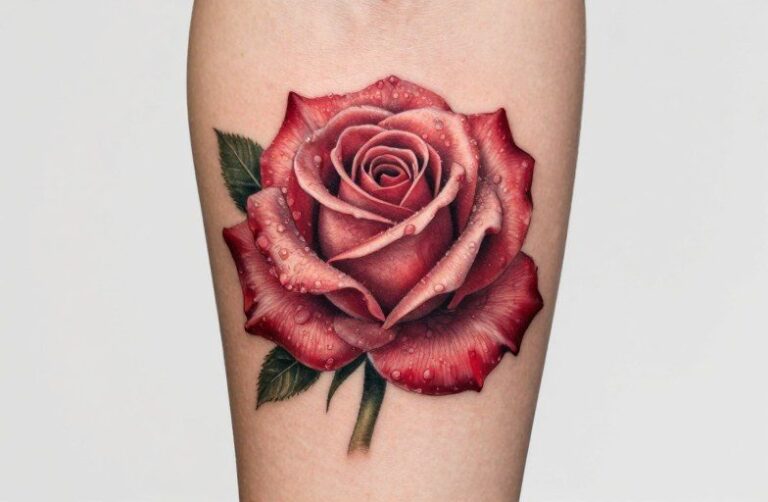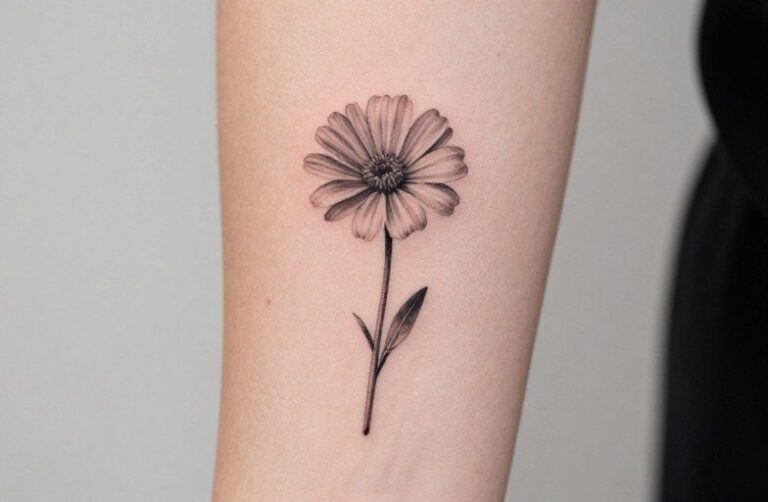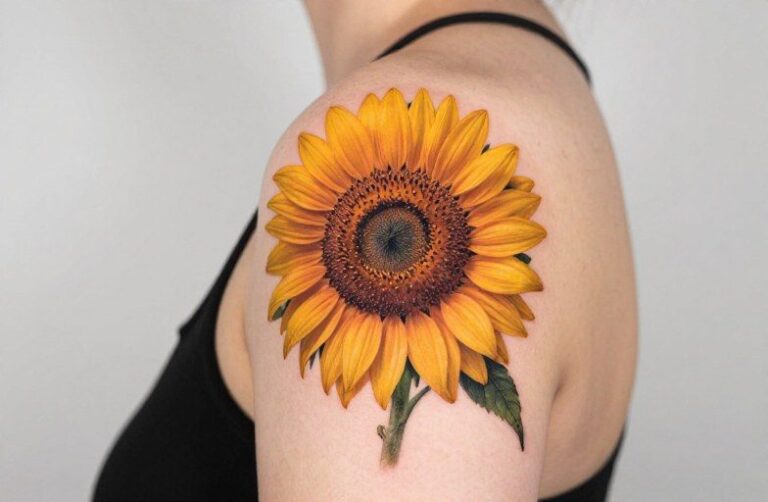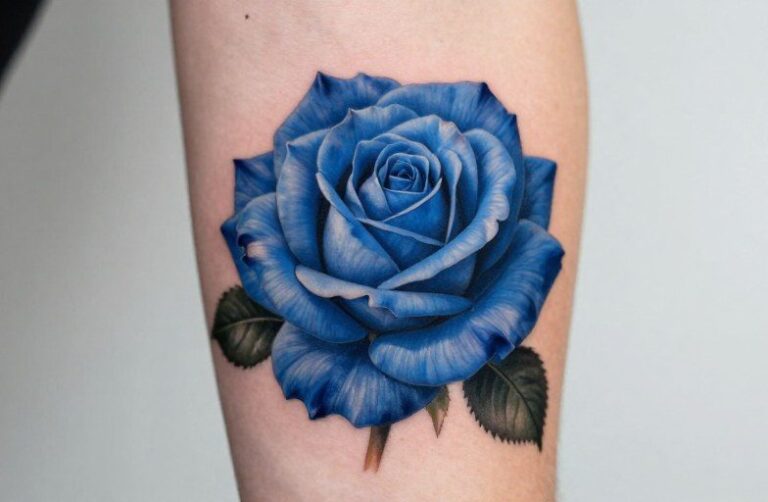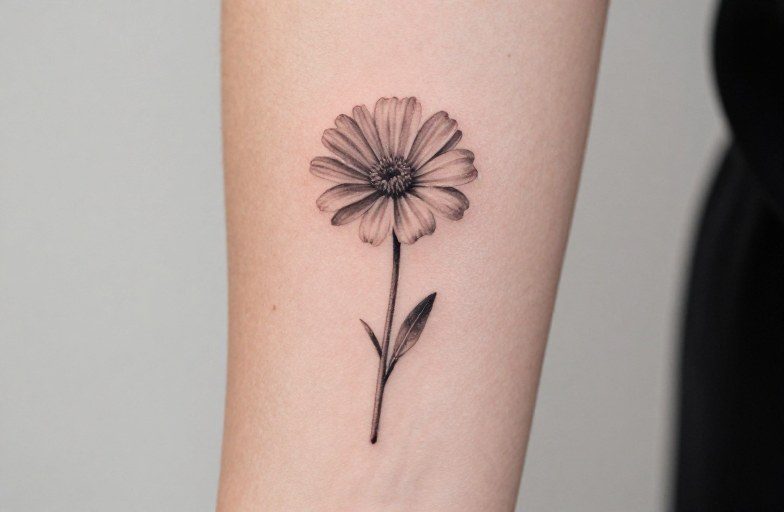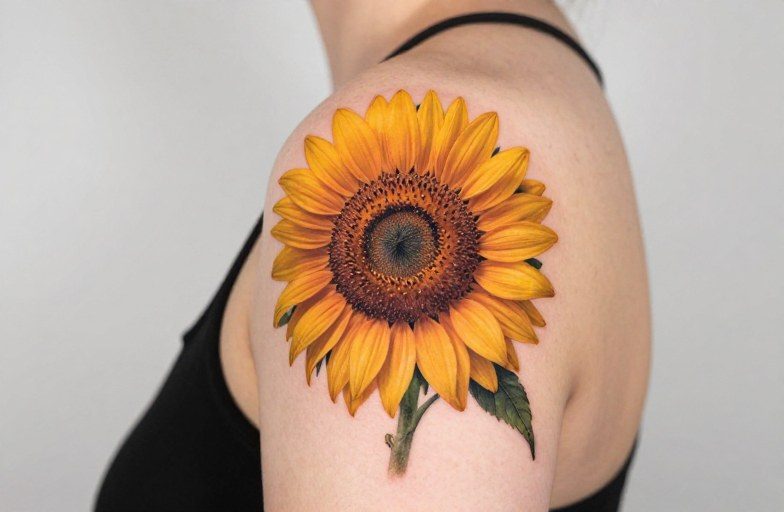
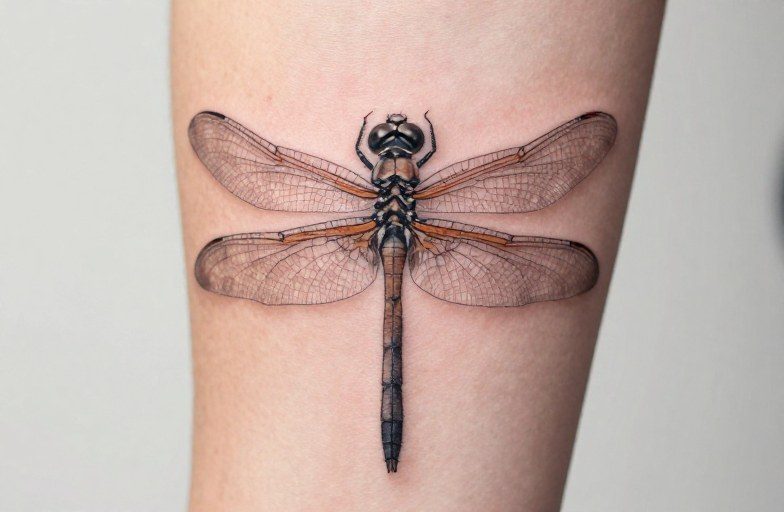
A dragonfly on flower tattoo typically symbolizes transformation, resilience, and the fleeting beauty of life. The dragonfly, an insect that spends years underwater before emerging to live only months in air, paired with a flower that blooms and fades in a single season, creates a meditation on impermanence and renewal. Together, they speak to people who have weathered significant change and found something worth celebrating on the other side.
Personal & Modern Meanings
Transformation Without Erasure
Unlike the butterfly tattoo, which dominates the transformation category, the dragonfly carries a quieter, more specific weight. Dragonflies molt multiple times before their final winged form; they don’t discard their past so much as build on it. That resonates with people who want to honor where they came from without romanticizing it. The flower anchors this, roots in soil, a fixed point the insect returns to or departs from. Together, the pairing suggests growth that remains connected to origin.
Modern wearers often choose this combination after recovery, relocation, or career shifts. The flower specifies the context: lotus for overcoming difficulty, cherry blossom for transient beauty, rose for love that survived change. The dragonfly adds motion, arrival, departure, the moment of hovering in between.
Resilience in Small Packages
Dragonflies are ancient predators with a 95% hunt success rate, among the highest in nature. That mechanical precision, wrapped in iridescent wings, appeals to people who have learned to function through difficulty. The flower softens this edge without weakening it. A wildflower rather than a cultivated bloom particularly emphasizes survival over perfection.
Common Variations & Styles
Placement Dictates Scale
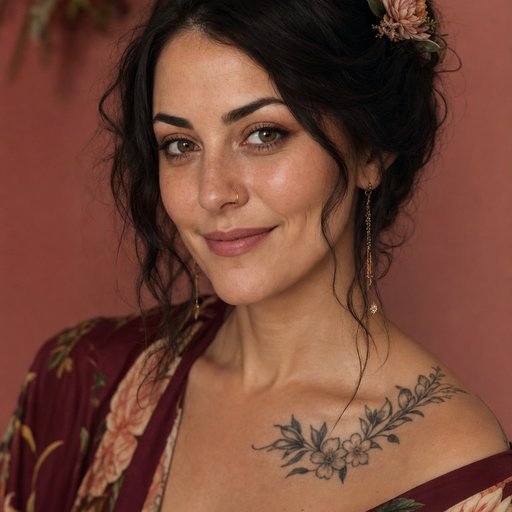
Behind the ear and along the collarbone, these designs shrink to single-needle fineline work, delicate antennae, translucent wing veining, a flower reduced to essential petals. The wrist and forearm allow fuller compositions: dragonfly perched on a stem, wings spread or folded, the flower in profile or viewed from above. Ribs and thighs accommodate the most elaborate versions, sometimes with the insect in flight above a field of blooms, the body angled to suggest movement through space.
- Single-needle realism: Captures wing transparency and petal texture; demands experienced application since fine lines blur faster on certain skin types
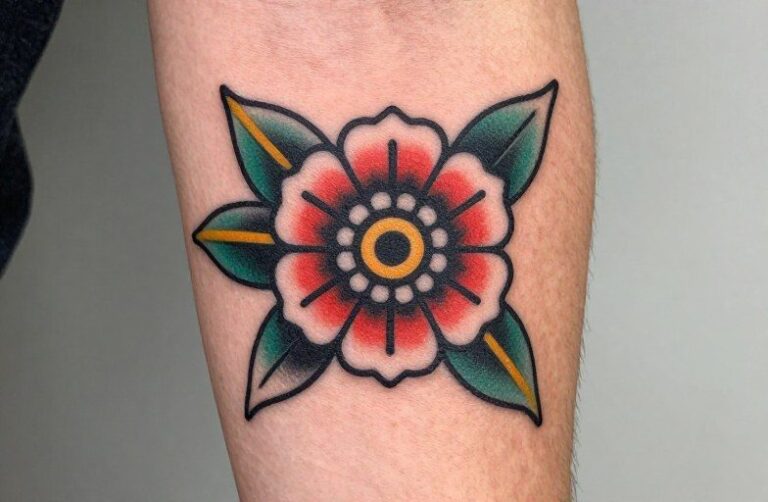
- American traditional: Bold outlines, limited color palette, stylized wings; ages reliably but sacrifices detail
- Japanese-inspired: Larger scale, water or wind bars in background, often paired with peonies or chrysanthemums
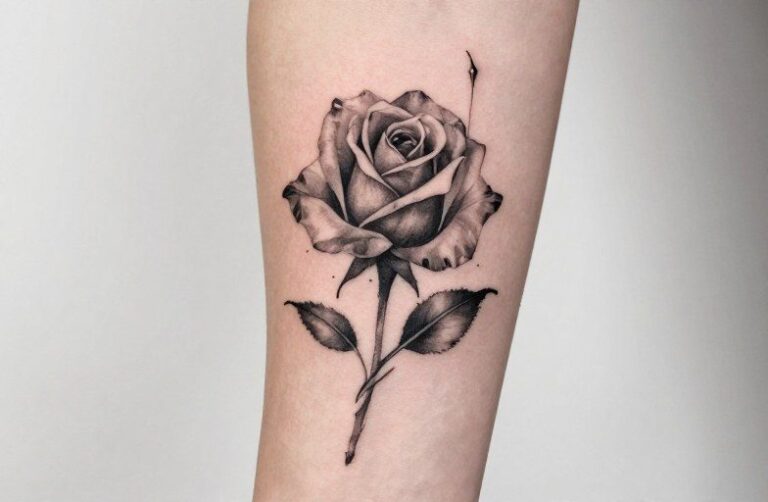
- Botanical illustration: Scientific accuracy, muted color, emphasis on correct species morphology
Wing Position Changes Everything
Wings spread flat read as display, openness, arrival. Wings folded back along the body suggest rest, completion, or preparation. One wing damaged or partially rendered, an increasingly common choice, acknowledges survival with visible cost. The flower’s state matters too: bud, full bloom, or shedding petals each shifts the timeline implied by the piece.
Who Chooses This Tattoo
The demographic spreads wider than many nature motifs. Younger wearers gravitate toward the aesthetic flexibility, dragonflies read as feminine without the cultural baggage of butterflies, masculine without the aggression of predatory animals. Older first-time tattoo clients often select this combination for its symbolic density; it carries enough weight to justify the permanent commitment without demanding explanation.
People with chronic illness or disability sometimes choose dragonfly imagery specifically, drawn to the insect’s reputation for hovering, changing direction instantly, functioning with apparent effortlessness despite complex mechanics. The flower grounds this in organic process rather than mechanical metaphor.
Geographic patterns emerge too. Pacific Northwest shops see more dragonfly-and-lotus combinations, likely reflecting the region’s Asian tattoo heritage and wetland ecosystems. Southwest studios report higher incidence of dragonflies with desert blooms, ocotillo, yucca, brittlebush, emphasizing survival in arid conditions.
History & Cultural Roots
Native American Associations
Among several Plains and Southwest tribes, dragonflies are often linked to purity and swiftness. Hopi and Pueblo traditions particularly associate them with water and fertility, appropriate to an insect whose life cycle depends on aquatic environments. The flower pairing in these contexts traditionally specifies the particular blessing sought, corn flower for sustenance, bean flower for continuity. Modern tattoo adaptations rarely replicate these specific ceremonial associations, but the underlying reverence for the insect’s powerful life cycle persists.
Japanese Connections
Japanese tattoo tradition, commonly associated with dragonflies through the term kagerou (meaning both dragonfly and heat shimmer), treated the insect as a symbol of courage and strength. Samurai reportedly admired their inability to fly backward, an anatomical impossibility that became moral metaphor. In tattooing, dragonflies frequently accompanied peonies, chrysanthemums, or autumn grasses. The flower-and-insect pairing thus has deeper precedent in Japanese practice than in Western tattooing, which adopted the combination more recently.
Color vs Black and Grey
Color choices fundamentally alter how these tattoos age and what they communicate. Dragonfly wings in nature derive color from structural interference rather than pigment, microscopic surface texture bends light into iridescence. Tattoo ink cannot replicate this; it can only approximate the effect through layered blues, greens, and violets. The result, while striking when fresh, often muddies over time as colors blend and fade. Black and grey wing rendering, using whip shading and negative space, frequently preserves readable detail longer.
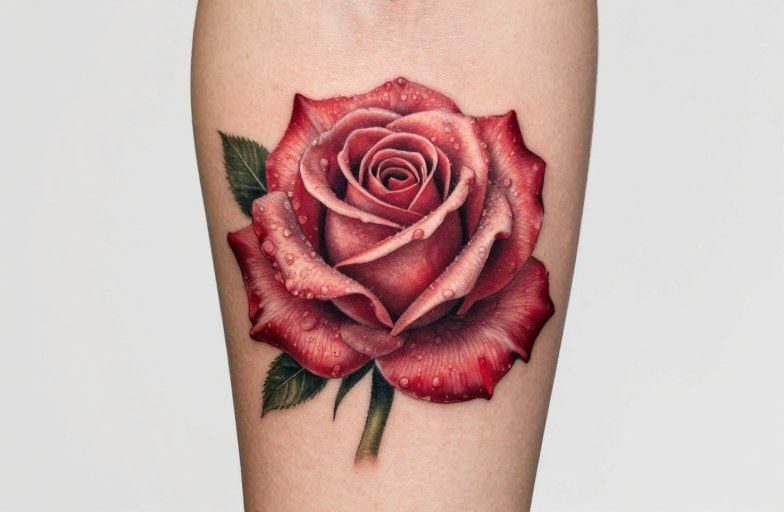
Flowers face similar calculus. Red and pink pigments, particularly organic formulations, fade fastest to orange or grey. Yellows and greens last longer but can shift toward olive or mustard. Botanical accuracy thus conflicts with longevity; a botanically correct blue forget-me-not may require purple ink that ages to grey, while a stylized violet using deeper pigment remains readable longer.
Some artists solve this through strategic limitation: full color on the flower alone, black and grey dragonfly, or vice versa. Others use bold traditional palettes, red, yellow, green, black, accepting the eventual fade as part of the medium’s nature rather than fighting it.
Mythology & Folklore
European Associations
European folklore often linked dragonflies to sinister forces, “devil’s darning needle,” “horse stinger”, names reflecting fear of their aerial agility and aquatic larval form. The flower pairing in this context historically served as counterweight, domesticating the insect through association with cultivated beauty. Modern tattooing largely abandoned the negative associations, but the tension between wild and tended remains available to those who want it.
Scandinavian and Celtic Threads
Some trace the dragonfly’s symbolic weight to Norse and Celtic traditions, though connections are often speculative. The insect’s compound eyes, thousands of lenses creating fragmented vision, resonate with concepts of seeing differently, multiple perspectives simultaneously. Paired with flowers that follow the sun or close at night, this becomes a meditation on perception’s limits and possibilities. Tattoo compositions emphasizing the eye structure, rather than wing spread, draw on this thread.
What to Remember
The dragonfly on flower tattoo succeeds when specificity serves the symbol. Generic dragonflies on generic flowers trend toward decorative wallpaper, pretty, but unanchored. Better work identifies species: a green darner on a water lily carries different weight than a meadowhawk on a dandelion. The former suggests wetland emergence, the latter dry field resilience. Line weight matters enormously; wings require restraint, flowers need substance, and the junction between insect legs and plant stem demands particular care since this contact point often blurs with age.
Healing presents specific challenges. Wing membranes, rendered in fine single-needle work, can drop ink during healing if the client swims or soaks too early. The flower’s solid color areas, conversely, may scab heavily and require patience to preserve saturation. Artists experienced with this particular combination will adjust technique to the planned aftercare.
Ultimately, the tattoo’s power lies in the tension between motion and stillness, between an insect that exists in perpetual flight and a plant fixed in place. The meaning crystallizes in that relationship, not in either element alone, but in their coexistence.
Frequently Asked Questions
Does a dragonfly on flower tattoo work for cover-ups?
The flower’s solid color areas and the dragonfly’s wing structure can camouflage smaller existing tattoos, but the fine linework in wings won’t hide heavy dark ink. An artist needs to assess whether the old tattoo’s location allows the new composition to read naturally.
How long does the fine detail in dragonfly wings last?
Single-needle wing veining typically remains readable for 5-10 years depending on sun exposure, skin type, and placement. Areas with frequent friction or stretching fade faster. Slightly bolder line weight in the wing framework extends longevity without sacrificing delicacy.
Which flower pairs best with a dragonfly for someone wanting a grief or memorial meaning?
Forget-me-nots and lily of the valley carry established memorial associations, while lotus emphasizes emergence from difficulty. Rosemary sprigs, though not showy flowers, have centuries of remembrance symbolism and pair well with the dragonfly’s hovering quality.
Is there a preferred direction for the dragonfly to face?
Upward-facing suggests aspiration or departure; downward-facing, return or arrival. Horizontal alignment reads as rest or observation. These aren’t rigid rules but compositional choices that subtly shift how the tattoo reads to viewers.