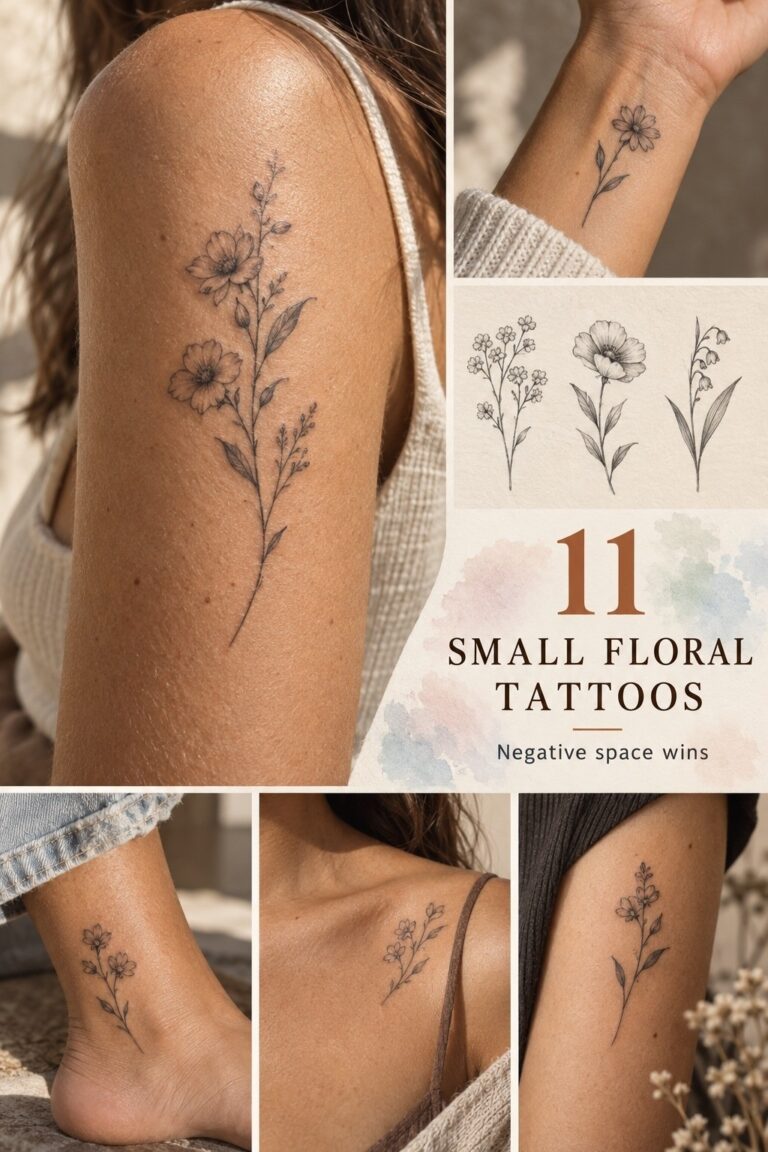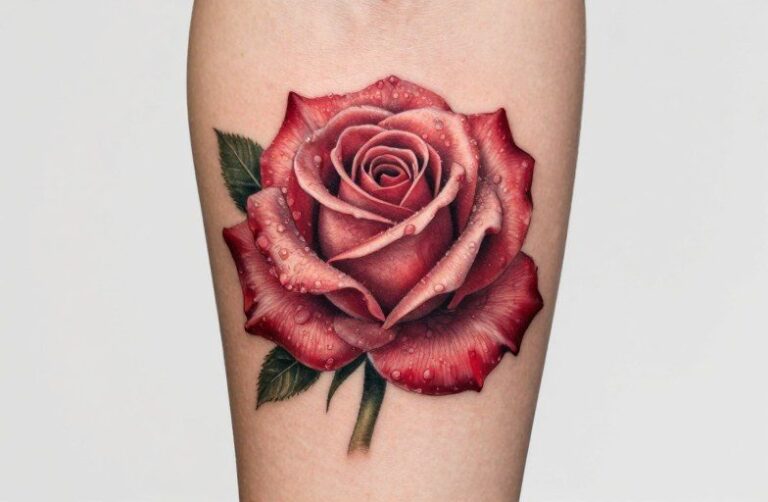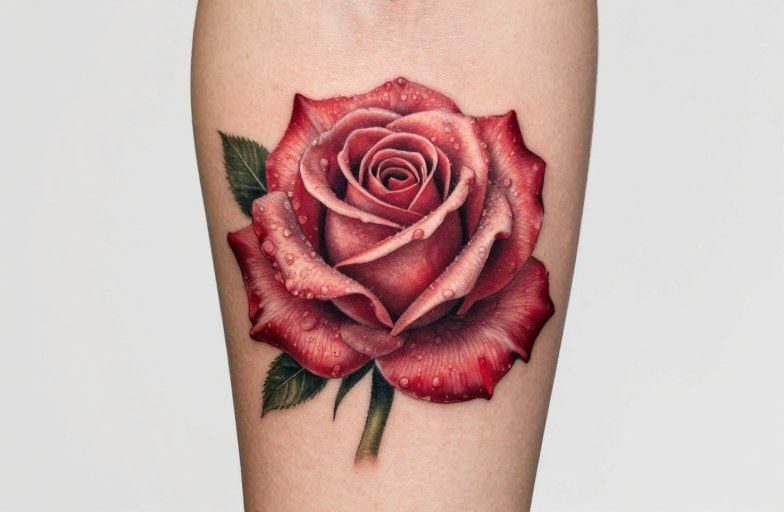
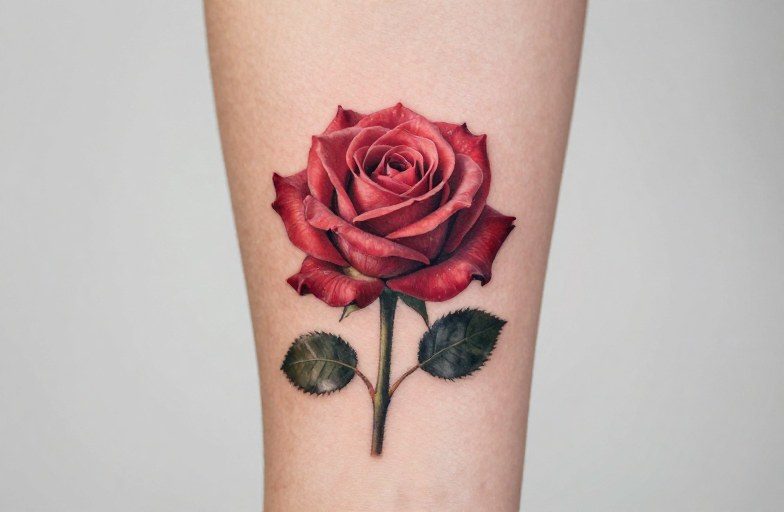
A rose tattoo most commonly represents love, beauty, and the balance between pleasure and pain, the flower’s petals against its thorns. Beyond romance, it can mark grief, personal growth, or a hard-won survival. The specific meaning depends heavily on color choice, whether the stem includes thorns, and cultural context.
Common Variations & Styles
How the rose is rendered changes its emotional weight significantly. A single bloom reads differently than a full bouquet, and the artistic approach shifts the tone from delicate to defiant.
Traditional American
Bold black outlines, saturated reds or pinks, and minimal shading. The classic Sailor Jerry style rose often pairs with a dagger, skull, or banner. These designs lean into the duality of beauty and danger, thorns prominent, leaves stylized rather than botanical. The graphic punch holds up for decades because the heavy linework resists blurring better than fine detail.
Realism & Neo-Traditional
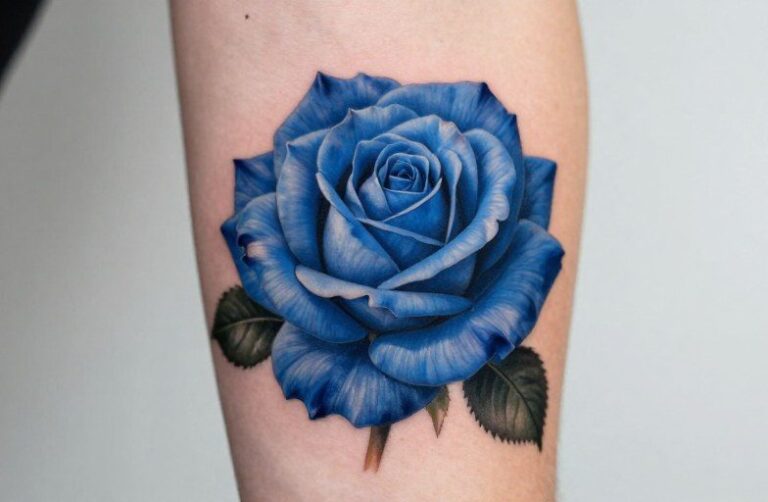
Photographic petals with depth, shadow, and color gradation. Realistic roses require larger skin real estate to prevent the soft shading from muddling into gray over time. Neo-traditional keeps the bold outlines but adds more illustrative detail, jewel tones, and sometimes ornamental frames. Both styles suit memorial pieces or tributes where likeness and emotional accuracy matter.
Minimalist & Fine Line
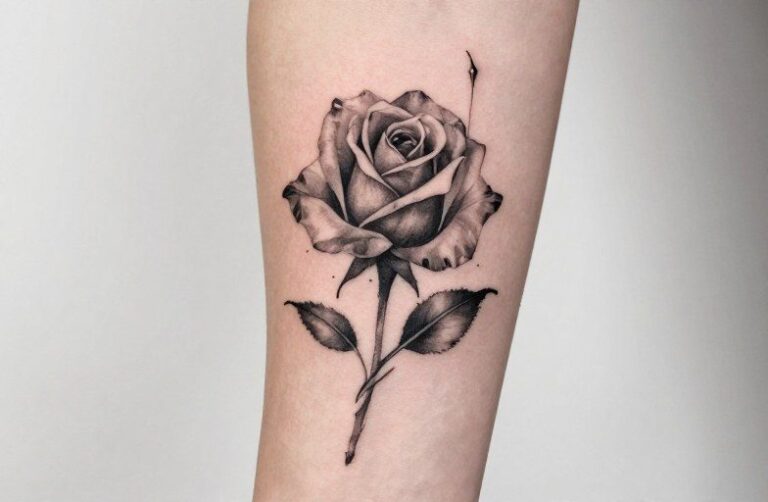
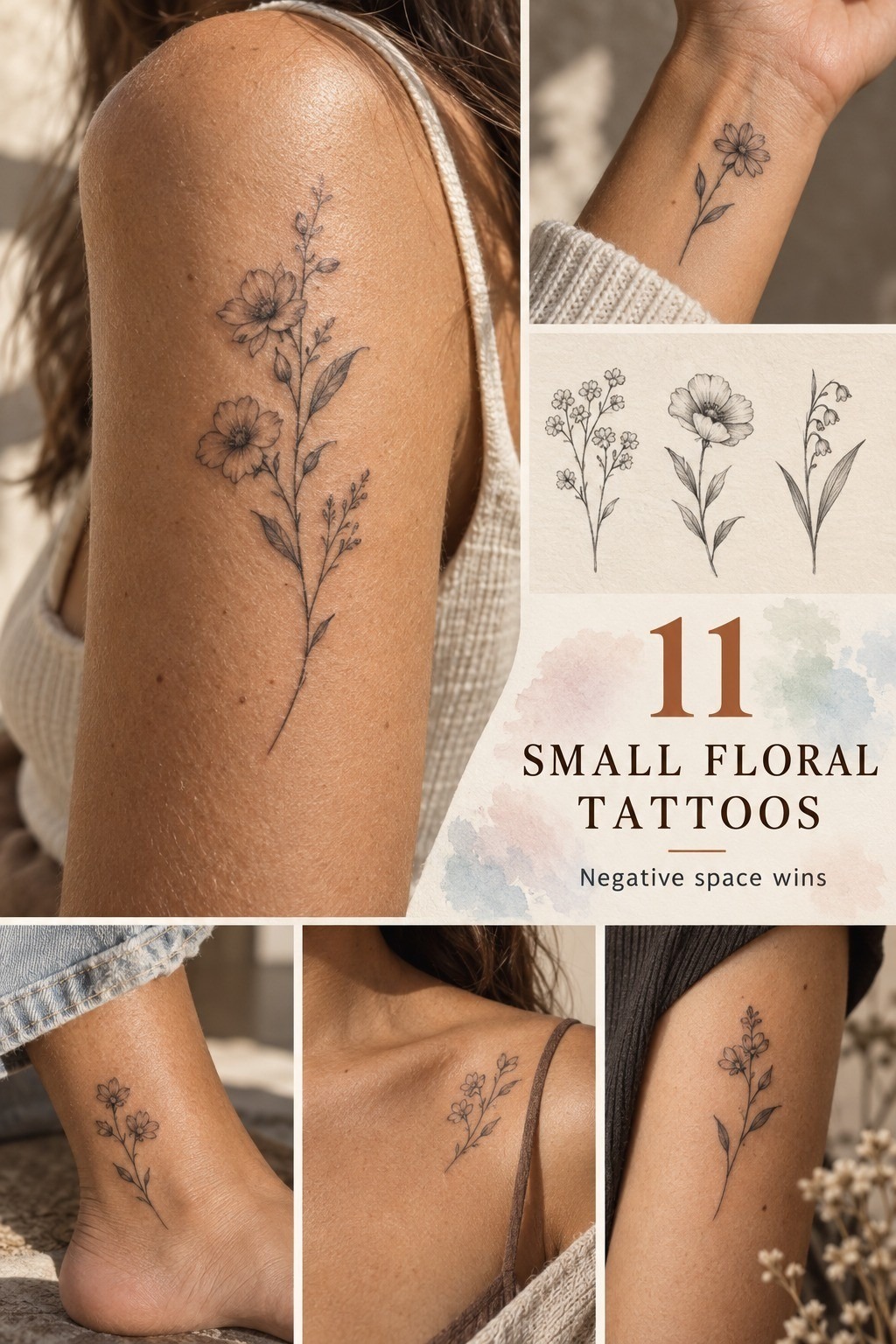
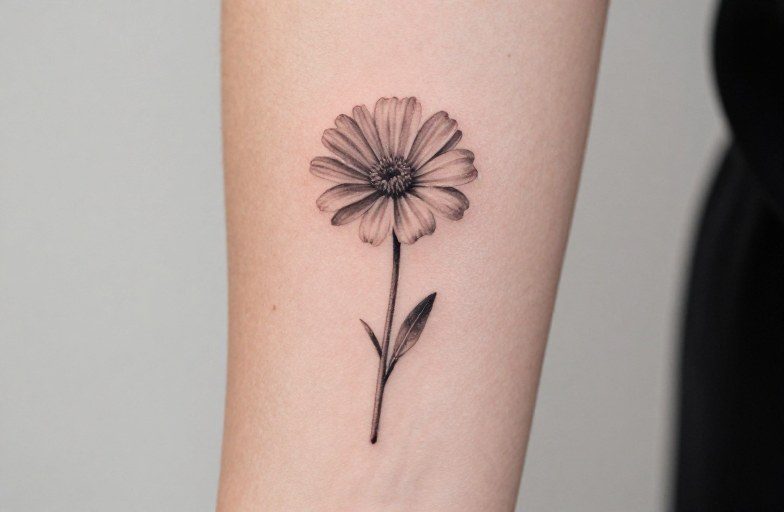
Single-needle outlines, tiny compositions, often without color. These read as intimate, quiet, sometimes tentative. The tradeoff: fine lines blur faster, especially on high-movement areas like wrists or ankles. A minimalist rose works best as a small, personal mark rather than a statement piece.
- Single rose: singular love, self-focus, or one specific loss
- Rose with stem and thorns: acknowledged pain alongside beauty
- Dropped or wilting bloom: grief, acceptance of impermanence
- Rose with clock or pocket watch: time’s passage, memento mori
- Rose and skull: classic life/death juxtaposition
Personal & Modern Meanings
Contemporary wearers rarely stick to Victorian flower-language dictionaries. The rose has become a flexible vehicle for individual narrative, though certain threads remain consistent.
Resilience and Survival
A rose growing through concrete, literal or implied, has become shorthand for thriving despite hardship. The thorn element matters here; without it, the design reads as purely decorative. Some choose this after recovery from addiction, illness, or abusive relationships, though the image stands alone without needing explanation.
Self-Love and Reclamation
Particularly among women and nonbinary wearers, a rose can mark reclaiming one’s body or narrative after violation or control. The choice of placement often reinforces this: visible locations like forearms or collarbones refuse hiding, while rib or thigh placements remain selectively revealed.
Romantic love still dominates, but it’s no longer the default assumption. A rose on a man’s arm might honor a mother, a child, or a personal philosophy rather than a partner. The old gendered associations, roses as feminine, daggers as masculine, have largely dissolved in contemporary tattooing.
Color vs Black and Grey
Color choice isn’t merely aesthetic; it carries established symbolic weight that most viewers recognize, even unconsciously.
Red
Passionate love, desire, courage, sometimes sacrifice. The most visually arresting option, red also fades fastest, crimson becomes pinkish within five to ten years, especially with sun exposure. Expect touch-ups if you want the intensity maintained.
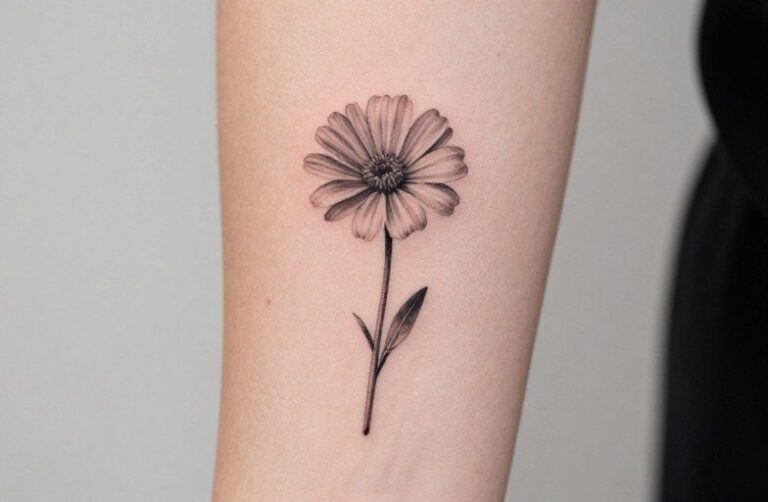
Black and Grey
Grief, mourning, timelessness, or deliberate ambiguity. Without color, the rose becomes more sculptural, less sentimental. Black and grey ages exceptionally well; there’s no red to shift to salmon, no yellow to muddy. For memorial pieces or those wanting gravitas over warmth, this is the pragmatic choice.
- White or pale pink: innocence, new beginnings, sometimes infant loss
- Yellow: friendship, joy, platonic love, rarely romantic
- Orange: enthusiasm, fascination, changing energy
- Blue or purple: the unattainable, royalty, sometimes creative identity
- Black-dyed or gothic rose: rebellion, dark humor, or subcultural affiliation
Single-color palettes (all red, all black) create cohesion. Mixed-color bouquets allow narrative complexity, a red and white pairing might represent united families, while red and black suggest love shadowed by loss.
Who Chooses This Tattoo
Rose tattoos cross demographic lines more than almost any other design. You’ll find them on eighteen-year-olds getting first pieces and on seventy-year-olds adding to decades-old collections. The unifying factor is usually some experience with emotional intensity, love, death, transformation, that the rose can hold without oversimplifying.
Certain subcultures have adopted specific rose variants. Chicano black-and-grey realism often features roses as tribute elements in larger religious or family compositions. Punk and goth scenes favor black roses, sometimes with dripping details or thorn-wrapped stems. The traditional American rose remains a staple in street shops worldwide because it’s technically forgiving and universally legible.
First-timers gravitate toward roses because the image is familiar, socially acceptable, and carries enough weight to justify permanence without requiring extreme commitment to a niche aesthetic. Collectors return to roses between more experimental pieces as grounding, classic work.
Best Placements
The rose adapts to body contours better than many designs, but certain locations amplify specific meanings.
High-Visibility Areas
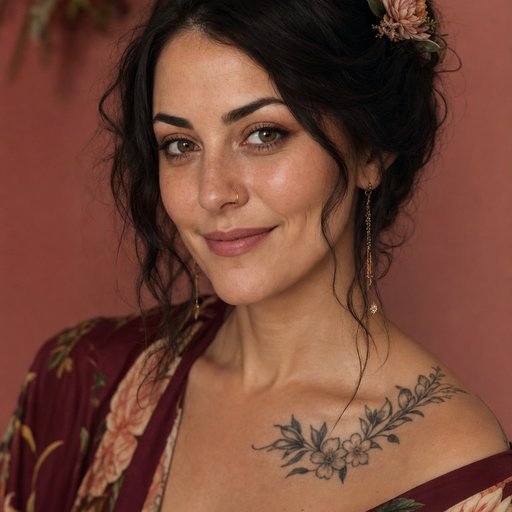
Forearms, hands, necks, and collarbones declare the tattoo’s importance to the wearer. A rose here refuses to be private, it invites question, assumes significance. Hand roses specifically have roots in prison and working-class tattooing, though that association has diluted considerably. The skin on hands sheds and regenerates rapidly; expect faster fading and more frequent maintenance.
Contained or Hidden Locations
Ribs, hips, upper thighs, and sternum areas allow concealment. The rib placement follows the body’s natural curve, letting the stem trail along the floating ribs while the bloom centers near the heart, classic romantic placement, though physically painful due to thin skin over bone. Hip roses often carry intimate or sexual significance, revealed only selectively.
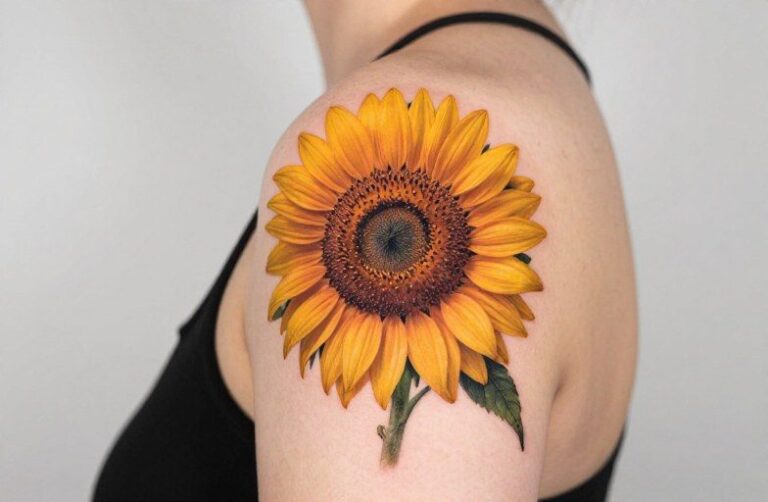
Shoulder caps and upper arms provide the flat, stable surface that detailed realism demands. The shoulder’s rounded plane lets a rose appear dimensional, catching light like a pinned brooch. This was historically masculine placement; gender associations have shifted, but the canvas quality remains excellent.
Mythology & Folklore
The rose’s symbolic life predates tattooing by millennia, and those layers still seep into contemporary choices.
In Greek tradition, the rose is often linked to Aphrodite, born from sea foam with roses springing where her feet touched land. Some trace it to Adonis, red roses supposedly colored by his blood. The Roman continuation made the rose a symbol of secrecy, hung at banquet ceilings to remind guests that spoken words stayed within walls. This “sub rosa” tradition occasionally surfaces in clandestine or protective tattoo choices.
Christian iconography adopted the rose for the Virgin Mary, particularly the “rosa mystica,” and for martyrdom generally. The juxtaposition of beauty and suffering made it doctrinally useful. Medieval alchemy used the rose to represent the completion of the magnum opus, the transformation of base material into gold, which some modern wearers reference as personal growth symbolism.
Islamic and Persian traditions, particularly the poetry of Rumi and Hafez, employ the rose as both earthly beauty and divine manifestation. The “nightingale and rose” motif, passionate devotion to something beautiful but unattainable, appears occasionally in literary tattoos, though less commonly than Western mythological references.
What to Remember
A rose tattoo’s meaning is constructed, not inherent. The same red forearm rose might commemorate a marriage for one person, a parent’s death for another, and aesthetic preference for a third. What matters is the coherence between your intention, the visual choices that express it, and the placement that frames how the world encounters it.
Practically: color roses need sun protection and eventual refreshment. Fine-line roses need larger scale than you might expect to age cleanly. Thorns add weight and darkness to the design; their absence softens the message. The stem’s direction, growing upward, drooping downward, wrapped around another element, subtly shifts the emotional register.
Choose an artist whose rose work you’ve examined closely, not just in fresh photos but healed results. Botanical accuracy, line weight consistency, and understanding how pigment settles in different skin tones separate competent rose tattoos from exceptional ones. The image is common enough that mediocrity is easy to find; hold out for work that does justice to whatever you’re carrying.
Frequently Asked Questions
Does a rose tattoo always mean romantic love?
No. While roses commonly represent romantic love, they also symbolize grief, personal growth, family bonds, and survival. Color choice and accompanying elements shift the meaning significantly. A black rose or one paired with a memorial date rarely reads as romantic.
How well do rose tattoos age over time?
Bold traditional roses with heavy outlines age best. Fine-line and realistic color work requires more maintenance, reds fade to pink, soft shading blurs, and small details merge. Expect touch-ups every 5-10 years for color realism, less for black and grey traditional styles.
What’s the most painful placement for a rose tattoo?
Ribs, sternum, and spine rank highest due to thin skin over bone and nerve density. Shoulders and outer arms are most manageable. Hands and feet hurt moderately but heal poorly and fade faster due to constant use and skin turnover.
Can a rose tattoo be covered up if I change my mind?
Roses are moderately coverable depending on size and color saturation. Black and grey roses allow more options than dense color. The rounded shape and internal detail can be reworked into skulls, clocks, or other rounded designs, though stem lines may limit complete transformation.