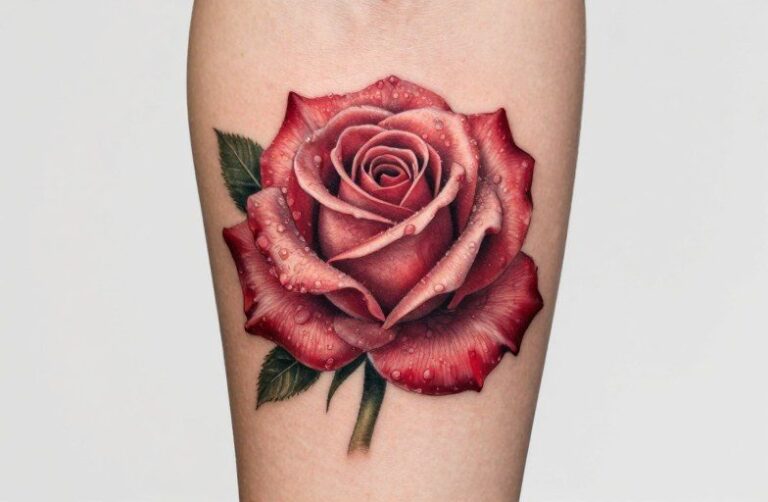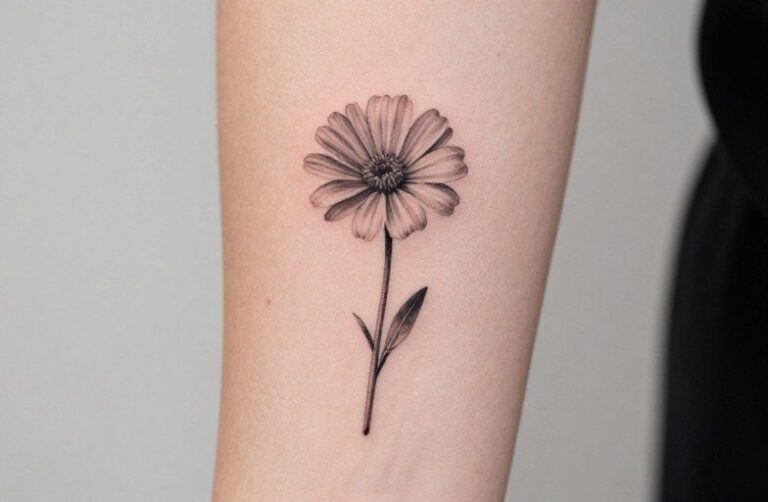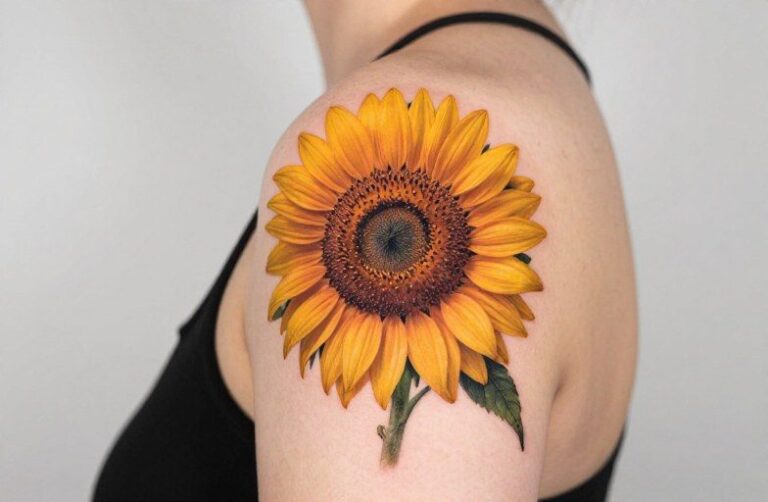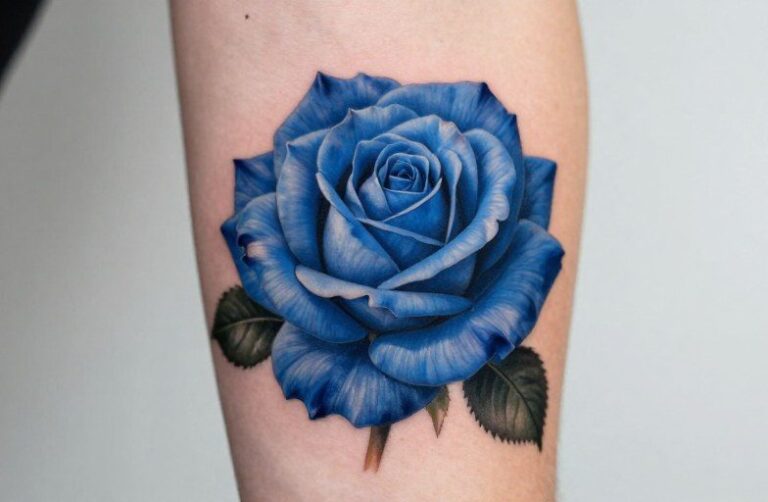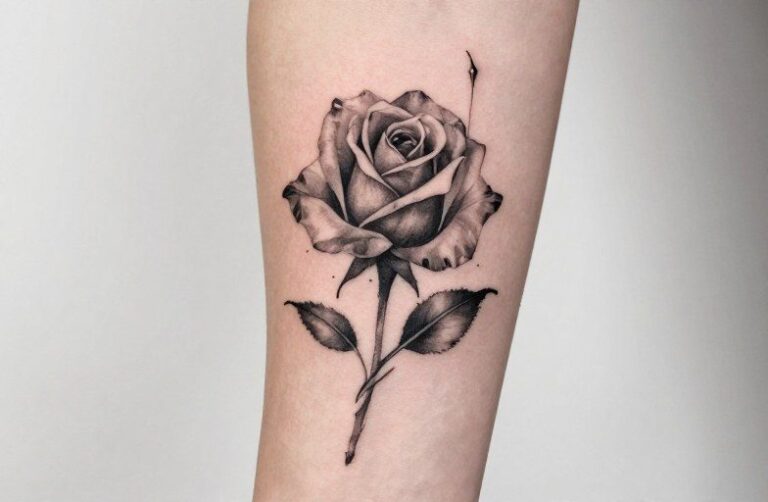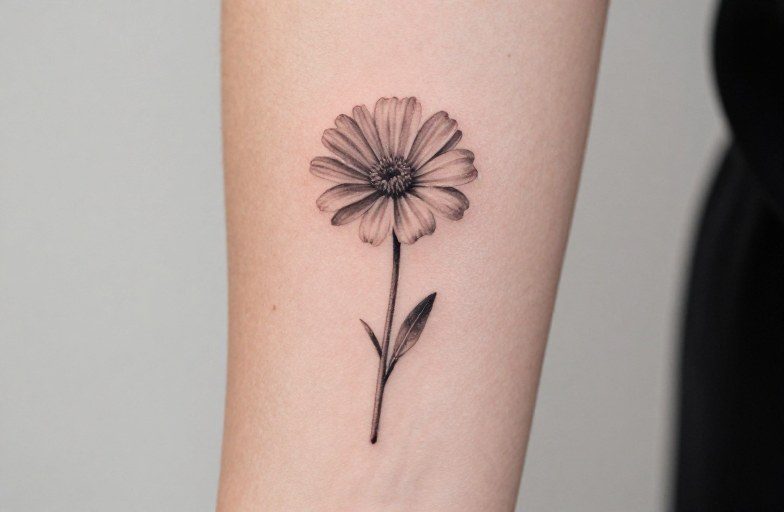
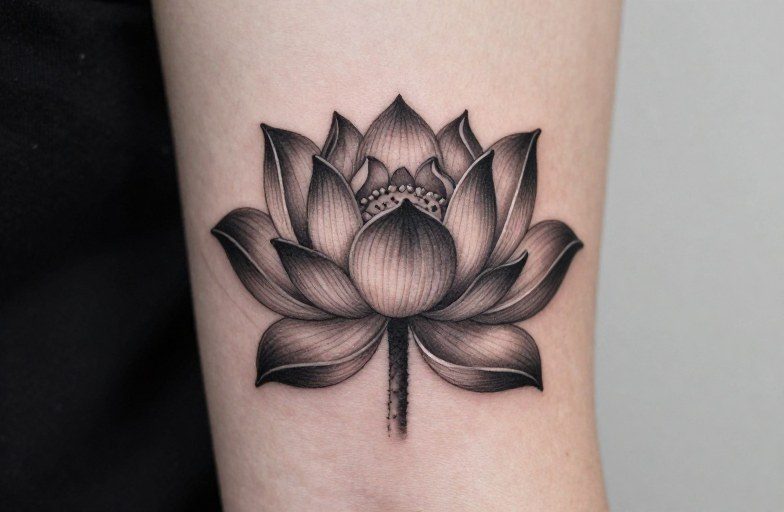
A black and grey lotus tattoo typically symbolizes rising through difficulty while maintaining inner clarity. The lotus grows from mud to bloom clean above water, and stripping away color emphasizes that journey through shadow into light. The greyscale palette adds a contemplative, grounded quality that full-color versions often lack.
Personal & Modern Meanings
People gravitate toward this design for intensely personal reasons that rarely fit neat categories. The black and grey treatment tends to attract those who want the symbolism without ornamental excess.
Recovery and Resilience
The lotus has become a quiet emblem for people marking survival from addiction, trauma, or depression. The grey tones suit this perfectly, there’s no pretending the struggle was colorful or pretty. The visual weight of solid black ink against soft grey wash mirrors the actual experience: heavy periods, gradual lightening, never pure white. Placements on the forearm or ribs let the wearer see it during hard moments without explaining it to anyone.
Minimalism as Statement
Choosing black and grey over color often signals a preference for restraint. The design reads as intentional rather than default. In an era of saturated Instagram tattoos, the muted palette stands out by receding. It ages better too, which matters when the meaning is meant to last decades.
- Single needle or fine line work suits smaller pieces where detail must carry the design
- Heavy black backgrounds make the lotus appear to emerge from darkness
- Soft grey shading without outlines creates a watercolor-adjacent effect that still holds
How It Ages on Skin
Black and grey lotus tattoos age with distinctive behavior that clients should understand before sitting. The good news: this palette outperforms color in longevity. The challenge: poor execution becomes obvious fast.
Line vs. Shading Decay
Bold black lines stay readable for years but can blur slightly at edges, especially on high-movement areas like wrists or ankles. Grey wash, particularly light tones, fades toward skin tone and can muddy if the artist packed grey too wet or too dry. The lotus petal layers rely on contrast between dark and light grey, when that contrast collapses, the flower becomes a blob. Ask to see healed photos from your artist, not fresh work.
White highlights, sometimes added for petal definition, rarely last. They yellow or disappear entirely within 3-5 years. Better to build luminosity through negative space and graduated grey tones.
Skin Tone Considerations
On darker skin, black and grey lotus tattoos require adjusted approaches. The darkest blacks still read strong, but mid-tone greys can disappear into melanin-rich complexions. Experienced artists compensate with heavier black outlines and more dramatic value jumps between dark and light areas. On very fair skin, subtle grey washes show beautifully but sun exposure damages them faster without protection.
Design Tips & Pairings
Composition choices dramatically alter how the lotus reads. The flower alone carries weight, but surrounding elements shift context.
Common Pairings That Work
Water ripples beneath the bloom reinforce the origin story without clutter. Sacred geometry behind or around the lotus adds structure and can reference mandala traditions without direct appropriation. A stem with visible roots keeps the “from mud” narrative present. Script pairings tend to age poorly and compete with the natural lines of petals; if text matters, consider placement on the stem where straight lettering follows organic form.
Snakes coiled through lotus designs carry complex charge, often read as kundalini energy or temptation overcome. Skulls nested in the center transform the piece toward memento mori. Both combinations demand confident execution, clumsy versions read as edgy Pinterest pastiche.
Style Variations
- Realistic: Photographic petal texture, visible veining, dramatic light source
- Traditional/Japanese: Bold outlines, limited grey values, often paired with waves or wind bars
- Illustrative: Clean lines with selective shading, graphic quality
- Dotwork/stipple: Texture built from points, slower to execute, distinctive aged look
Religious & Spiritual Angles
The lotus saturates several spiritual traditions, and black and grey treatment can either honor or secularize those connections depending on intent.
In Buddhism, the lotus represents purity of mind and spirit rising from attachment. The eight-petaled lotus specifically appears in mandalas and sacred diagrams. A black and grey rendering removes the color symbolism (red for love, blue for wisdom, etc.) but preserves the essential form. Some practitioners prefer this stripped version as less culturally loaded.
Hindu iconography features lotus seats for deities, Lakshmi and Vishnu in particular. The padma, or lotus, appears in creation narratives. A standalone lotus without deity figures stays more universally accessible.
For non-religious wearers, the spiritual residue remains in public perception. The tattoo may be read as Buddhist affiliation regardless of personal belief. That association bothers some, comforts others. Worth considering before committing to visible placement.
Best Placements
The lotus form suits certain body areas naturally, and black and grey execution influences optimal size and location.
Where Detail Survives
The shoulder cap and outer upper arm provide flat, stable skin where petal layering stays crisp. The sternum or center chest offers vertical space for the lotus to open upward, though this area hurts significantly and stretches with weight fluctuation. The thigh, especially outer or front, accommodates larger designs with room for background elements.
Small lotus tattoos, under 3 inches, work best with bold simplified shapes rather than attempted realism. The inner wrist and ankle suffer from constant friction and sun exposure; black and grey here needs periodic refreshing.
Placement and Meaning
Back of neck or spine: private, revealed selectively, suits personal significance over public statement. Forearm: visible, conversational, the lotus faces outward toward others. Rib cage: intimate, painful, often chosen for deeply personal commemoration. The placement itself becomes part of the meaning.
Mythology & Folklore
The lotus carries ancient associations across multiple cultures, though specifics often blur in popular tattoo culture.
Egyptian mythology linked the lotus, often the blue water lily, to rebirth and the sun. The flower closes at night and opens at dawn, mirroring solar cycles. Some trace the lotus-as-creation symbol to the Nun, the primordial waters, from which the first lotus emerged bearing the sun god. This narrative parallels the Hindu creation story remarkably.
Chinese tradition often associated the lotus with summer, purity, and harmony. The phrase “he er bu chan” (lotus emerging unstained from mud) became proverbial moral aspiration. Lotus seeds can remain viable for centuries, adding genuine immortality symbolism beyond poetic license.
Greek and Roman contexts are less direct, the lotus appears in the Odyssey as the lotus-eaters’ plant, a narcotic escape rather than spiritual elevation. This divergent meaning rarely surfaces in tattoo contexts but exists in the cultural record.
Contemporary tattoo culture often merges these lineages freely. The black and grey palette sometimes functions as a visual disclaimer, suggesting personal rather than doctrinal meaning through its modern, graphic quality.
Key Takeaways
A black and grey lotus tattoo works best when the design matches the depth of intention. The palette rewards technical precision, choose artists with demonstrated healed results in grey wash, not just fresh photos. Consider placement for both visibility and longevity. Understand that spiritual associations will attach regardless of personal belief. The meaning holds because the image has held for millennia, but your specific version should feel earned, not borrowed. Let the grey tones do what they do best: suggest light emerging from shadow without claiming to have arrived there.
Frequently Asked Questions
Does a black and grey lotus tattoo have less meaning than a colored one?
No. The greyscale palette often carries more personal weight for people who’ve experienced darkness or prefer understated expression. Color adds cultural specificity in some traditions, but meaning isn’t diminished by absence of color.
How long does a black and grey lotus tattoo take to heal?
Surface healing typically takes 2-3 weeks, with full settling of grey tones visible around 6-8 weeks. Lighter grey areas may appear patchy during healing and even out as the skin fully regenerates.
Can a black and grey lotus cover up an older tattoo?
Yes, lotus designs adapt well to cover-ups because the layered petals create natural opportunities to hide existing ink. Heavy black areas in the center or lower petals can mask darker previous tattoos, though consultation with an experienced cover-up artist is essential.
What’s the difference between a lotus and a water lily tattoo?
Botanically distinct, though visually similar. True lotus (Nelumbo) petals rise above water on tall stems; water lily (Nymphaea) pads and blooms float on the surface. In tattoo culture the terms often blur, but lotus carries stronger spiritual associations while water lily reads more decorative or naturalistic.