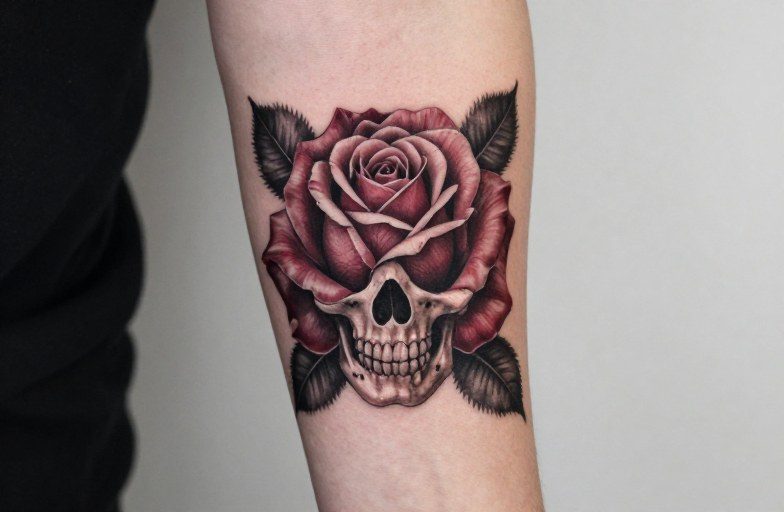
A death rose tattoo combines the rose, a universal emblem of beauty and love, with skulls, skeletal hands, thorns, or withered petals to create a memento mori, a reminder that life and death are inseparable. The meaning centers on contrast: the bloom’s vitality against its inevitable decay. For many, it becomes a way to acknowledge mortality without surrendering to despair, or to mark a loss while still honoring what flourished.
Symbolism & Core Meaning
The power of this design lies in juxtaposition. The rose without the death element is pure celebration; the skull without the rose is pure warning. Together, they create something more nuanced than either alone.
The Rose as Flesh and Time
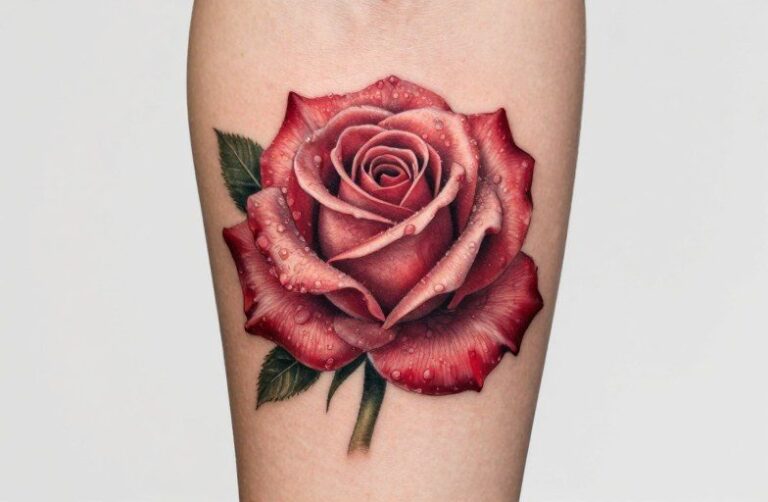
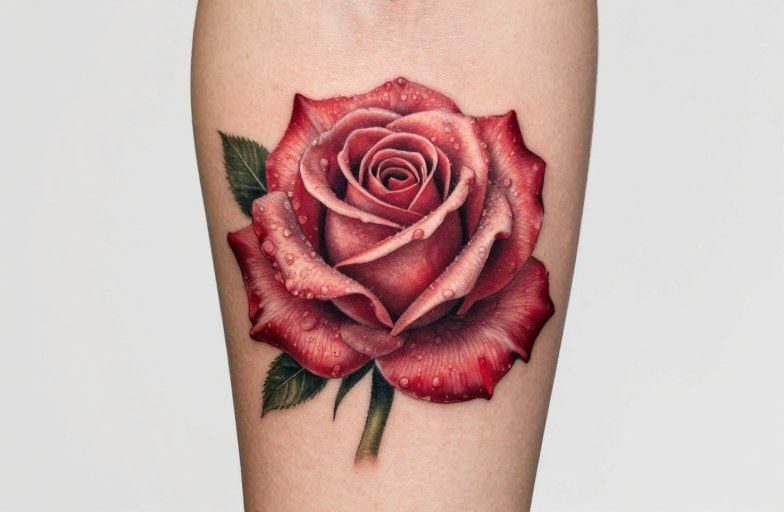
Petals bruise, brown, and drop. A rose in full bloom is already dying, that peak is the beginning of the end. In tattoo form, this makes the flower a honest symbol of living presence. Red roses specifically carry weight here: the color of blood, of pulse, of arterial urgency against the white or grey of bone.
The Death Element as Grounding Force
Skulls, skeletal fingers clutching stems, or wilting black petals strip away sentimentality. They refuse to let the design become purely decorative. The death element insists on context: this beauty is temporary, this love is mortal, this moment is finite. That refusal to look away is what gives the tattoo its gravity.
Design Tips & Pairings
Placement and composition choices dramatically shift how this design reads on skin. The same imagery can feel contemplative, defiant, or mournful depending on execution.
Line Work vs. Shading Approaches
- Heavy blackwork with solid skulls and minimal greywash reads bold and graphic, holding contrast for decades but risking muddiness if the rose details are too fine.
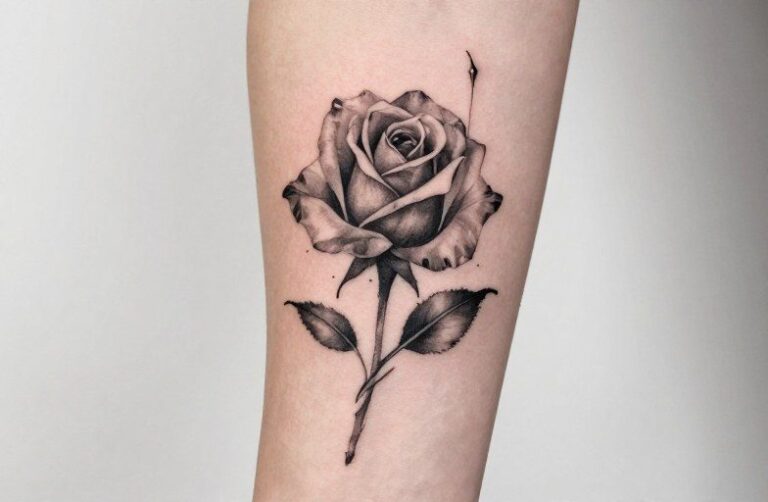
- Fine-line with stippled shading can render delicate petal texture and bone porosity, though the rose may soften and blur faster than the skull over ten to fifteen years.
- Traditional American styling, bold outlines, limited color palette, strong black backgrounds, offers the most longevity; the rose stays readable, the skull stays stark.
Common Pairings and Their Effects
Clocks or pocket watches introduce explicit time pressure. Moths or butterflies emphasize transformation rather than ending. Dagger-through-rose compositions add violence or sacrifice to the mortality theme. Snake coils suggest cycles, renewal through shedding. Each pairing tilts the meaning; a skilled artist will adjust the rose’s bloom state, tight bud, full open, or visibly decaying, to match the companion imagery.
How It Ages on Skin
This design presents specific aging challenges because it relies on contrast between soft organic forms and hard structural ones.
The Rose Problem
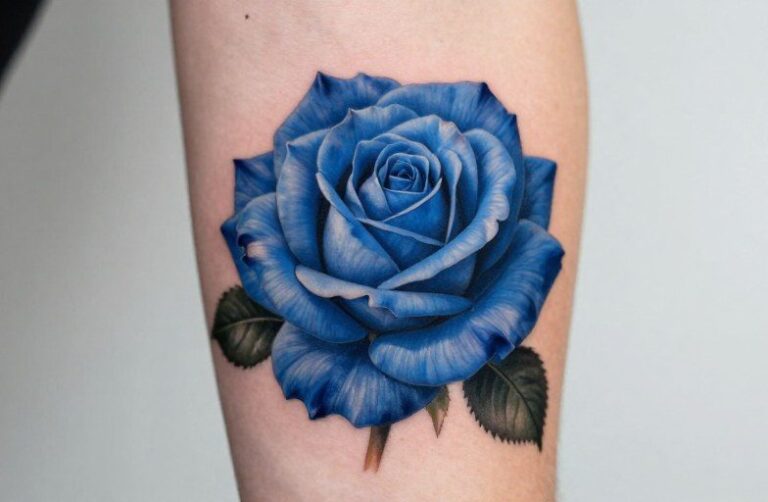
Petals, especially in color, tend to spread. Red ink migrates more noticeably than black. What starts as defined petal edges can become soft pink blobs within seven to twelve years, depending on sun exposure and skin type. Small roses, under two inches, lose detail fastest. The skull or bone element, rendered in black and grey, typically holds its structure longer, creating an imbalance where the death half outlasts the life half.
Strategic Solutions
- Oversize the rose slightly relative to the skull, anticipating some spread.
- Use heavier black outlines on petal edges than pure realism would demand.
- Consider healed value over fresh color: a desaturated crimson ages to dusty rose rather than muddy brown.
- Placement on inner forearm or outer calf, areas with stable skin, minimal stretch, and moderate sun exposure, preserves detail better than ribs or hands.
Touch-ups are almost inevitable with color-heavy death rose pieces. Budget for one session at the five-to-eight year mark.
Religious & Spiritual Angles
The memento mori tradition has deep Catholic roots, though the tattoo itself carries no necessary religious affiliation. Medieval and Renaissance art often paired skulls with flowers in vanitas paintings, reminders that earthly pleasures and achievements mean nothing before divine judgment. Some wearers reclaim this as spiritual discipline: a daily visual prompt to consider what matters beyond the physical.
In Mexican folk practice, particularly around Día de los Muertos, marigolds (not roses) guide spirits, but the visual language of bloom-and-bone has cross-pollinated. A death rose with candle elements or papel picado styling may signal this connection without explicit religious declaration. Buddhist interpretations sometimes read the wilting rose as anicca, impermanence, not as depressing truth but as liberation from attachment.
History & Cultural Roots
The specific pairing of rose and skull as tattoo imagery is often linked to 20th century American and European tattooing, though the visual tradition stretches further back.
From Sailor Jerry to Modern Iteration
Norman Collins and his contemporaries popularized skull-and-rose flash in the mid-1900s, drawing on existing memento mori visual vocabulary but rendering it in bold, wearable form. These early designs were typically smaller, simpler, and more legible at a distance than contemporary hyper-realistic versions. The traditional template, skull centered, rose adjacent, often with a banner, still informs most modern interpretations, even when the execution has gone photorealistic or abstract.
Broader Cultural Echoes
Gothic literature and later subculture embraced the death rose as romantic symbol, sometimes sincerely, sometimes with deliberate excess. This literary association means some designs carry 19th-century visual cues: wilting tendrils, baroque framing, muted color. The tattoo can signal participation in that aesthetic lineage without requiring explicit textual reference.
Personal & Modern Meanings
Beyond the traditional memento mori reading, contemporary wearers assign highly specific personal significance.
Commemoration and Grief
A death rose often memorializes specific loss, the rose representing the person, the skull representing their death or the wearer’s surviving presence. Birth month flowers combined with memorial dates create layered personal code. Some choose the rose variety specifically: damask for grandmother’s garden, wild rose for untamed temperament, black rose (actually deep burgundy) for what cannot be spoken directly.
Survival and Transformation
For those who have faced mortality directly, illness, violence, addiction, the design can mark passage through rather than mere acknowledgment of death. The rose then represents what grew from impossible soil, the skull what was survived. This meaning requires no explanation to strangers; the image carries it silently.
The Takeaway
The death rose tattoo endures because it refuses easy resolution. It does not promise that love conquers death, nor that death negates love. Instead, it holds both in permanent tension, inked into skin that will itself age, spread, and eventually return to the elements it depicts. The design demands technical care, contrast that lasts, placement that respects how ink behaves, imagery specific enough to mean something particular. Done well, it becomes not decoration but orientation: a way of facing forward while refusing to forget what walks beside every living thing.
Frequently Asked Questions
Does a death rose tattoo always mean someone died?
Not necessarily. While many use it for memorial, the core meaning is broader: the inevitability of death within life itself. Plenty of wearers choose it as personal philosophy without specific loss attached.
What colors work best for a death rose that won’t look muddy in ten years?
Deep crimson and burgundy age more gracefully than bright red or pink. Black and grey hold indefinitely. If you want color, limit it to the rose and keep the skull strictly black and grey for lasting contrast.
Is the death rose considered bad luck or morbid by most tattoo artists?
No, it’s a standard, respected design with centuries of artistic precedent. Artists treat it as legitimate symbolic territory, not superstition or shock value. The meaning depends entirely on your intent and execution.
How big should a death rose tattoo be to keep detail over time?
At least three to four inches in the smallest dimension for the rose element. The skull can be slightly smaller since bone structure reads clearly with less detail. Anything under two inches risks becoming indistinct within five to seven years.