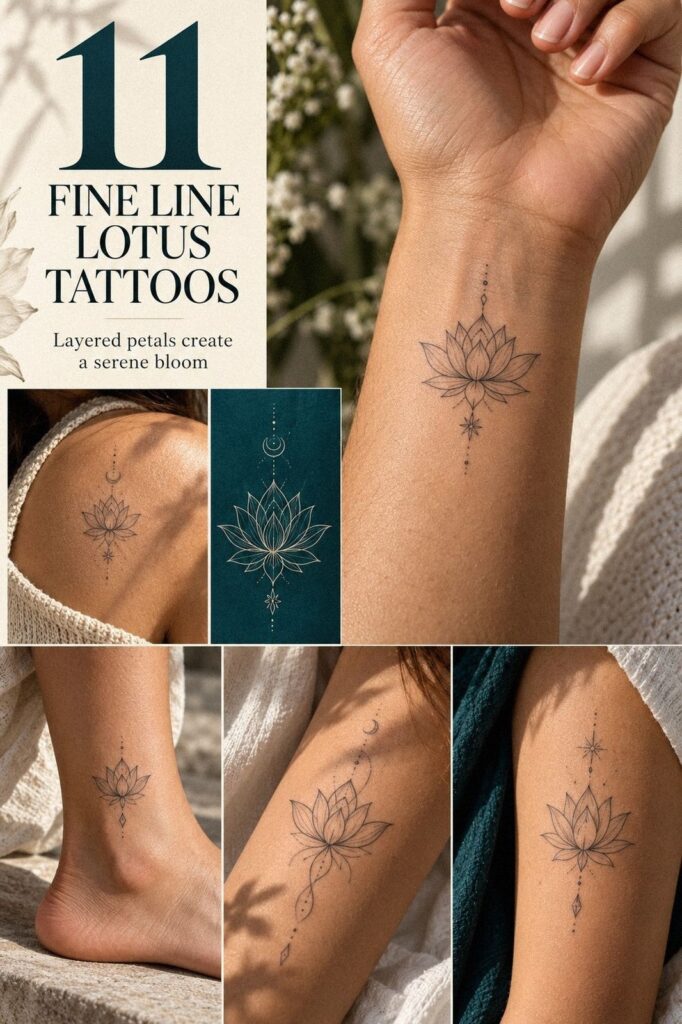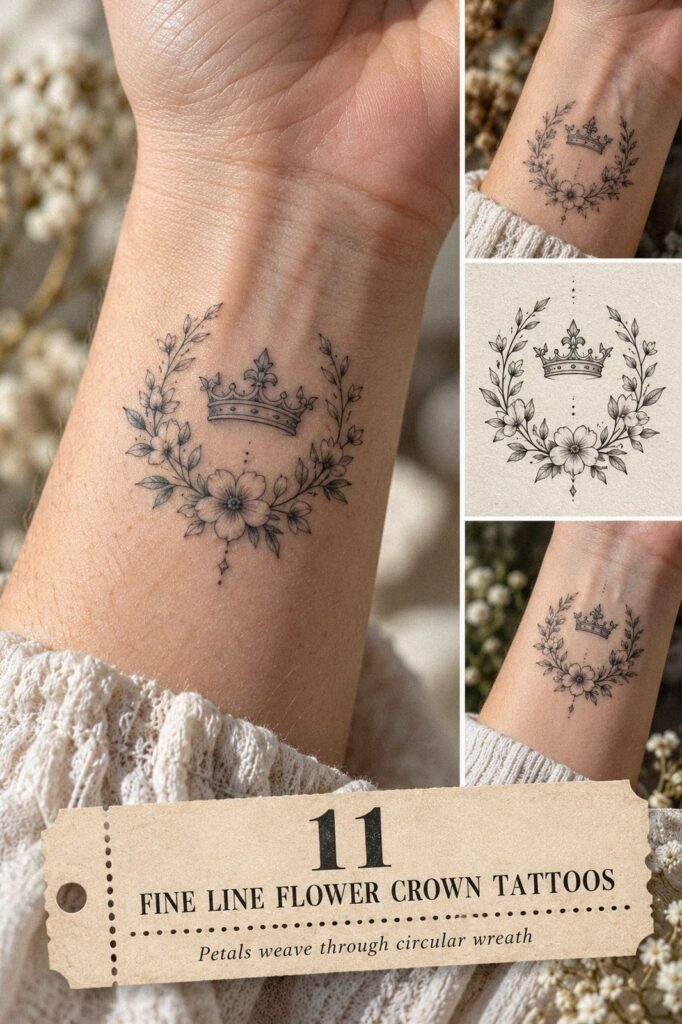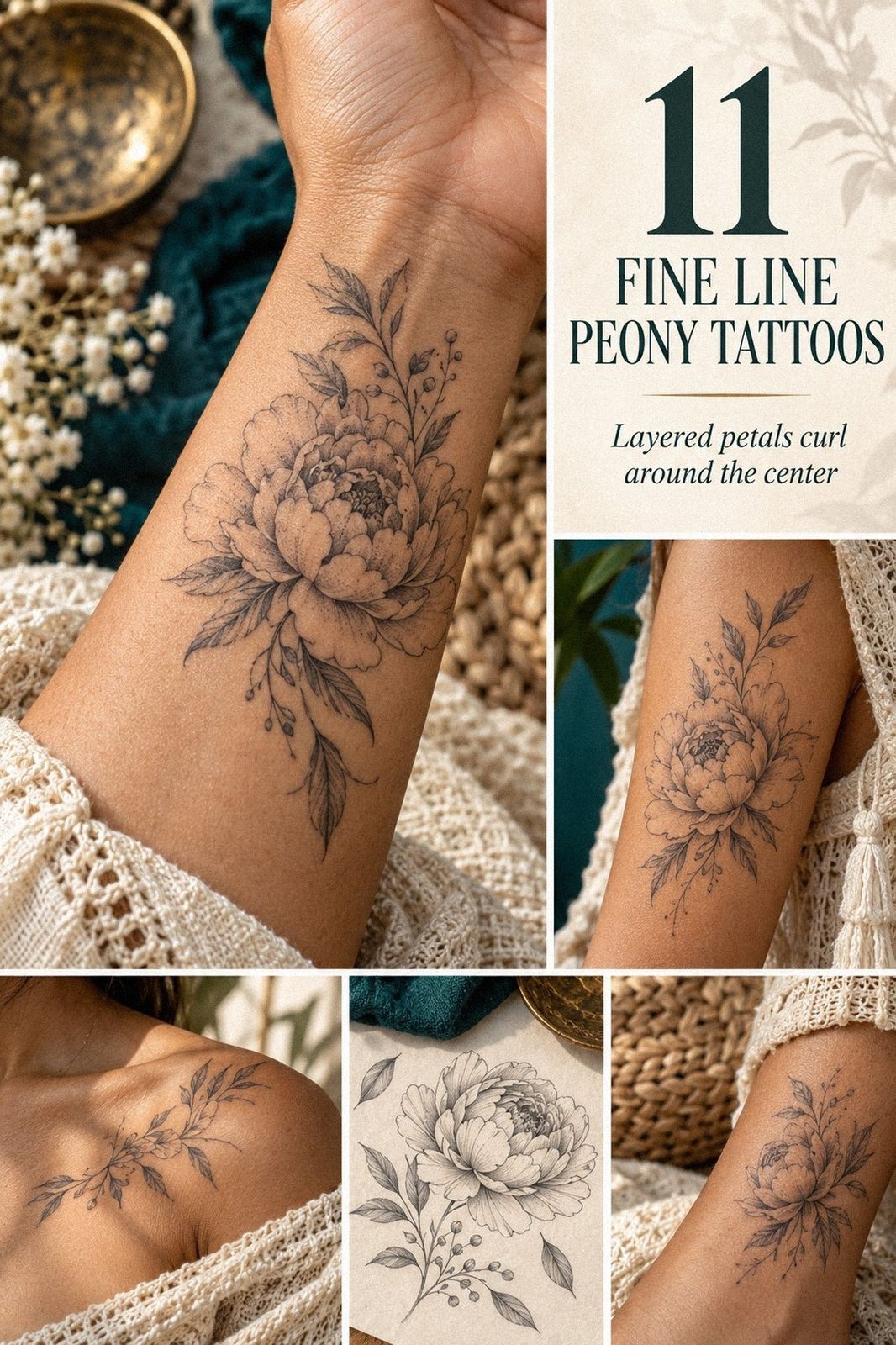
A fine line peony tattoo can hold private meaning without looking heavy or obvious. I once chose a design that was too small for its detail, and the petals blurred as it healed. These ideas balance placement, spacing, symbolism, and long-term value. Start with the skin area that feels personal to you!
Editor’s note: Choose the bloom, scale, and one detail that matters most. A personal tattoo feels stronger when every line has a reason.
- Let a Small Wrist Peony Breathe
- Why Add a Botanical Stem?
- Make the Shoulder Bloom
- Initials, Ink, and Private Meaning
- Follow the Collarbone’s Line
- Geometric Accents Versus Soft Petals
- Ask Whether the Forearm Fits Your Life
- Build a Crescent Along the Spine
- Script Beside the Peony
- Behind the Ear, Keep It Crisp
- Dotwork Around the Bloom
1Let a Small Wrist Peony Breathe
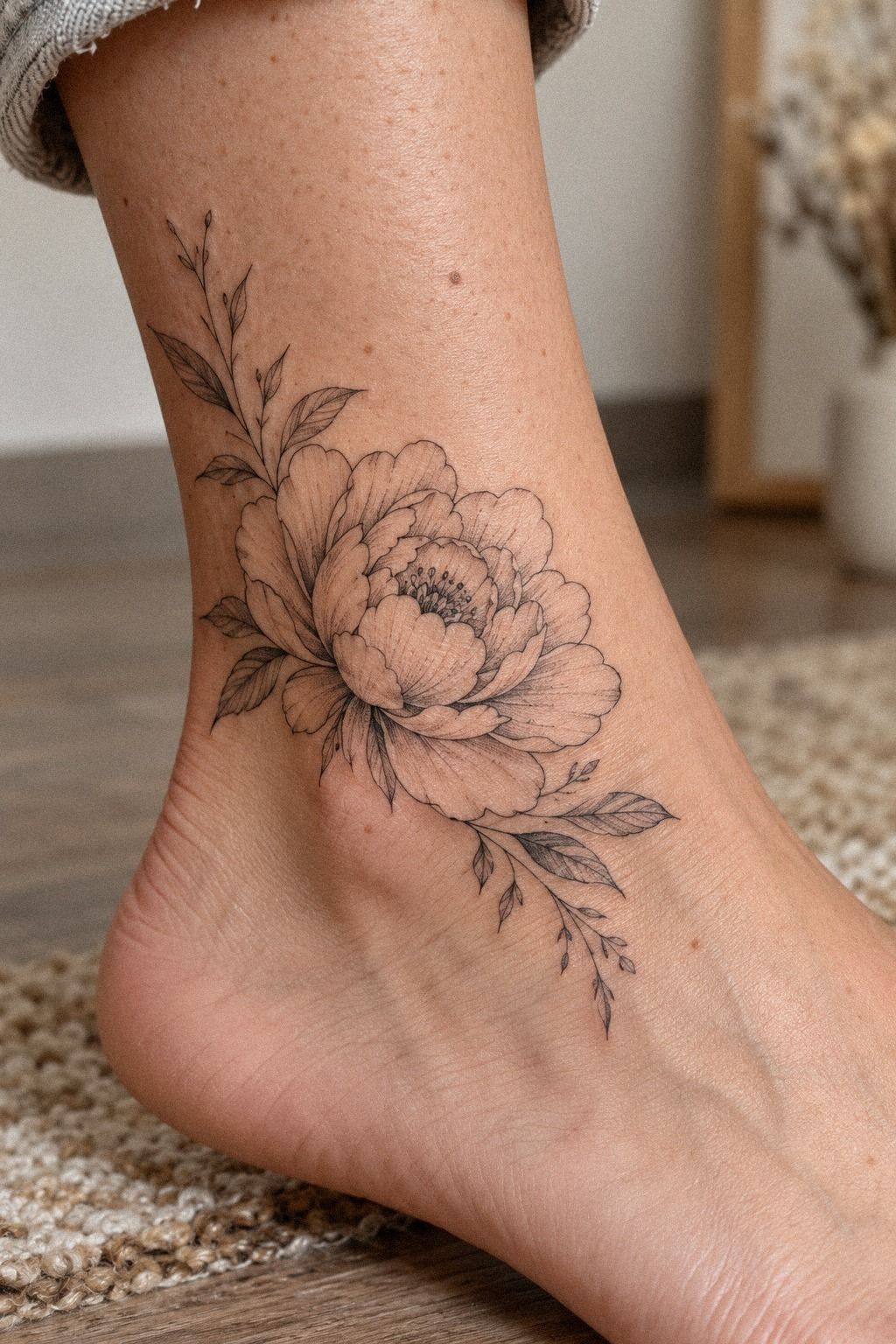
A small wrist peony works best when the flower has breathing room around every petal. Ask for hair-thin lines, a crisp central bud, and a short stem that follows your wrist. The result can feel delicate and understated.
The breathable wrist spacing matters more than extra petals. I’d skip an overly intricate miniature with six layers. It may look striking on the stencil, but those lines can soften as your skin heals.
A single-needle linework style can work well here. Choose two or three clear petal folds instead of trying to copy every detail. You’ll see the tattoo often, so pick a symbolic mark you won’t resent during ordinary days.
I like a small pointed leaf beneath the bloom. It gives the flower direction and avoids a floating outline. Your artist should leave clean negative space between the petals and the wrist crease.
The wrist also makes your aftercare routine easy to monitor. You can see irritation, clothing friction, or excess dryness.
That visibility can feel reassuring for a first meaningful tattoo. If you’re comparing tiny floral ideas, save this fine line flower guide before booking.
Less can be powerful here!
For this version, I’d consider terracotta-and-olive linework with a soft stone-toned accent. That palette feels vibrant without making a tiny flower look busy.
2Why Add a Botanical Stem?
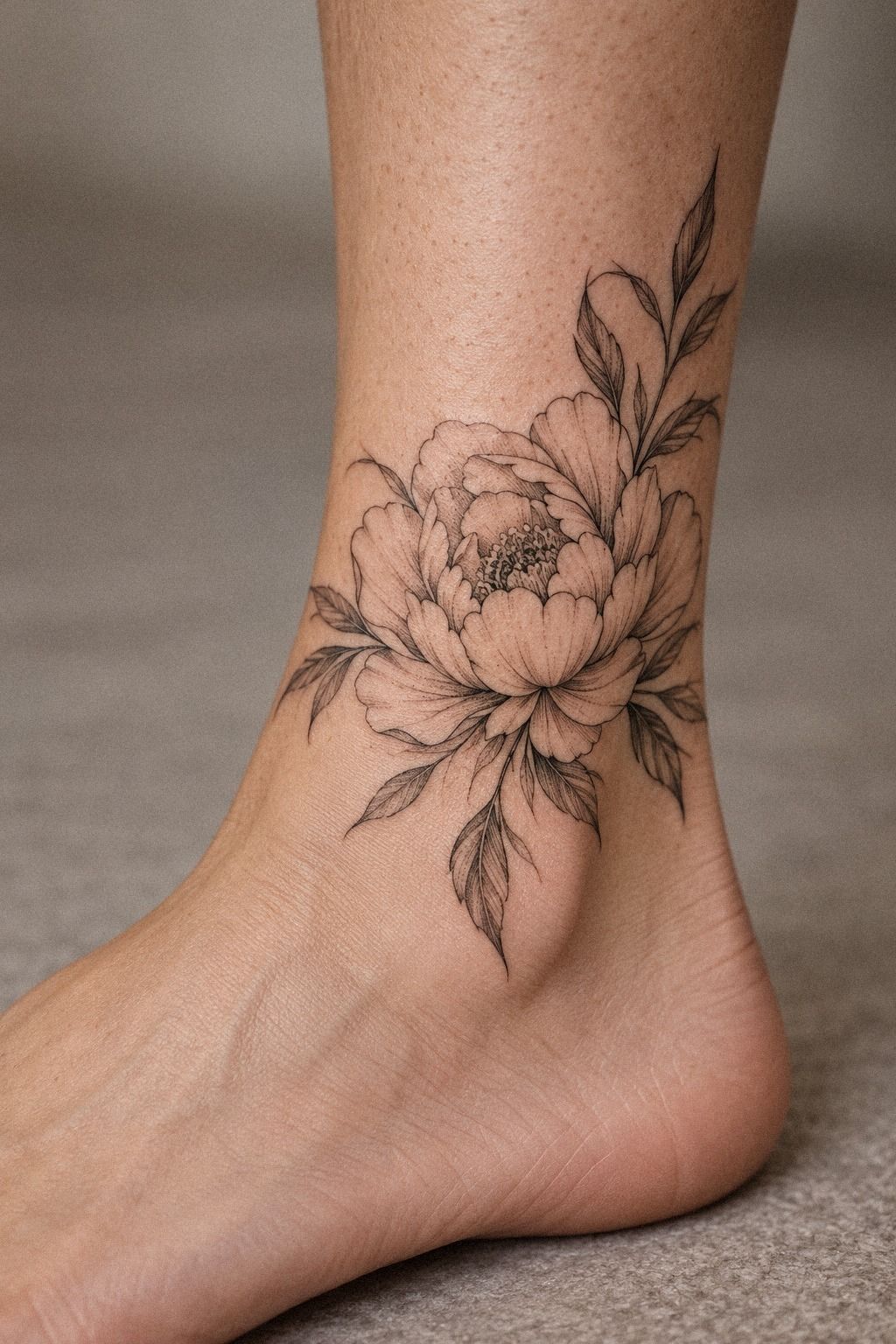
A botanical stem gives your peony a flowing shape.
A clay-toned stem with a linen-soft gap and an aged-brass detail can make the bloom feel elegant without competing with its petals.
3Make the Shoulder Bloom

The shoulder suits a peony because its rounded shape lets the flower sit like a natural emblem. This shoulder placement can feel bold without becoming aggressive.
Picture hair-thin plum lines, with muted grey shading and one restrained rose-gold accent. Add one short leaf that points down the upper arm. That direction gives the flower a graceful flow.
A plum-and-grey linework design should follow the body’s curve. Check the stencil with your arm relaxed and slightly lowered. A tattoo that looks perfect with your shoulder raised may shift when your arm rests.
This placement can feel feminine, masculine, or quietly neutral. Meaning comes from the structure you choose.
A narrow stem feels sleek. A fuller outer petal creates a more ornate and iconic presence.
A medium-sized peony can offer good value here. You get room for a clearer outline without paying for an oversized piece.
Ask whether the price includes the consultation, stencil changes, and aftercare advice. For softer references, browse these fine line flower examples.
Keep the line weight consistent.
4Initials, Ink, and Private Meaning
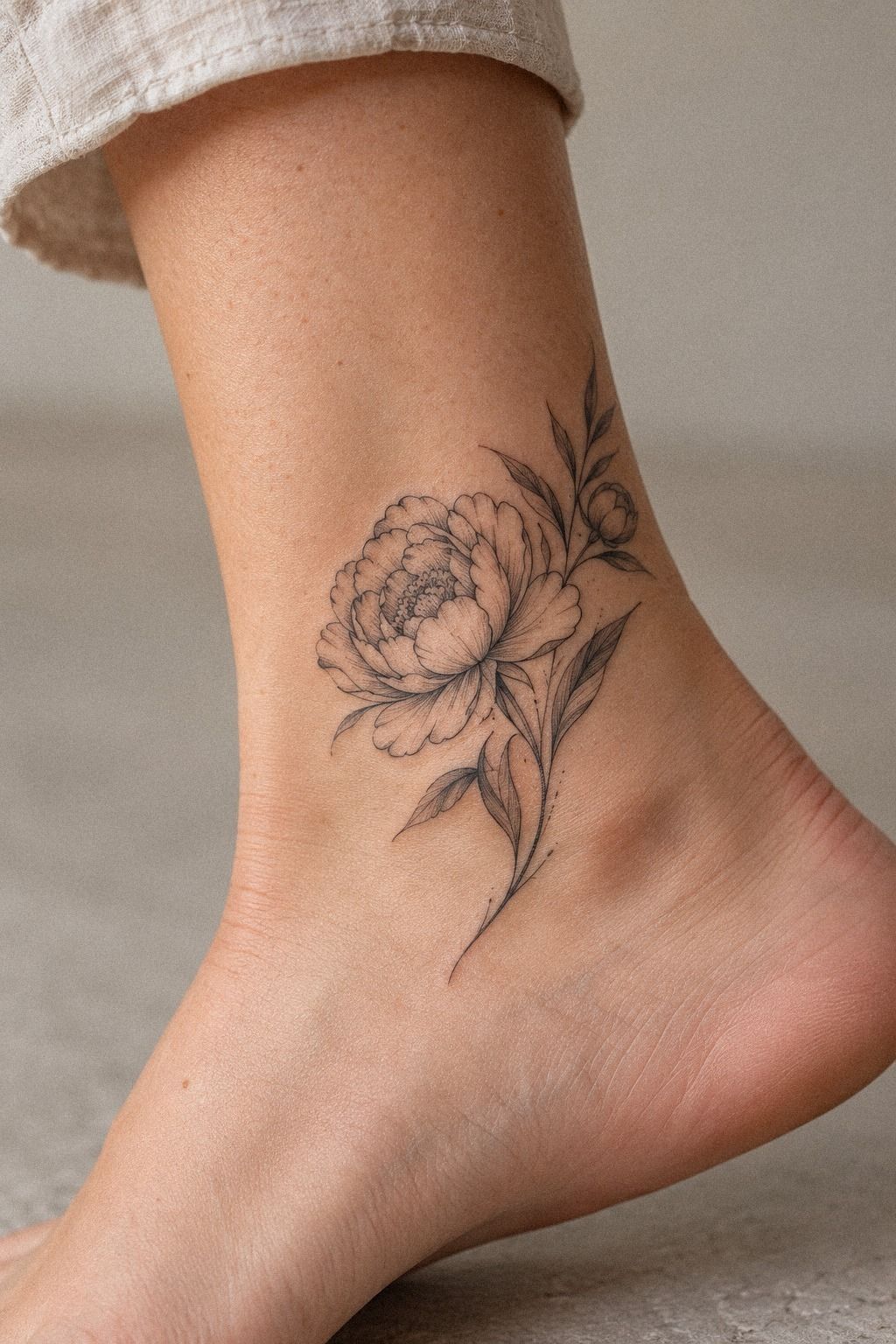
Initials can turn a peony into a personal marker. Place them near the ribs or beside the stem instead of hiding them inside the flower. One letter can feel meaningful, intimate, and slightly edgy.
Your initial placement should support the bloom. I’d choose a simple serif or clean handwritten form. Keep the letters smaller than the inner petals.
They need room to stay readable.
A fine line letterform can blur when squeezed into a narrow gap. Ask your artist to test the lettering at the final size. Look at it while standing and while bending slightly.
The ribs offer privacy, but the area can feel more sensitive than the forearm, thigh, or shoulder. Discuss the stencil before the appointment. If the design includes a date, check that the numbers still read clearly when your body moves.
A private tattoo meaning does not need a full explanation. That’s part of its appeal. If you’re choosing between lettering and a symbol, compare this minimal flower tattoo collection.
Your peony should feel personal first, legible second, and decorative third.

5Follow the Collarbone’s Line
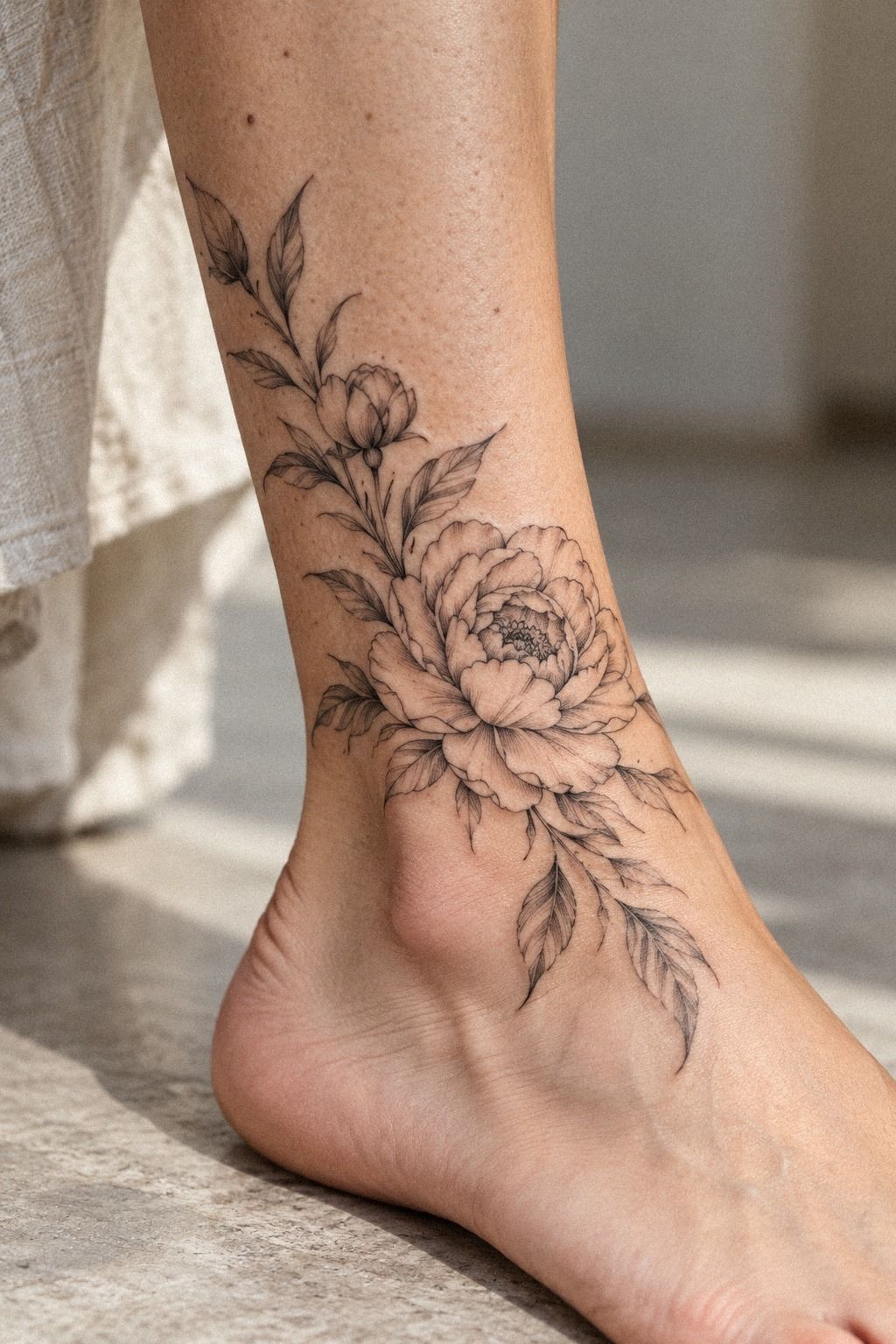
A collarbone peony can follow the body in a long, elegant sweep.
I’d keep the bloom slightly open and the stem narrow. That creates a graceful collarbone flow without forcing every petal into one crowded line.
6Geometric Accents Versus Soft Petals
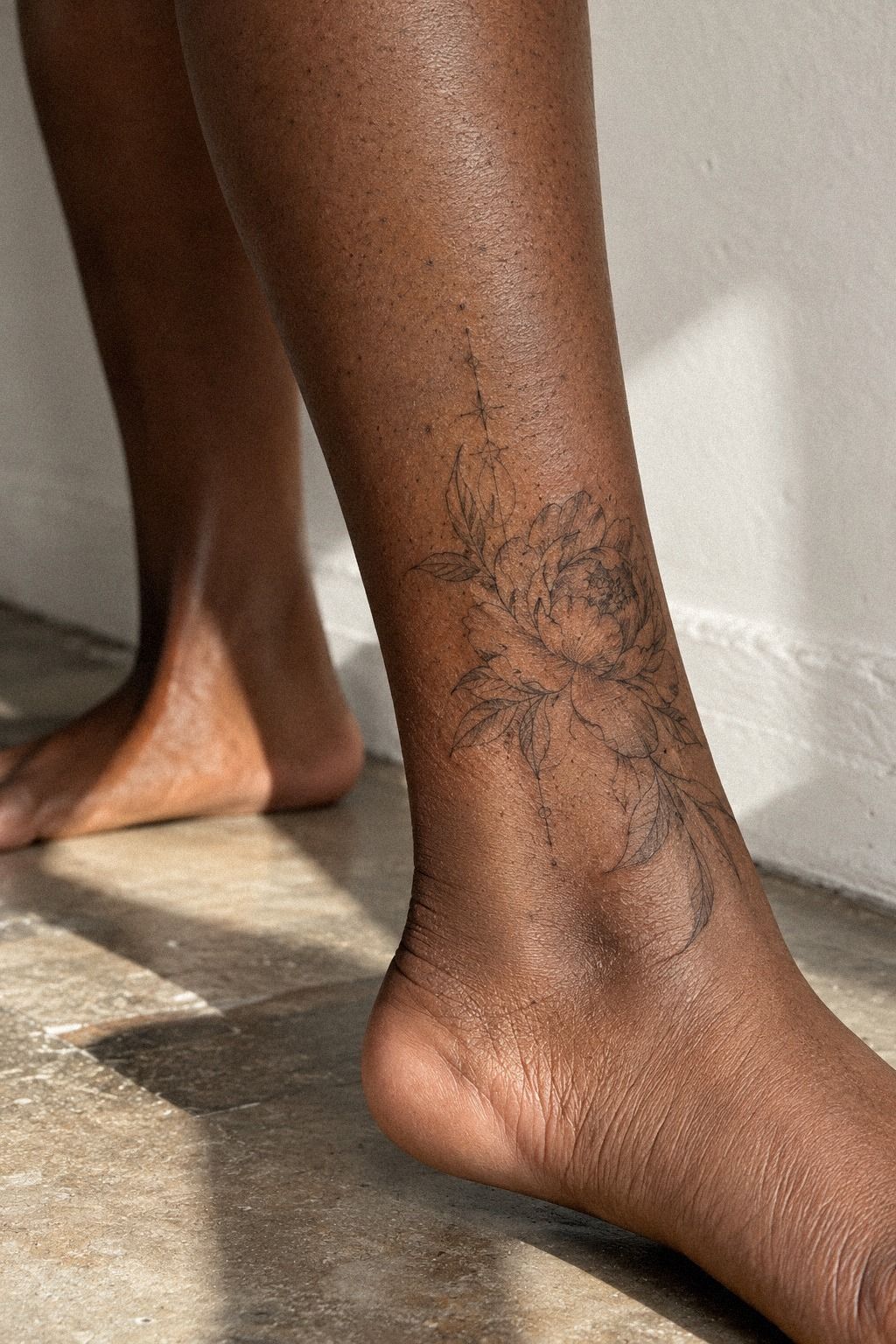
A geometric accent can make a soft peony feel sharper. On deeper skin tones, forest-green lines need thoughtful spacing, while a restrained rust detail can create contrast.
I’d pick one circle, triangle, or fine arc. An arc beside the flower can feel polished. Too many angles make the bloom look technical instead of organic.
The skin tone and placement should guide the contrast. Your artist should show how the design reads with your arm relaxed and turned naturally. A stencil check can reveal whether the extra shape helps or distracts.
An ankle version needs special care. The ankle placement receives friction from socks and shoes. It also moves often.
Ask how the artist handles delicate lines in that area.
A stronger outer contour can protect the flower’s identity. Lighter interior details may soften as the tattoo settles.
You don’t need to choose between feminine and fierce. A rounded peony inside a precise arc can feel both.
If you’re unsure whether the extra shape is worth the cost, remove it from the stencil. Look at the flower alone. Then add the accent back.
Ask which version feels more expressive to you. Trust that pause!
7Ask Whether the Forearm Fits Your Life
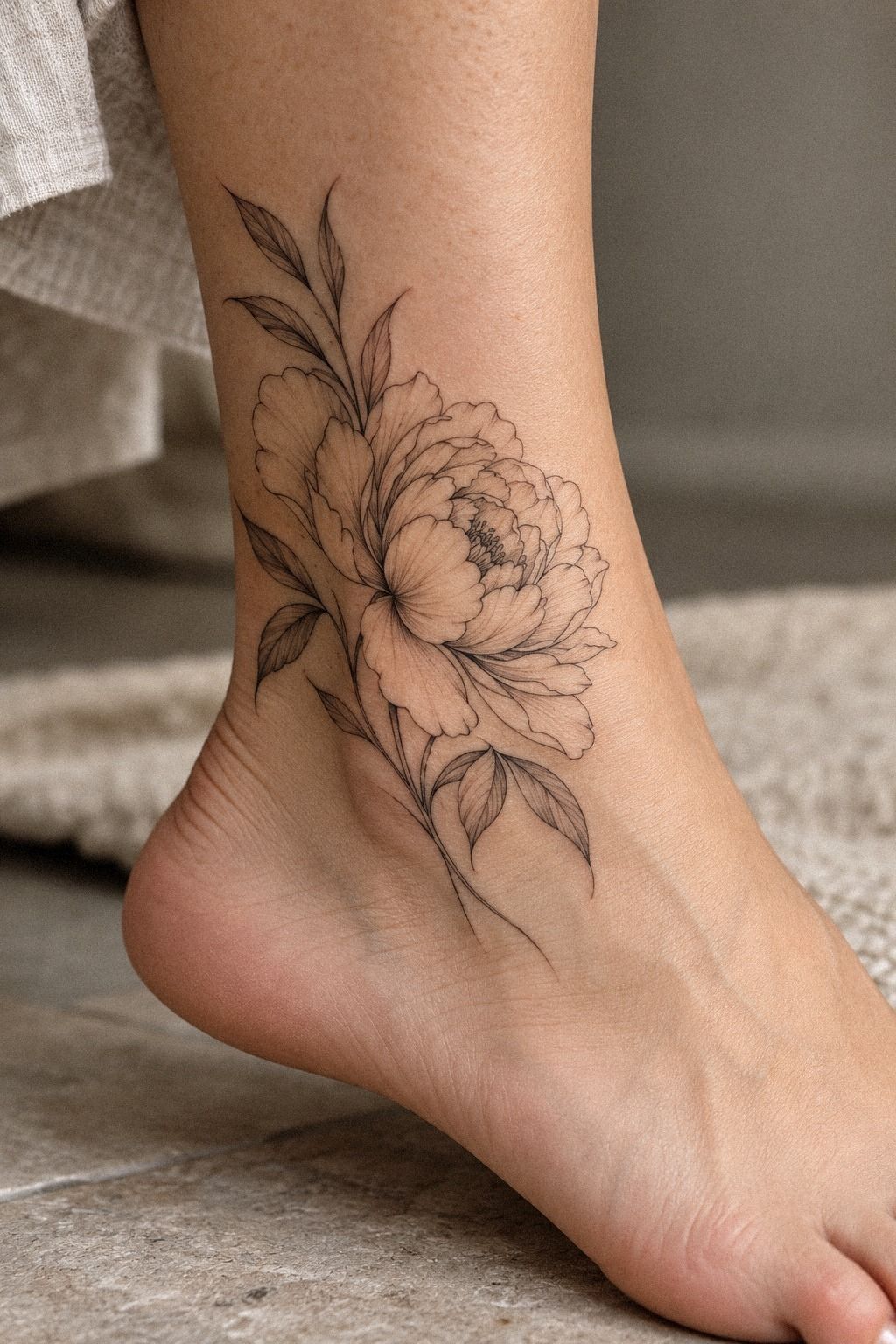
The forearm gives a fine line peony a clear, visible position.
I’d choose this spot when you want to monitor healing easily and enjoy the design often. A forearm location can feel practical, meaningful, and quietly empowering.
8Build a Crescent Along the Spine
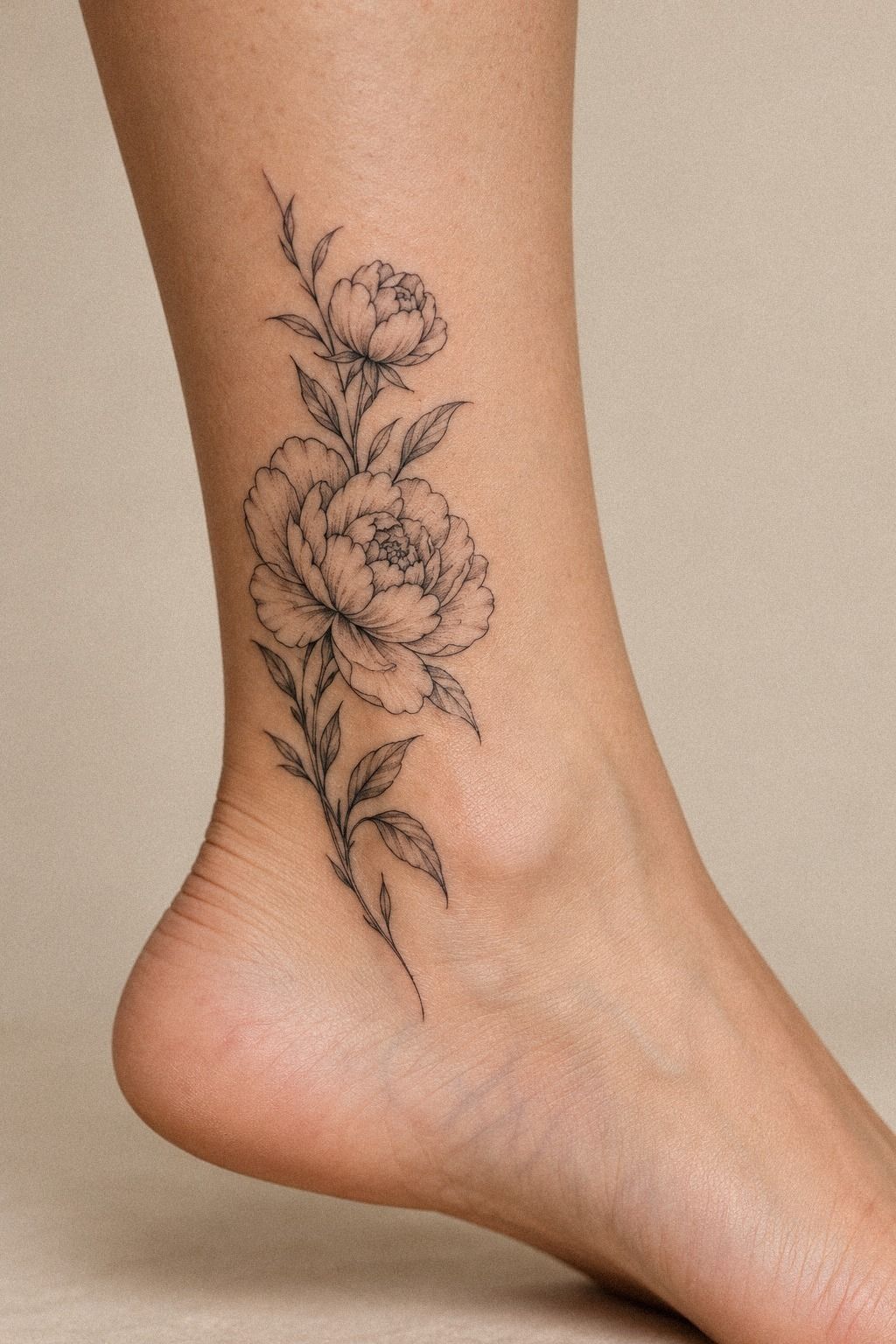
A crescent shape gives the peony movement along the spine. It avoids a rigid vertical arrangement. The flower can sit inside the curve, touch one end, or interrupt the arc with one open petal.
The spine placement can feel ethereal and symbolic. It may represent change, remembrance, or a quiet cycle only you understand.
I’d build the curve from three parts: one open peony, one narrow leaf, and a small arc of dots. A crescent composition should read clearly from a distance. Check the full silhouette before refining the inner lines.
The spine can feel more intense than the forearm, shoulder, or thigh. Wear comfortable clothing that will not rub the area afterward. Your comfortable clothing plan matters during the first few days.
If you want curved references, see this peony tattoo guide. I’d keep this version black and crisp instead of colorful. You’re paying for clarity, not the highest possible number of marks.
9Script Beside the Peony
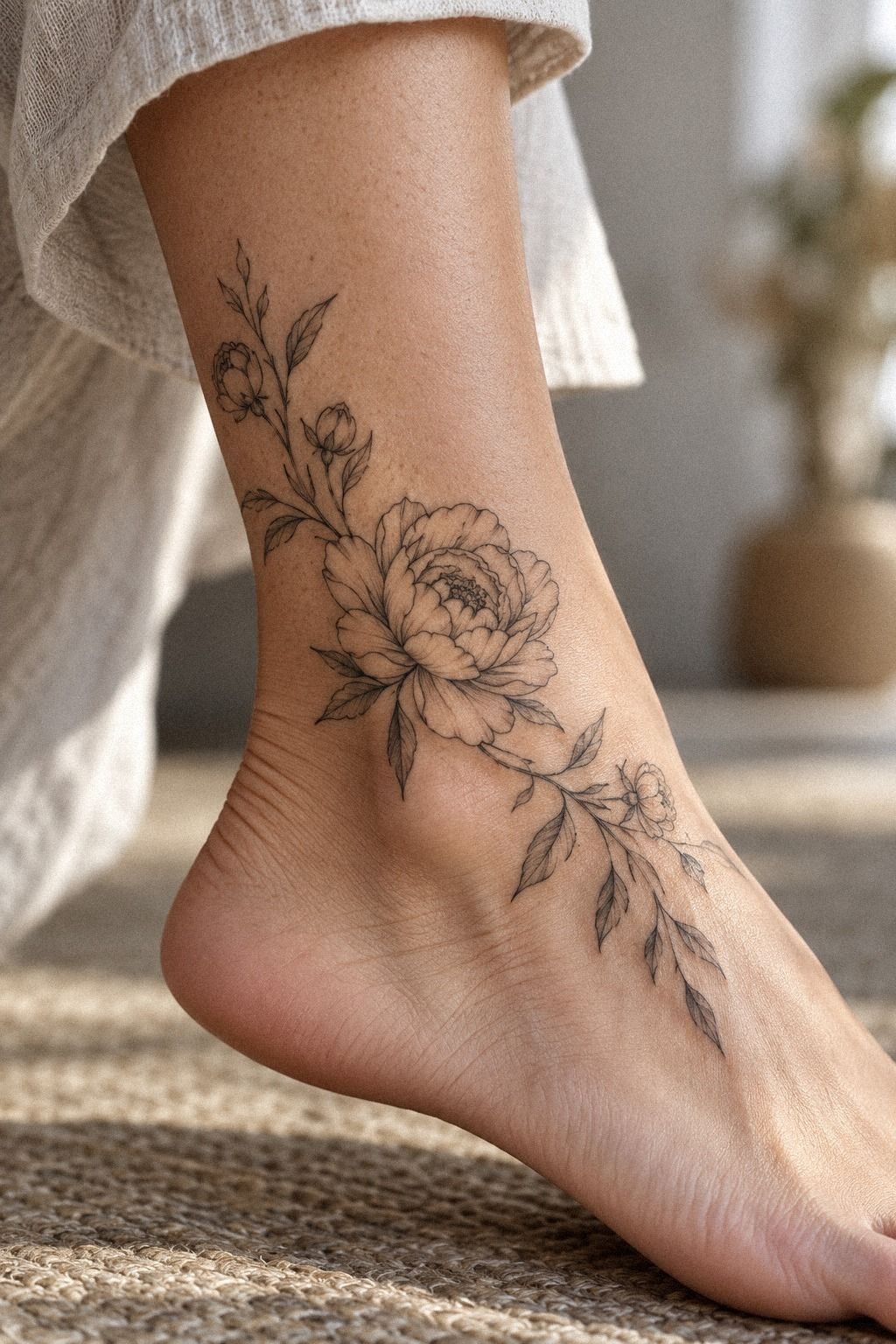
Script beside a peony can carry a sentence, name, or single word.
A script detail can make the design romantic, classic, or slightly daring. Keep the phrase short enough that the letters remain readable beside the petals.
I’d choose a vintage serif or stylish handwritten form. A long sentence may compete with the flower, while one meaningful word can feel sharper and more expressive.
10Behind the Ear, Keep It Crisp
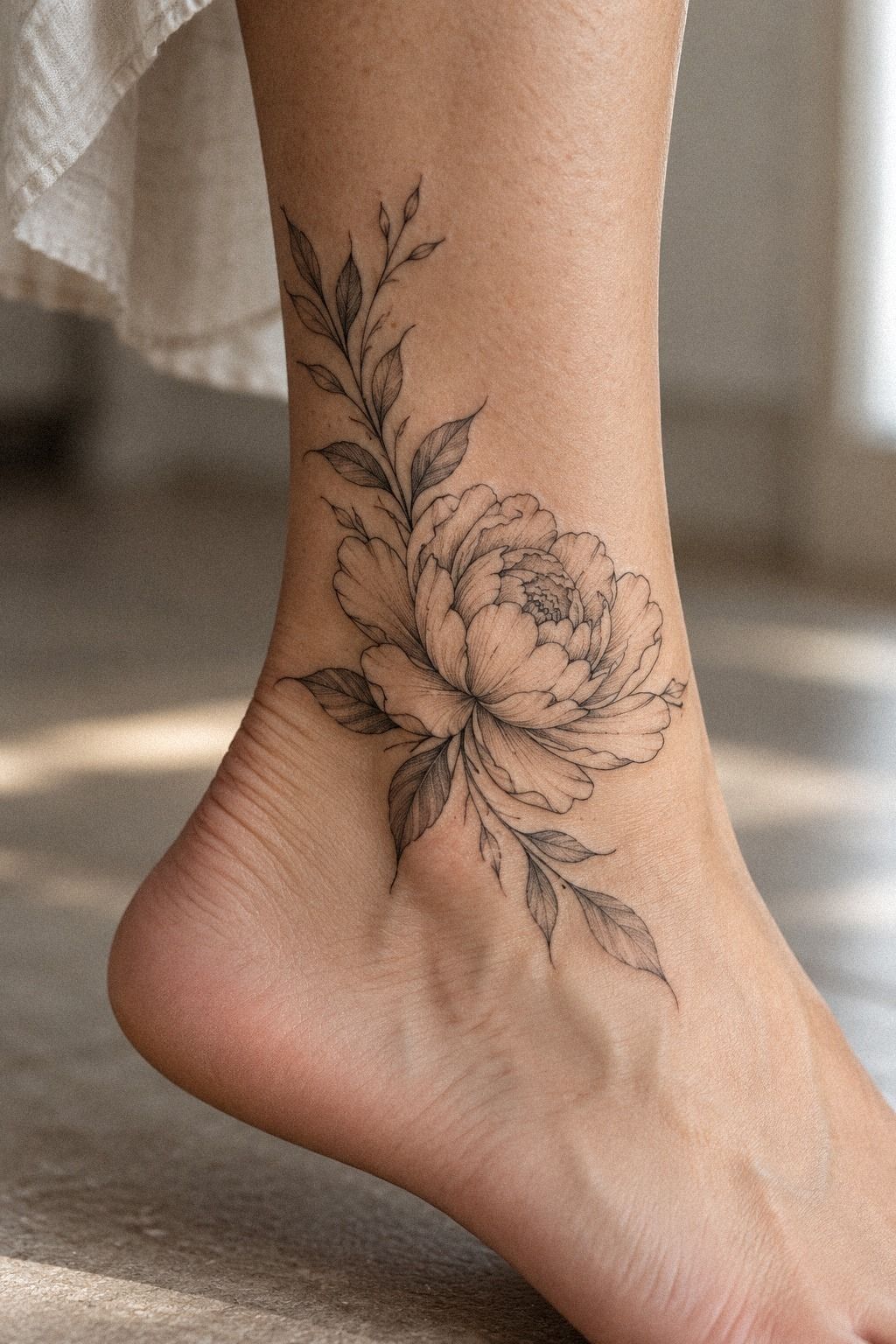
Behind the ear, a fine line peony needs a compact silhouette. This behind-ear placement feels charming and discreet, but it cannot hold a dense flower with too many overlapping petals.
I’d choose one open bloom and a short curved stem. The behind-ear stencil should show every line at its final size. If you want a leaf, dot, or initial, decide which detail matters most.
The area receives shampoo, hair friction, and regular movement from the jaw and neck. Ask about care before you book. Headphones, loose hair, and work uniforms can all create rubbing.
The surface may heal in about 2 to 3 weeks. Complete settling can take about 2 to 3 months. Do not judge the final line quality too early.
Choose this spot because the hidden visibility feels right. Do not choose it only because the design is small. A compact tattoo still needs a confident hand and sensible spacing.
Look for healed portfolio photos rather than fresh work alone. If you’re comparing discreet ideas, save this tiny peony tattoo guide before your consultation.
11Dotwork Around the Bloom
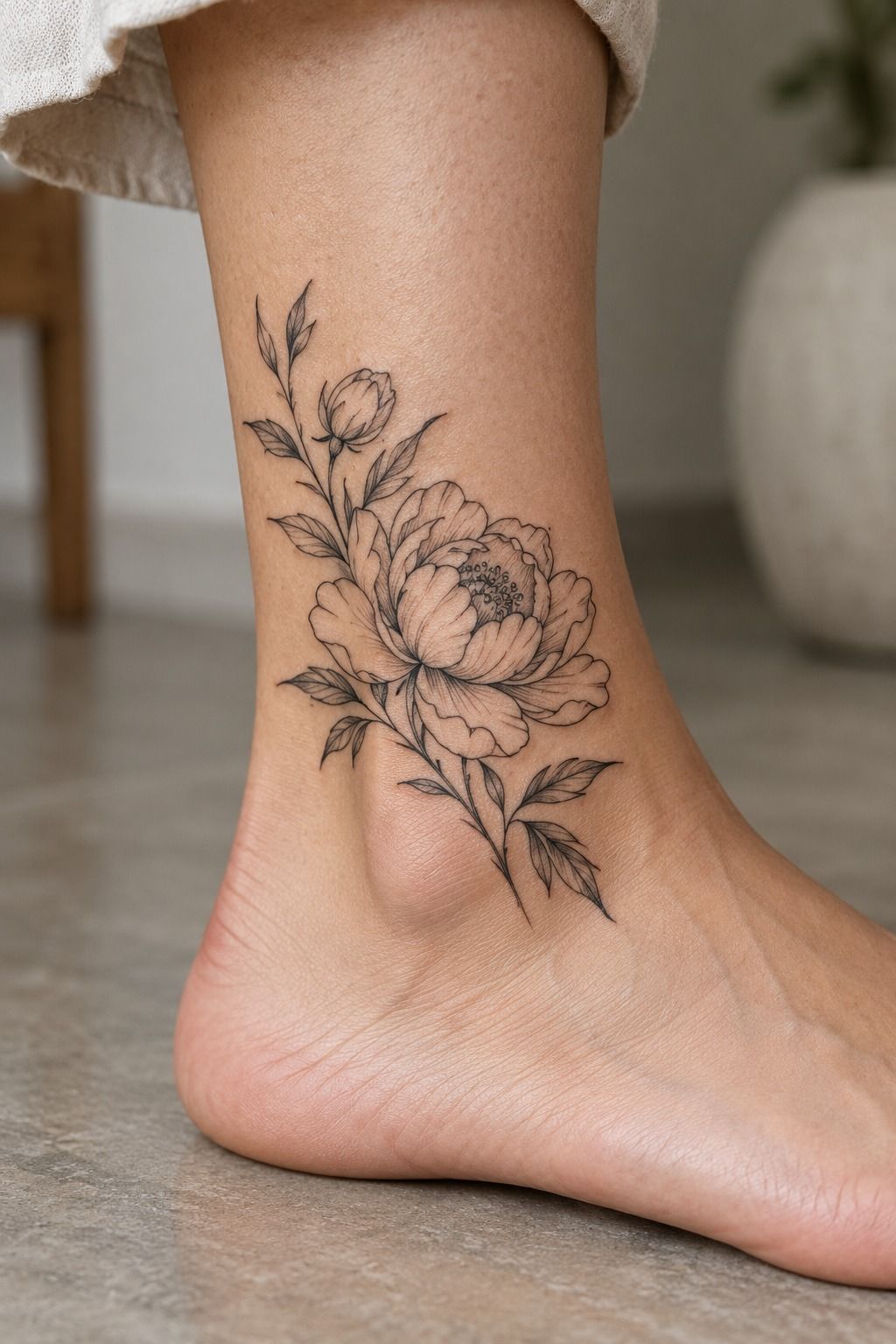
Dotwork can give a fine line peony a soft halo. It does not need to fill the flower with heavy shading.
A dotwork halo should guide the eye toward the petals. Place the dots around the outer curve instead of scattering them inside every fold.
On deeper brown skin with a warm undertone, use clean terracotta contours and deliberate olive dot spacing. Leave enough open skin for the stone-toned contrast to remain easy to read.
The ankle can receive more friction and sun than people expect. Shoes, socks, and movement affect how the tattoo settles. Ask your artist to avoid the strongest rubbing points.
Protect the finished tattoo from ultraviolet exposure after it heals. Fine lines may widen, and sunlight can soften contrast. Solid black accents often hold more clearly than extremely pale shading.
If you want a simpler direction, compare these small flower tattoo ideas. Decide whether the dots add meaning or only extra decoration.
Choose Scale Before Detail
The most important decision may not be the flower’s position. It’s the scale. A readable tattoo scale gives the petals enough separation to stay distinct.
If you love intricate petals, say so before choosing a tiny wrist or behind-ear version. You may need the forearm, thigh, shoulder, or collarbone instead.
The petal spacing protects both the look and the value of your investment. A larger tattoo can cost more, but it may preserve the detail you care about.
A dainty tattoo should still have a strong silhouette. I’d remove three minor marks before shrinking the whole flower. Fewer deliberate lines often create a sharper, more timeless result.
Hold a printed stencil at the intended size. If you can’t tell where one petal ends, edit the design. This fine line flower guide can help you compare small-scale spacing.
A minimal design can still feel iconic. The strongest version may be the one with fewer marks and a more confident outline.
Which Meaning Belongs in the Design?
A peony can represent love, resilience, remembrance, beauty, family, or a personal turning point. You do not need an obvious symbol.
A personal tattoo meaning can live in one leaf, one letter, or the direction of the stem. I prefer symbolism that still works when nobody else understands it.
That gives your personal symbol room to grow. The design can feel meaningful and understated at the same time.
If you’re considering a date, ask whether it adds emotional weight or visual clutter. A date design may look clean beside the stem. A long inscription can compete with the petals.
Compare lettering and symbols in this minimal flower tattoo collection. Pick the detail you’d miss most. That is usually the right detail to keep.
Ask These Questions Before You Book
Before you pay a deposit, ask to see healed examples. Fresh work can look sharp and vibrant. Healed fine line work shows whether spacing and contrast survived.
Ask what size the artist recommends. Ask what the session will cost. Ask whether the price includes a consultation or touch-up policy.
The booking deposit should be clear before you pay. A low quote is not always good value if the design needs correction later.
Ask how the artist approaches your skin tone and chosen placement. A confident artist can explain line weight without making promises no tattoo can guarantee.
Use this fine line flower collection to identify petal shapes and spacing you genuinely like. Send one main direction instead of ten unrelated references.
A clear consultation can prevent a rushed decision. Bring the reference, but stay open to scale changes that protect the design.
Protect Fine Line Clarity
The surface usually heals in about 2 to 3 weeks. The tattoo can keep settling for about 2 to 3 months. Follow your artist’s instructions.
A fine line aftercare routine should fit your actual life. If you work outdoors, exercise often, or wear shoes that rub the area, discuss that before the appointment.
Wash gently with a mild gentle cleanser if your artist recommends one. Avoid picking flakes. Do not soak the tattoo while it heals.
After healing, use broad-spectrum sunscreen when the tattoo is exposed. Sun can soften contrast. That care helps protect the design’s long-term clarity.
Fine lines may soften with time. That isn’t automatically a failure.
Skin changes. A design with enough spacing and contrast can remain delicate without becoming unreadable.
A long-term care plan helps preserve the crisp structure you paid for. Small habits matter more than panic over ordinary settling.
What a Fine Line Peony Gets Right
I’ve changed my mind about fine line tattoos more than once. At first, I thought the smallest design would always feel the most personal.
Then I saw a tiny peony lose its petal structure. The artist had tried to preserve too much detail at too little scale. That taught me one thing: delicate does not mean underplanned.
The best designs make a clear decision about what matters. Is it the open bloom, the stem, the initials, or the private symbolism?
I’d rather see one crisp flower with intentional negative space than an intricate bundle. The skin should not carry more detail than it can comfortably keep.
Placement changes the emotional register. A wrist feels visible. Ribs feel intimate.
The shoulder can look bold, while behind the ear feels discreet.
Your placement choice should match how often you want to see the tattoo. It should also match how much attention you want it to attract.
A surface may heal in roughly 2 to 3 weeks. The tattoo can settle for about 2 to 3 months. Keep it clean and follow your artist’s instructions.
If the design is exposed, UV care matters. Apply sunscreen after healing. That step is simple, but it protects contrast.
I’d choose an artist from healed portfolio work, not only fresh photographs. A fresh line can look impossibly sharp. Healed work tells you whether the structure survived.
A well-spaced design can remain graceful even as your skin changes. That’s why scale deserves more attention than trendiness.
Cost, Value, and Budget Reality
A small fine line peony tattoo commonly costs about $100 to $300 in the United States. Size, placement, artist, and region all affect the quote.
Some studios have a studio minimum near $50 to $100. Hourly rates often fall near $100 to $250. Ask how the artist prices small custom work.
Here’s a simple cost snapshot:
The cheapest option isn’t always the best value. A respected artist may charge more for consultation, stencil refinement, hygiene, and healed-work experience.
If your budget is limited, simplify the design. Choose one bloom instead of two.
Remove dotwork. Skip lettering. That may keep the final quote manageable while preserving the idea that matters most.
Send the artist your placement, approximate size, and script before asking for a price. Clear information produces a more useful estimate.
A realistic tattoo budget leaves room for quality and proper aftercare. Saving money should not mean shrinking a meaningful design below its readable size.
What People Always Want to Know
How much does a fine line peony tattoo usually cost?
I’d expect a typical tattoo to cost about $100 to $300 in the United States. A larger custom piece may cost more.
Studio minimums and hourly rates also matter. I’d share the placement, size, and reference before asking for a final quote.
Are fine line peony tattoos a good idea for a first tattoo?
I think they can be a meaningful first tattoo when the scale is realistic. I’d choose a forearm, thigh, or shoulder before the ribs or sternum. A manageable detail level matters more than choosing the smallest possible flower.
How do I choose a tattoo artist?
I’d look for a portfolio with clean linework, balanced spacing, and healed photos. One isolated flower is not enough.
I’d also check the artist’s hygiene standards and aftercare advice. The right artist will tell you when a reference has too much detail.
How much does a fine line peony tattoo hurt?
Pain varies by person and placement. I’d expect ribs, feet, hands, and sternum to feel more intense. The forearm, thigh, and shoulder may feel easier.
I’d eat beforehand and follow the artist’s preparation advice.
How long does a fine line peony tattoo take to heal?
I’d allow about 2 to 3 weeks for surface healing. Complete settling can take about 2 to 3 months.
I’d wash gently, avoid picking, and skip swimming while it heals. I would not judge the final lines too early.
What’s the best placement for a fine line peony tattoo?
I’d start with the forearm, thigh, or shoulder for visibility and comfort. The wrist and behind-ear spots feel more discreet. Ribs, spine, and ankle designs may feel more sensitive.
The best choice depends on your life and your preferred visibility.
Where I’d Start First
If I had to pick one, I’d start with the forearm peony. You’ll get a clear position, a tolerable placement, and enough length for petals that won’t collapse into a dark mark.
My second choice would be the shoulder placement if you want something more striking and visible. It gives the flower room to feel graceful without requiring an enormous design.
If privacy matters most, I’d choose the ribs or behind-ear placement. I’d simplify the details first. A well-planned peony tattoo should feel like yours before it feels fashionable.
Your final choice does not need to satisfy everyone. Choose the flower, placement, and symbolism you’ll still recognize as yourself. That’s the part that makes the tattoo worth it!