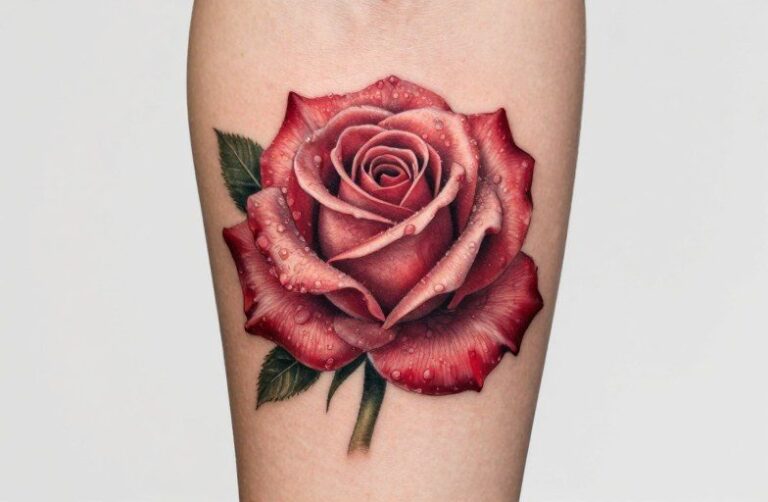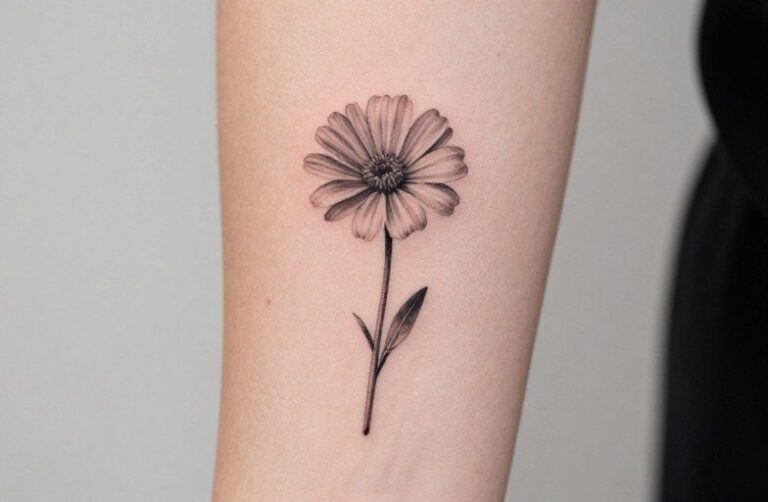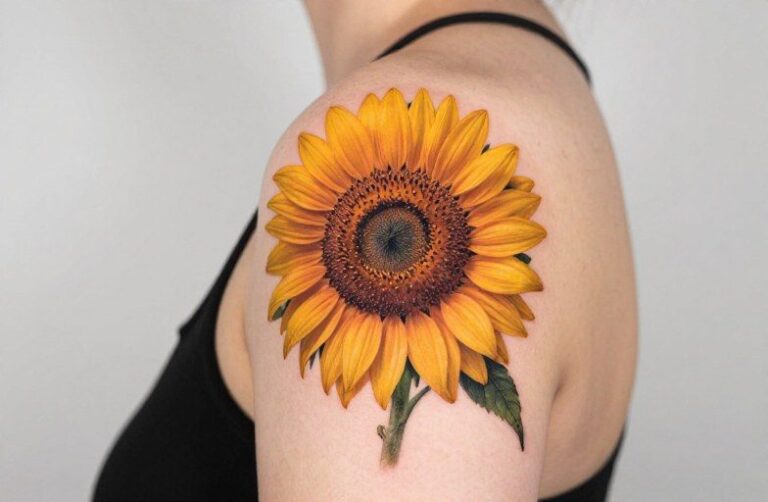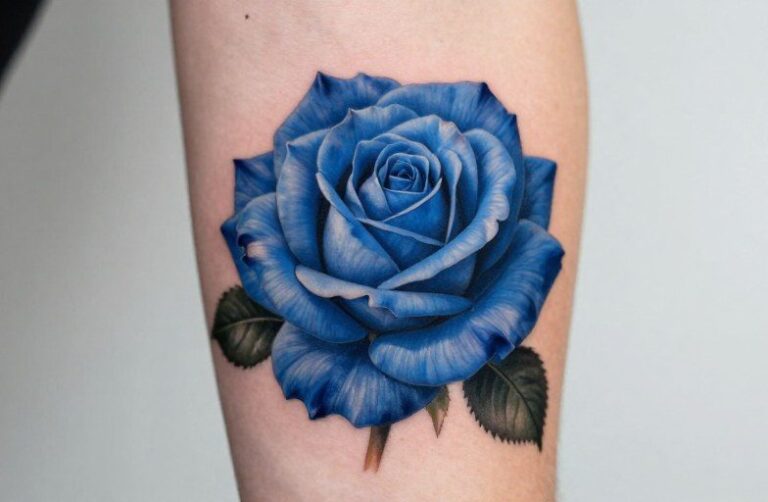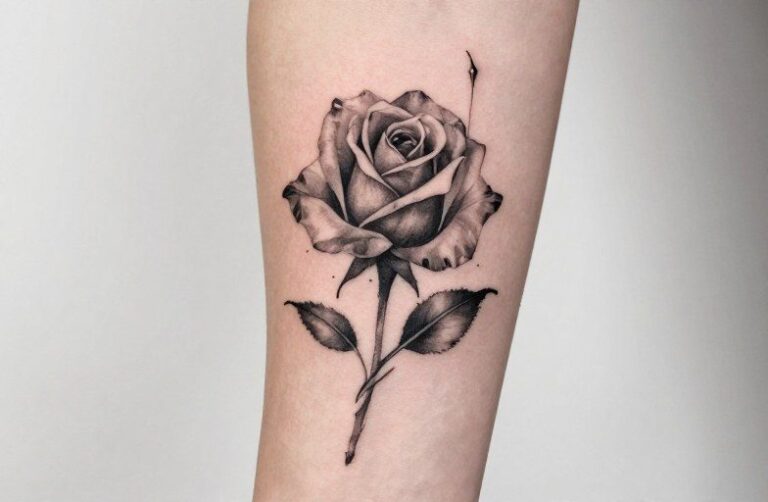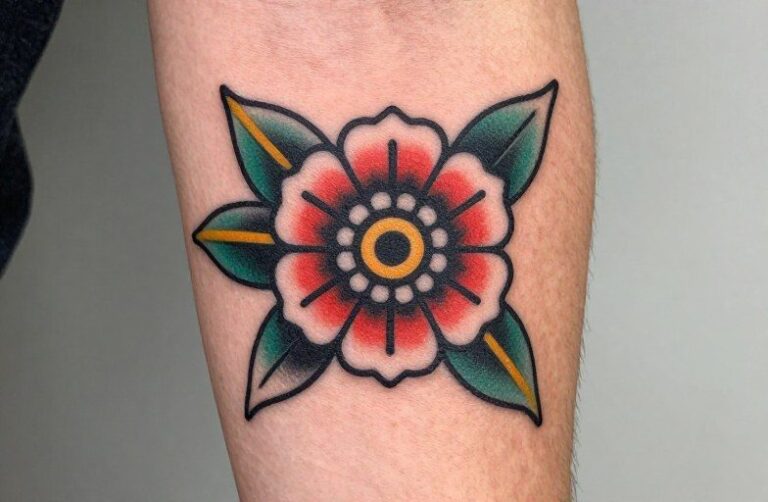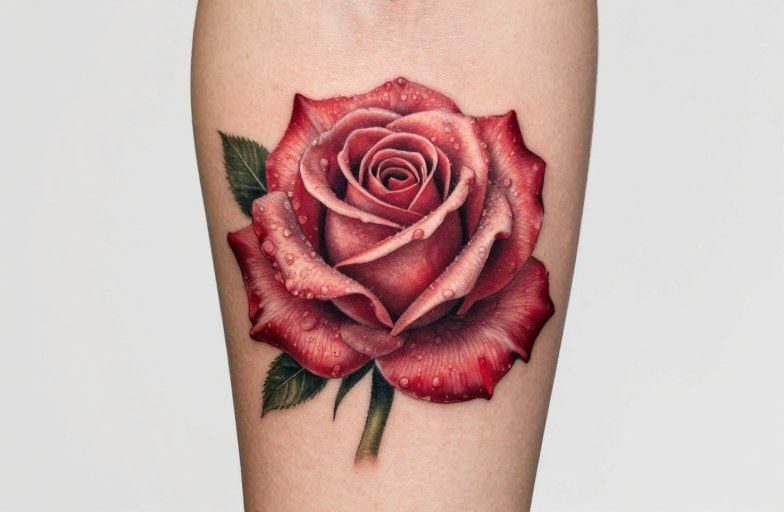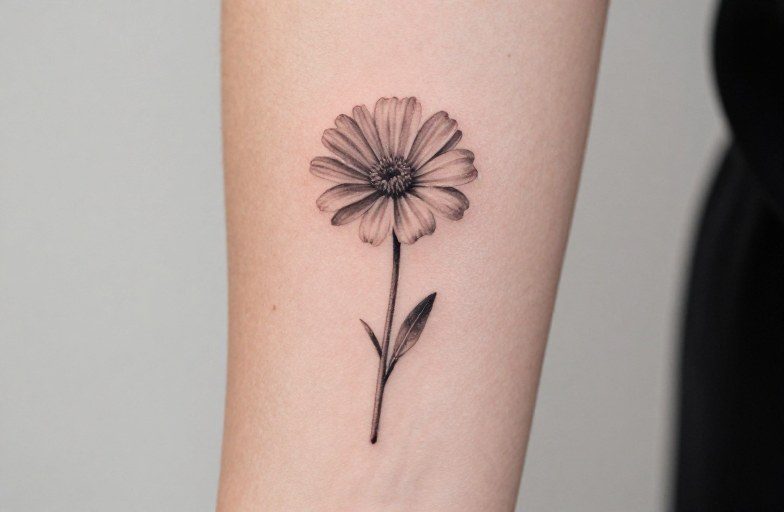
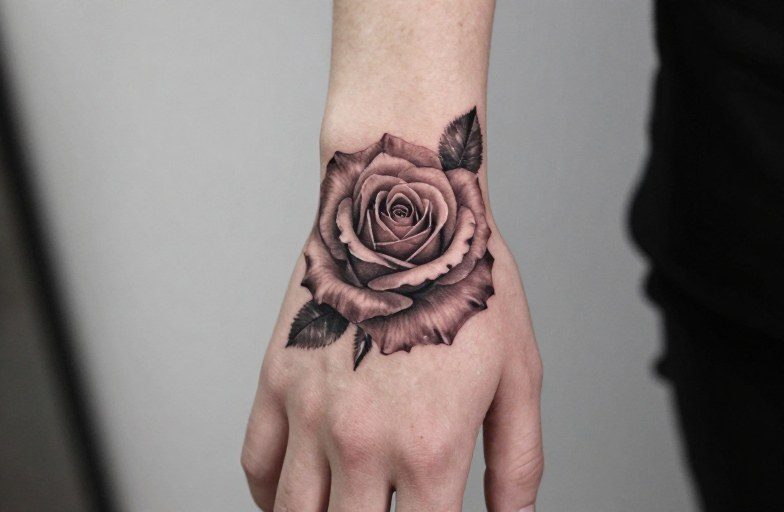
A realistic rose hand tattoo reproduces the flower with photographic accuracy: soft petal gradients, visible veining, dewdrops if desired, inked onto one of the body’s most exposed and unforgiving surfaces. The hand offers little room for error. Bone sits close to skin, movement is constant, and sunlight hits daily. Done well, these pieces read like still life pressed into living tissue. Done poorly, they blur into indistinct pink blobs within a few years. This article covers what actually matters: who should get one, how artists build them, and how they age.
Who Should Consider This Placement
Honest Self-Assessment
The hand is a statement. Covering it with a realistic rose means accepting near-constant visibility. Professionals in conservative fields sometimes regret the lack of concealment. Others lean into it. What matters is thinking through your actual life before booking, not imagining a different one. The rose itself carries broad recognition: love, loss, beauty, resilience. That accessibility cuts both ways. It reads clearly to strangers, which some want and some do not.
Skin and Pain Realities
Hand skin differs from arm or back skin. It is thinner, moves more, and regenerates faster. The pain tends to be sharp and immediate, especially over knuckles and between fingers, where nerve density is high and cushioning is minimal. Most people find it more intense than forearm work, less than ribs or feet.
Darker skin tones can absolutely support realistic roses, but the color palette shifts. Deep crimsons and true blacks hold better than pale pinks and yellows, which can heal ashier or disappear entirely. Experienced artists adjust saturation and contrast accordingly. If someone promises identical results across all skin tones without discussion, that is a red flag.
How the Design Works
Placement and Composition
Realistic rose hand tattoos typically concentrate detail on the dorsal surface, across the knuckles or between thumb and index finger. The palm side is rarely used; it sheds ink rapidly and hurts substantially more. Most designs feature a single bloom rather than a bouquet, since space is tight and clarity degrades with clutter.
- Petals: Layered with soft edge shading, not hard outlines. The transition from highlight to shadow creates dimension.
- Leaves and stems: Often wrap to the side of the hand or extend toward the wrist, framing the rose and filling awkward negative space.
- Water drops: A divisive choice. Well-executed, they add freshness. Poorly done, they look like clear stickers sitting on top of the skin.
- Color versus black and grey: Color realism demands more touch-ups. Black and grey ages more gracefully on hands but sacrifices the rose’s natural red.
Scale and Readability
On a hand, a rose larger than two inches across starts encroaching on fingers or wrist. Too small, under an inch, and detail collapses. The sweet spot sits between 1.5 and 2.5 inches for the bloom itself, with leaves and stem extending as composition demands. Fingers themselves can carry small buds or thorns, but these blur fastest due to constant flexing.
What Happens After the Needle
First Two Weeks
Hand tattoos heal differently. You wash your hands dozens of times daily. You grip, type, open doors. All of this stresses fresh ink. The first week requires deliberate modification: minimize hand use where possible, keep moisturizer light to avoid trapping bacteria, and accept that some plasma and ink will seep regardless of perfectionism.
- Gloves: If your work demands them, wait until the tattoo has fully closed, usually 4-5 days minimum. Sweat buildup inside gloves causes problems.
- Sun: Hand tattoos see more UV than almost anywhere else. SPF application becomes non-optional. Unprotected sun fades reds and pinks into muddy browns within a year or two.
- Touch-ups: Plan for one. Hand tattoos commonly need reinforcement at 6-12 months. This is not failure; it is anatomy.
Long-Term Maintenance
After healing, the ongoing work is behavioral. Moisturizing prevents the cracked, aged look that makes tattoos seem older than they are. Sun protection preserves color saturation. These are not elaborate rituals, just consistency that most people skip until fading becomes obvious.
Style Variations Worth Knowing
Hyperrealism and Graphic Contrast
Contemporary realistic rose hand tattoos have splintered into several approaches. Some artists push hyperrealism: every petal edge soft, every thorn casting a micro-shadow, the overall effect approaching a photograph. Others incorporate graphic elements: geometric frames behind the rose, negative-space stems, or stippled backgrounds that contrast with smooth petal rendering. These hybrid approaches can help the tattoo read clearly at a distance, which matters on a small, mobile canvas.
Another direction pairs the rose with script, though lettering on hands ages notoriously poorly unless bold and simple. If you want words, consider placing them elsewhere and letting the rose stand alone on the hand.
Biomechanical and Fusion Styles
Biomechanical roses merge organic and machined aesthetics: petals with gear-like precision, stems threaded through circuit patterns. This reads as distinct from traditional biomech because the rose remains recognizable, not dissolved into abstraction. It is a niche choice, but one that demonstrates how the realistic rose can anchor unexpected conceptual territory.
What About Gendered Framing?
Marketing often frames roses as feminine, but the realistic style transcends that. Some people request heavier thorn emphasis, darker overall values, or integration with existing hand and finger tattoos. Others prefer softer edge work, more open composition, or color emphasis. These are tendencies, not rules. The underlying technique, smooth shading, accurate form, remains identical regardless of who is sitting in the chair.
Where the Style Comes From
Roses in Tattoo History
The rose as tattoo motif predates realism by centuries. Sailor traditions often linked it to mothers, sweethearts, or memorials. The realistic rendering style, however, emerged from photorealism’s broader rise in tattooing during the late twentieth century, often linked to improved graywash techniques and single-needle machines. Hand placement specifically gained traction as tattoo visibility became more socially acceptable in many Western contexts. Before recent decades, hand tattoos were largely confined to subcultural markers in mainstream perception. The realistic rose on the hand represents a fusion: traditional subject matter, modern technique, and placement that once signaled fringe identity now read as mainstream artistic choice.
Cultural Associations
The rose carries varying weight across cultures. In Western contexts, it is broadly legible. In some East Asian traditions, red roses specifically connote passionate romance in ways that might complicate a professional image. Some Latin American contexts link roses to religious devotion, particularly Marian imagery. These associations are not universal but worth considering if the tattoo carries personal significance beyond aesthetics.
How Artists Build the Image
Core Techniques
Realistic roses rely minimally on linework. Outlines, where present, are typically restricted to thorns, stem edges, or selective petal contours. The bulk of the image builds through shading: whip shading, pendulum shading, or machine stippling depending on the artist’s method and the desired softness.
- Needle selection: Round shaders for soft petal work, magnums for broader saturation, single needles only for the finest details like individual stamens or hairline cracks in dried petals.
- Graywash: Pre-mixed or hand-mixed dilutions create the value range. On hands, slightly darker graywash than intuition suggests often heals to the intended mid-tone.
- Color packing: Reds and magentas require dense saturation to hold in hand skin. Under-packing results in the faded-from-day-one look that disappoints.
- White highlights: Applied last, often healed and touched up rather than packed in fresh. White on hands tends to yellow or disappear; strategic restraint prevents chalky buildup.
Machine versus Hand-Poked
Machine work dominates realistic roses for speed and saturation. Hand-poked realism exists but demands extraordinary patience and typically heals with a softer, less photographic quality. Some clients prefer this slightly diffused result. Most seeking realistic want machine precision.
What to Remember
A realistic rose hand tattoo succeeds or fails on technical fundamentals: saturation appropriate to the skin, scale that respects the canvas, and aftercare that acknowledges the hand’s unique demands. The style itself is beautiful when executed well, generic when not. Choose an artist whose healed hand work you can examine, not just fresh photos. Ask specifically about their touch-up policy; hands almost always need one. Budget for it. The rose will be with you daily, visible to everyone you meet; the preparation deserves matching seriousness.
Frequently Asked Questions
How long does a realistic rose hand tattoo take to complete?
Most single-bloom realistic rose hand tattoos take 3 to 5 hours depending on size, color complexity, and the artist’s working speed. Full hand coverage or highly detailed color work can extend to multiple sessions. The hand’s sensitivity often means artists work in shorter passes to manage swelling and client comfort.
Why do hand tattoos fade faster than other placements?
Hand skin regenerates faster than most body areas, and constant use, washing, and sun exposure accelerate ink breakdown. The thin skin over bone also provides less stable housing for pigment. These factors combined mean hand tattoos typically need touch-ups sooner than arm, leg, or torso work.
Can a realistic rose hand tattoo be removed or covered later?
Laser removal is possible but challenging on hands due to thin skin and proximity to bone. Cover-ups are feasible if the original tattoo is not overly dark or saturated, but realistic style leaves little room for the bold, simplified shapes that cover-ups usually require. Plan for the long term, not easy reversal.
How much should I expect to pay for quality work?
Experienced specialists typically charge $150 to $400 per hour, with most realistic rose hand tattoos falling in the $500 to $1,500 range total. Hand work often commands a premium because it demands precision and because artists know touch-ups are likely. Extremely low prices usually indicate inexperience, which is costly on this placement.
Is black and grey or color better for longevity on hands?
Black and grey generally ages more gracefully on hands, maintaining readable contrast longer. Color, especially reds and pinks, can remain bold with diligent sun protection but fades faster without it. The choice depends on your willingness to maintain the work and your aesthetic priorities.