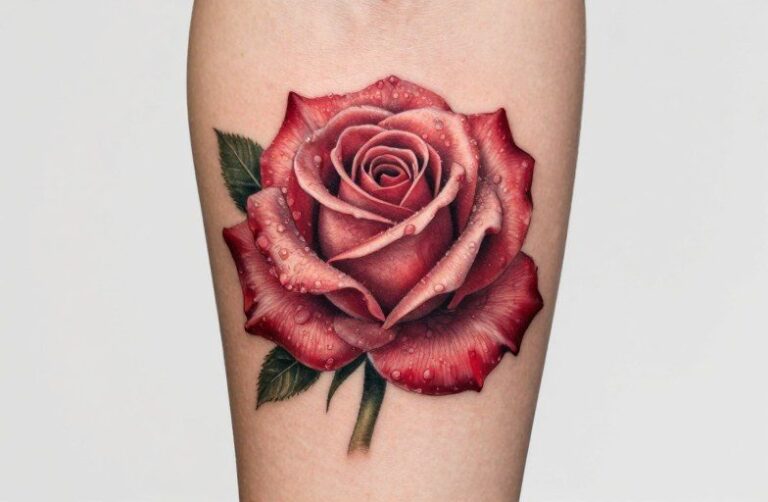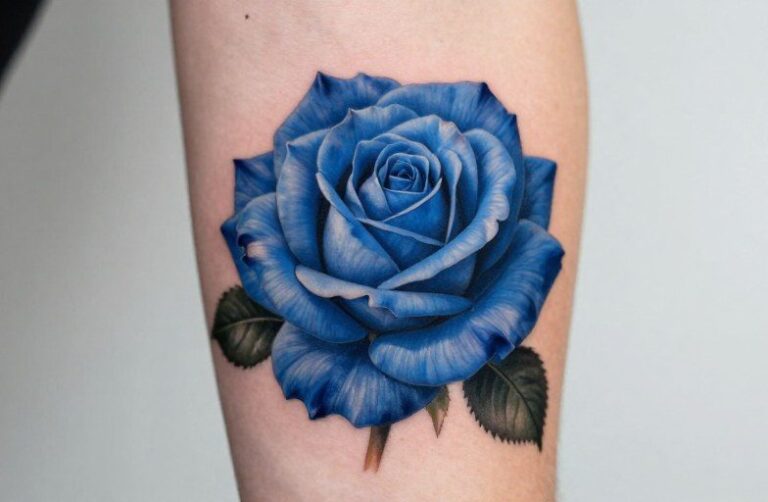
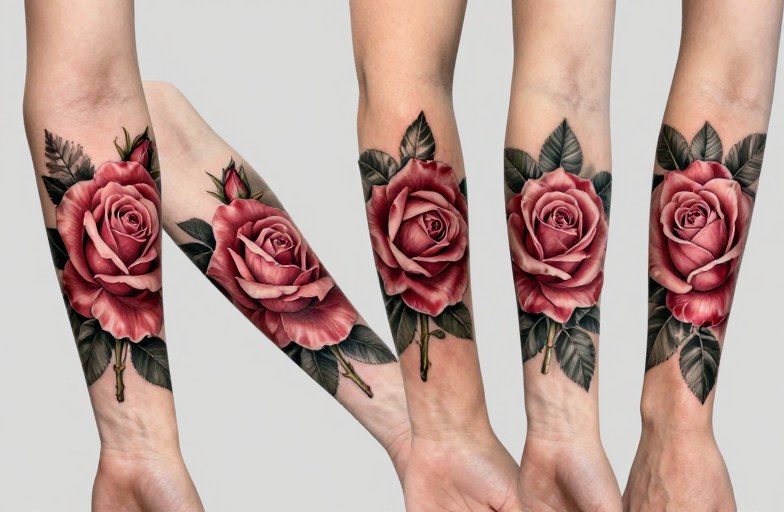
A rose sleeve tattoo on a female arm typically speaks to duality, beauty and pain, growth and defense, softness and strength. The rose itself has stood for centuries as a symbol of love, mortality, and rebirth; stretched across a full sleeve, those meanings gain room to breathe, shift, and layer with other imagery. For many women, the choice signals a reclaiming of space: the arm as visible, unapologetic canvas.
Personal & Modern Meanings
Reclamation and Visibility
A full sleeve demands attention in ways a wrist piece or shoulder cap does not. For women, especially in professional or conservative environments, this visibility can be intentional defiance or quiet self-ownership. The rose softens the aggression sometimes read into large-scale tattooing, its familiar, “feminine” symbolism creating a bridge between the wearer and the viewer. Thorn placement matters here: wrapped around the forearm, thorns outward can read as boundary-setting; turned inward, toward the body, they suggest self-protection or internal struggle.
Grief and Memorial
Roses remain the most requested flower for memorial work. On a sleeve, that mourning gains narrative room, blooms at different stages (bud, full open, dropping petals) can track a relationship’s timeline or a person’s life stages. Some women choose specific numbers of blooms to match family members or years. The sleeve format allows for dates, names, or complementary imagery (crosses, birds, clocks) without crowding a single focal point.
- Single rose dominant: singular love, self-love, or one pivotal loss
- Multiple roses climbing: growth through hardship, accumulated experience
- Roses with negative space: what remains after removal, absence as presence
- Dagger through rose: betrayal, sacrifice, or protection of something precious
Religious & Spiritual Angles
Christian Iconography
The rose carries heavy Catholic weight, often linked to the Virgin Mary as the “Mystical Rose,” and to the rosary itself. A sleeve incorporating rosary beads with roses grounds the design in devotional tradition. The five petals of a wild rose have been read as representing Christ’s wounds. For women raised in or departing from these traditions, the imagery can mark faith, rebellion, or complicated reconciliation. Sacred hearts, blood drops, and banners with scripture verses frequently accompany rose sleeves in this register.
Secular Spirituality
Outside organized religion, roses map onto chakra systems (the heart chakra, Anahata, is green but rose-associated in some Western adaptations) and tarot (the Rose Cross in esoteric decks). The flower’s cycle, thorn, bud, bloom, decay, mirrors meditation on impermanence. Some trace the rose’s spiritual lineage to ancient mystery cults, though this connection is more speculative than documented. What holds across traditions is the rose as threshold: between seen and unseen, material and symbolic.
Similar & Related Symbols
Peonies, lotuses, and chrysanthemums often get substituted or mixed with roses in sleeve work. Each shifts the meaning:
- Peonies: Prosperity, masculine honor in Japanese tradition, softer petal structure that ages more gracefully in color
- Lotus: Purity emerging from mud, more explicitly spiritual, cleaner lines for black-and-grey
- Chrysanthemums: Death and rebirth in Mexican and Japanese contexts, longer petals that hold detail
- Carnations: Less common in sleeves; maternal love, but ragged edges blur faster
Butterflies, bees, and hummingbirds paired with roses introduce pollinator symbolism, mutuality, fleeting pleasure, ecological awareness. Skulls nested in rose blooms (the classic memento mori) keep the design from reading as purely decorative. Snakes coiled through rose stems add danger and transformation; the Garden of Eden resonance is unavoidable but not mandatory.
How It Ages on Skin
Line Work and Placement Reality
Rose sleeves live or die on line weight. Fine, single-needle lines defining individual petals will blur within five to eight years, especially on the inner arm where skin stretches and rubs. Bold outlines, three to five needles, hold definition longer but sacrifice the delicate, illustrative quality many women want. The compromise is strategic: bold stems and outer petal edges, softer shading inside.
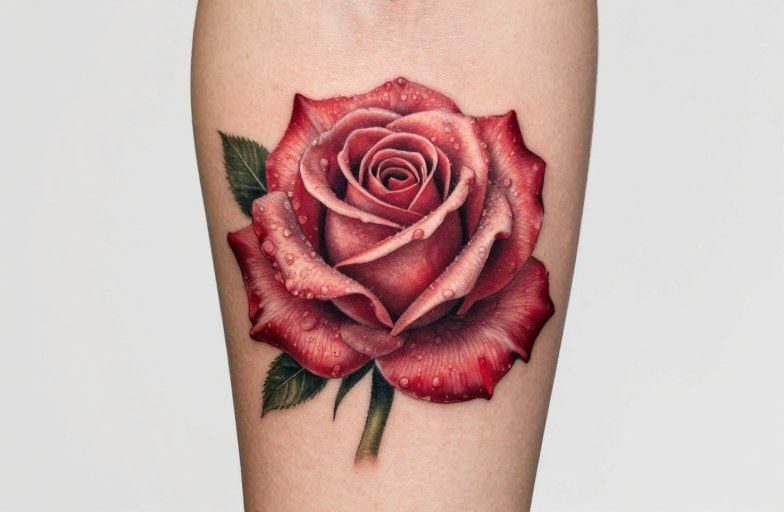
Color saturation faces its own challenges. Reds and pinks are notoriously fugitive; UV exposure fades them fastest, and the outer forearm catches more sun than the inner bicep. A sleeve with heavy red on the forearm will need touch-ups sooner than one with color concentrated on the upper arm. Black and grey ages more uniformly but can muddy if shading isn’t graduated properly, solid blacks in leaves turning to bruise-like blobs as ink spreads.
Healing and Long-Term Care
Full sleeves heal in sections unless you’re doing marathon sessions. The ditch (inner elbow) and wrist are high-movement zones; scabbing there is normal, picking isn’t. Moisture matters, dry skin cracks lines, over-moisturized skin can leach ink. After healing, sunscreen on the forearm isn’t optional if you want color to last past a decade. The upper arm, more protected by clothing and less sun-exposed, generally preserves detail longer.
Who Chooses This Tattoo
Demographics here are less fixed than tattoo culture sometimes pretends. Younger women often come in for rose sleeves after first tattoos elsewhere, wrist quotes, rib pieces, having tested their pain tolerance and workplace tolerance. The sleeve represents commitment, a visible line crossed. Older women getting first sleeves frequently arrive with specific imagery accumulated: a rose for a mother, a thorn pattern for a divorce, a color palette tied to something concrete.
Placement patterns differ by body type. Thinner arms need careful design so the wrap doesn’t distort when the muscle flexes; heavier arms offer more canvas but require the artist to account for more significant skin movement. Women who’ve lost significant weight sometimes choose sleeves to reclaim skin that held stretch marks or loose tissue, the tattoo restructuring how they see their own limb.
Color vs Black and Grey
Color: Risk and Reward
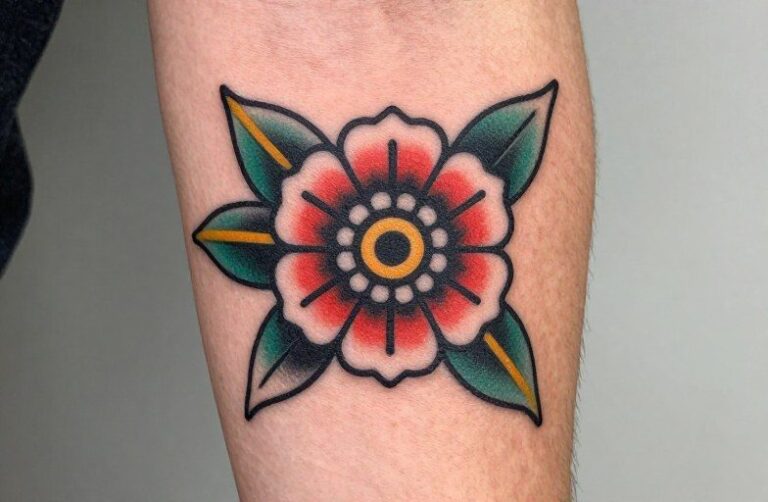
Traditional red and green rose sleeves carry immediate recognition. The color reads as “classic tattoo” to most observers, referencing Sailor Jerry lineage without requiring replication. But color demands more sessions, more money, more maintenance. Skin tone affects outcome dramatically; darker skin can subdue reds into brownish tones unless the artist works with high-contrast alternatives (deep burgundy instead of bright scarlet, emerald instead of lime green). White highlights on petals, popular in color realism, often yellow or disappear entirely on melanin-rich skin.
Black and Grey: Subtlety and Structure
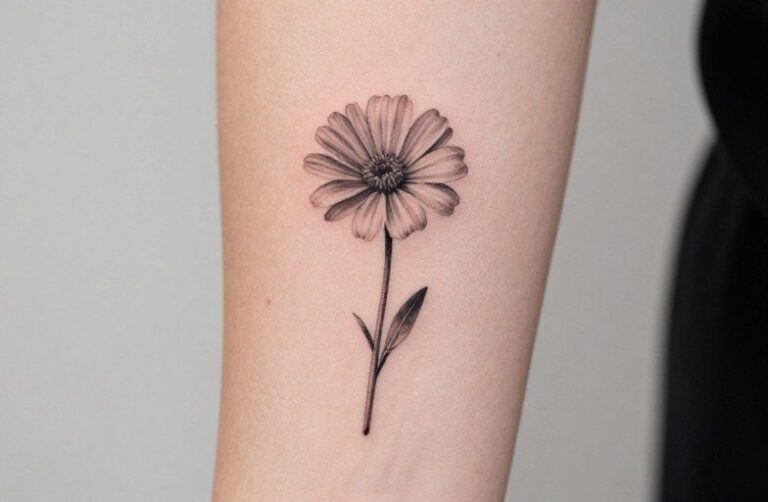
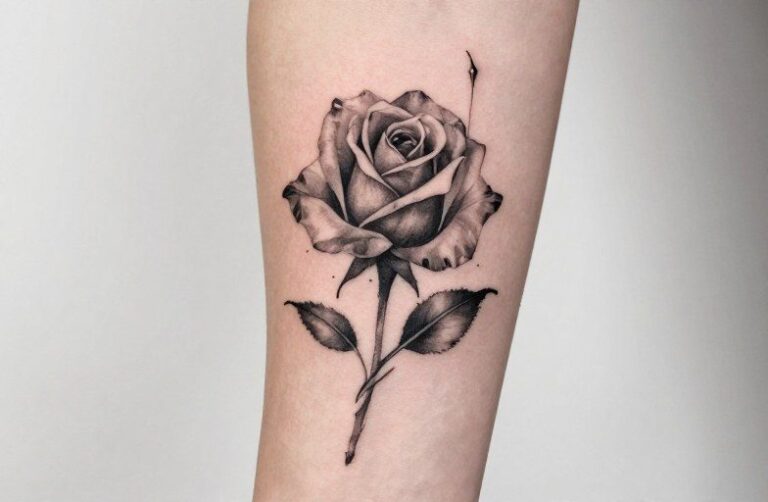
Black and grey rose sleeves rely on contrast gradients, smooth transitions from pitch black to skin tone, to create depth. This technique, often linked to Chicano tattooing and West Coast black-and-grey traditions, ages exceptionally well when executed properly. The absence of color forces attention to form: how the bloom opens, how leaves cup and turn, how negative space shapes the composition. For women wanting sleeves that read as elegant rather than loud, or who work in environments where color draws too much attention, black and grey offers flexibility.
Some split the difference: black and grey base with selective color accents, a single red rose among monochrome ones, or a green stem only. This approach draws the eye to specific narrative moments without the maintenance burden of full color.
The Takeaway
A rose sleeve tattoo for a woman carries no single meaning, it accumulates them. The rose’s historical weight (love, death, faith, beauty) provides a vocabulary; the individual wearer arranges the grammar. What distinguishes a successful rose sleeve from a generic one is specificity: not “a rose sleeve” but this rose, these thorns, that placement of color or absence of it. The arm becomes a record of choices made deliberately, visibly, and with the understanding that the image will change as the skin does, softening, shifting, but remaining marked.
Frequently Asked Questions
Do rose sleeve tattoos hurt more than smaller rose tattoos?
The pain varies by placement, not design. Inner bicep and elbow ditch hurt significantly more than outer forearm. A sleeve’s size means more total hours under the needle, but the rose imagery itself doesn’t increase pain.
Can I add to a rose sleeve later if I start with just a forearm piece?
Yes, but plan the composition early. A good artist designs with expansion in mind, leaving stem lines that can continue, or negative space that accommodates future blooms. Retrofitting disjointed pieces into a cohesive sleeve is harder and more expensive.
How much should a detailed rose sleeve cost?
Quality rose sleeves from experienced artists typically run $2,000, $5,000+ depending on color, detail level, and geographic market. Full color realism takes more sessions than black and grey. Bargain shopping for large work usually means rework later.
Will a rose sleeve affect my job prospects?
Visibility is the factor, not the imagery itself. Forearm and hand placement can’t be hidden in most professional settings; upper arm sleeves stay covered in standard business attire. Some fields (healthcare, education, corporate law) remain more conservative than creative industries.