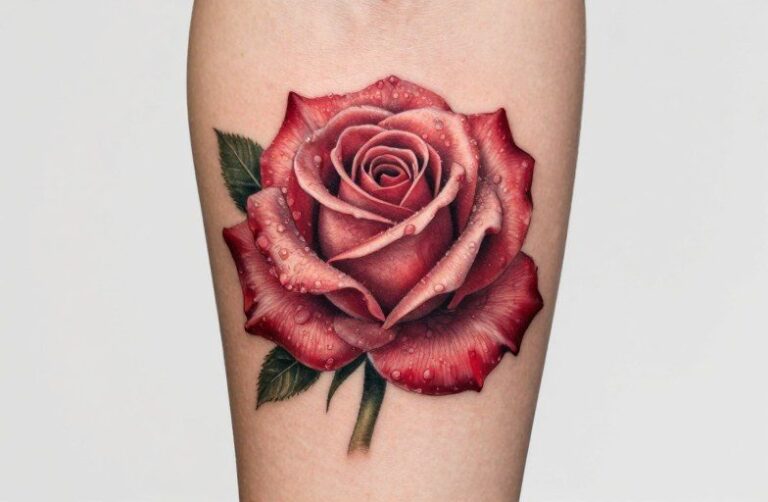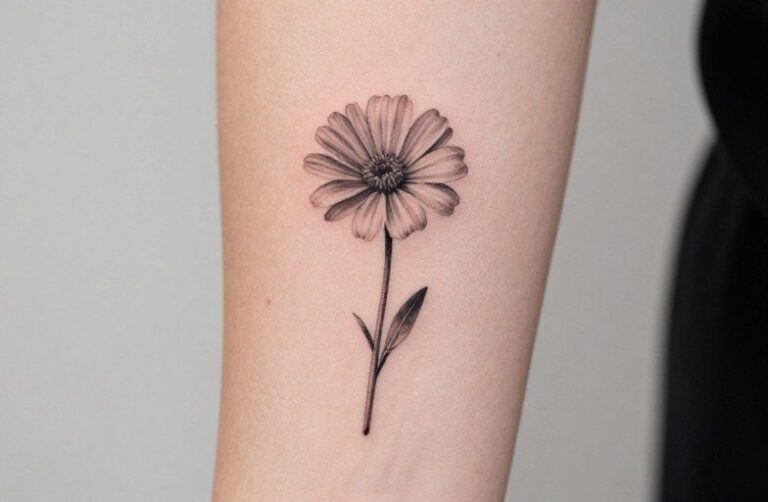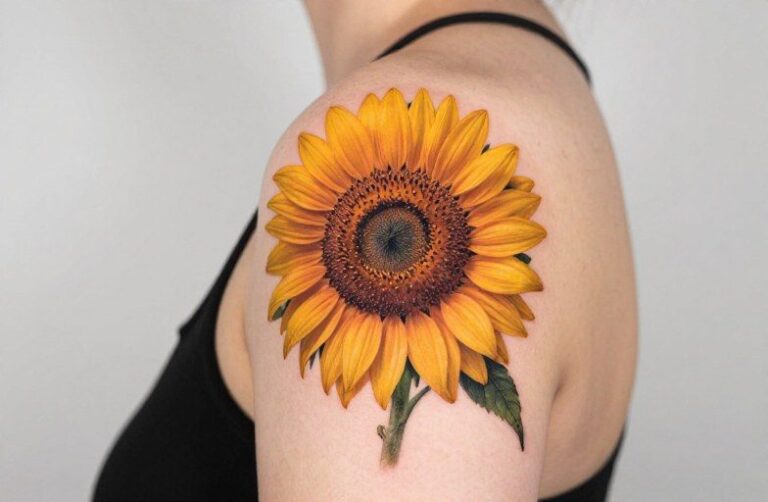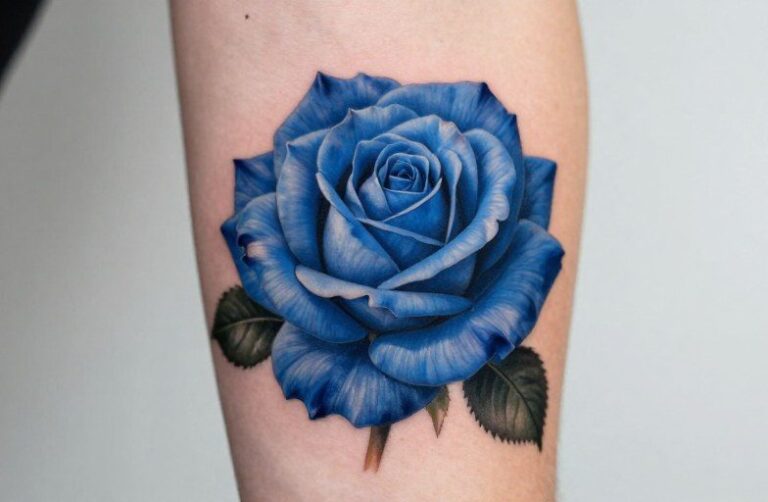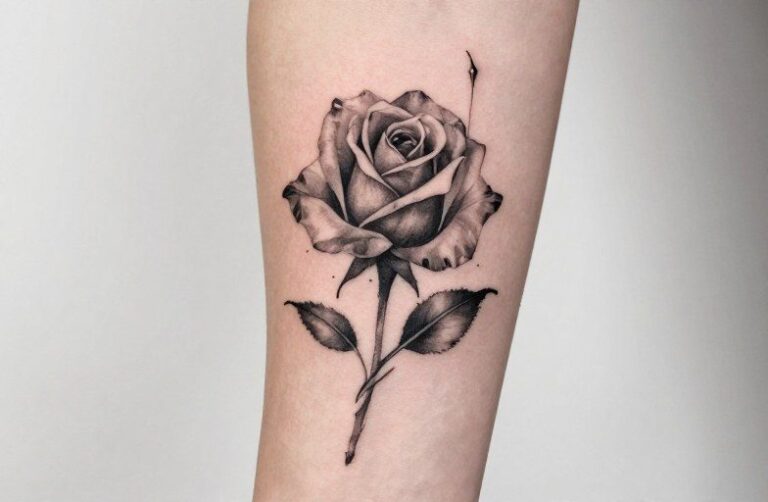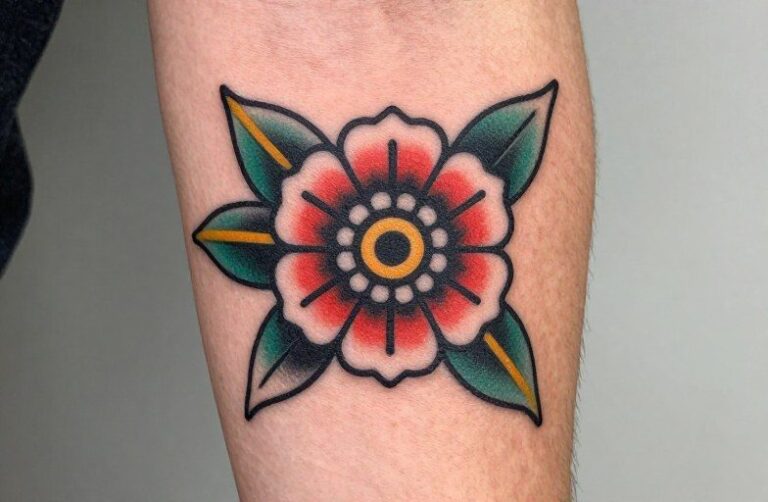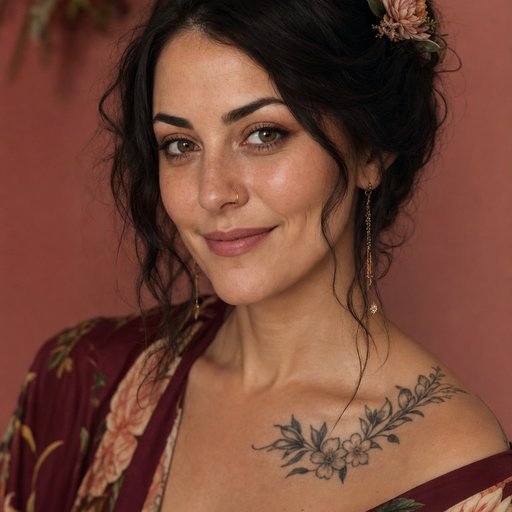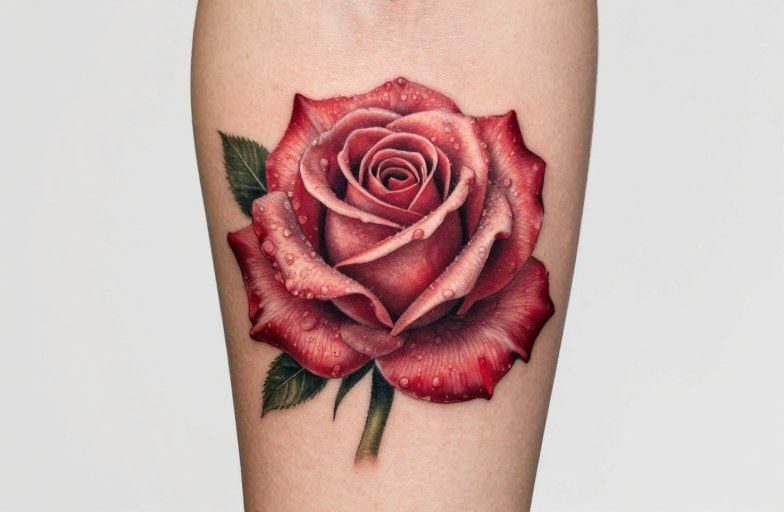
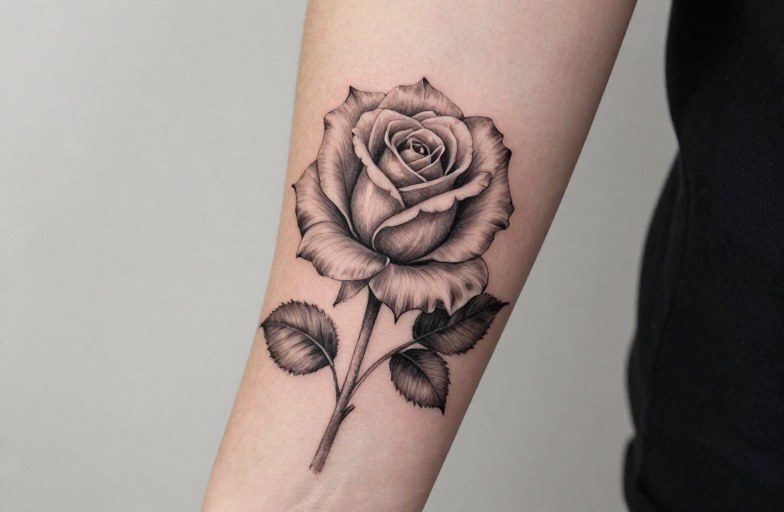
A sketch rose tattoo typically symbolizes raw emotion, creative freedom, and the beauty found in imperfection. Unlike a polished, photorealistic rose, the sketch style, with its visible lines, crosshatching, and deliberate incompleteness, speaks to process over product, the courage to remain unfinished, and an embrace of life’s messy, authentic edges. The rose itself carries centuries of layered meaning: love, loss, resilience, and the tension between beauty and pain.
Symbolism & Core Meaning
The Unfinished as a Statement
There’s a specific psychology to choosing a sketch style over a completed piece. The visible pencil strokes, the areas where shading stops mid-form, the lines that don’t quite connect, these aren’t flaws. They’re declarations. The sketch rose says: I am still becoming. I value the attempt. I don’t need to be polished to be valid. For artists, musicians, writers, and makers of any kind, this resonates as a permanent reminder that the rough draft has its own dignity. The visible process also creates intimacy; the viewer sees the hand of the maker, the human effort behind the image.
The Rose’s Built-In Contradictions
The rose carries inherent tension that amplifies the sketch style’s meaning. Thorns against soft petals. Something beautiful that demands blood to hold. Something that dies quickly but grows back. A sketch rose often leans into specific aspects of this duality: the thorny stem rendered in aggressive, scratchy lines while the bloom stays light and barely there; or a fully shaded flower with a stem that dissolves into loose, wandering marks. These choices aren’t random, they’re the wearer’s emphasis, their personal weighting of pain against beauty, permanence against loss.
How It Ages on Skin
Line Weight and Longevity
Sketch roses age differently than their solid counterparts, and understanding this matters before you commit. The light, feathery lines that give sketch work its energy are also the first to blur and fade. A single-needle line at hair’s width may look ethereal at month three and disappear entirely by year five. Heavier contour lines, think 7RL or 9RL work, hold their ground far longer. The most successful aging sketch roses use a hierarchy: bold outer contours that stay readable, with lighter interior details allowed to soften and become suggestion rather than information. Crosshatching, a common sketch technique, tends to merge over time into tonal areas rather than remaining distinct lines, which can actually work in the design’s favor if planned for.
Placement Realities
Where you put a sketch rose significantly affects its lifespan. High-friction areas, inner fingers, sides of the hand, feet, accelerate the fading of delicate lines. Areas with thin skin over bone, like the collarbone or shin, can cause fine lines to blow out as ink spreads through the dermis. The upper arm, outer thigh, and upper back offer more stable canvases where sketch details remain legible longer. Sun exposure matters enormously; UV radiation breaks down the lighter pigments faster, so a sketch rose on a frequently exposed forearm will need more touch-up maintenance than one on a typically covered torso.
Religious & Spiritual Angles
The rose carries heavy religious freight, and the sketch style can either honor or subvert it. In Catholic tradition, the rosary and the rose are linguistically and symbolically linked, the Virgin Mary is often associated with the Mystical Rose, and the five-petaled wild rose was linked to the five wounds of Christ. A sketch rose in this context might represent a questioning faith, a relationship with the divine that isn’t neatly resolved, or a personal spirituality that refuses institutional polish. The visible construction lines become almost confessional: here’s my doubt, here’s my reaching.
In esoteric traditions, the rose often symbolizes the soul unfolding, the achievement of spiritual insight through difficulty (the thorn path). The sketch style amplifies this, the soul still unfolding, the path still being walked, the insight still partial. The alchemical rose, which transforms base matter into gold through fire, finds an interesting parallel in the sketch technique: raw, seemingly unfinished material that nonetheless contains the complete form within it.
History & Cultural Roots
From Sailor Jerry to Fine Art
The sketch tattoo style emerged from multiple streams rather than a single origin. Traditional tattooing’s bold, clean lines dominated for decades, but by the 1990s and early 2000s, artists with fine art backgrounds began bringing their sketchbook aesthetics into tattooing. The style often linked to artists like Anki Michler and others who crossed between gallery drawing and skin work helped establish that visible process, construction lines, erasure marks, the evidence of revision, could be the point rather than something to hide. The rose, already a tattoo staple since the early 20th century, became a natural subject for this treatment, offering familiar symbolism rendered in unfamiliar form.
The Japanese Connection
Some trace the sketch aesthetic’s popularity to the influence of Japanese sumi-e painting, where a single brushstroke’s confidence and spontaneity carry more value than detailed rendering. The “one stroke” rose, captured in motion, shares DNA with the sketch rose’s energy and incompleteness. This isn’t direct lineage but rather convergent evolution: cultures valuing the visible hand, the moment of creation, the acceptance of imperfection as aesthetic virtue.
Who Chooses This Tattoo
Creative Professionals and the Identity Piece
Graphic designers, illustrators, architects, and photographers often gravitate toward sketch roses as professional identity markers. The style signals their relationship to process, their comfort with iteration, their rejection of the idea that only final products deserve attention. It’s common to see these paired with actual tools of the trade, pencils, brushes, cameras, integrated into the sketch lines themselves. The tattoo becomes a credential worn on skin, a way to identify fellow travelers.
Recovery and Transformation Narratives
People in recovery from addiction, eating disorders, or traumatic relationships sometimes choose sketch roses to mark periods of reconstruction. The unfinished quality mirrors their self-perception: not yet whole, still working, but undeniably alive and growing. The rose’s traditional association with love gets redirected toward self-love, self-forgiveness, the patience to allow one’s own slow unfolding. Unlike more triumphant imagery, the sketch rose accommodates the reality that healing isn’t linear, that some days you’re rough pencil and other days you’re barely there at all.
Common Variations & Styles
Technical Approaches
- True sketch: Actual pencil or charcoal texture replicated with stippling, varied line weight, and simulated paper grain. Often monochrome, sometimes with a single accent color.
- Watercolor sketch: Loose, bleeding color washes combined with sketch lines, the pigment seeming to escape the drawing’s boundaries.
- Geometric sketch: Construction lines, measurement marks, and drafting geometry visible beneath or around the organic rose form.
- Negative space sketch: The rose drawn in skin-toned negative space against a dark background, with sketch lines carving out the form.
Compositional Choices
Single stem roses dominate, but bouquet arrangements in sketch style create interesting tension, multiple flowers at different stages of completion, some fully rendered, others barely outlined. Falling petals, a traditional memento mori element, translate powerfully to sketch work; a single petal drifting away in a few loose lines can carry more emotional weight than a fully shaded falling petal. The stem’s treatment varies enormously: some artists wrap it in deliberate “mistake” lines, crossed-out attempts at thorns, numbers or letters that suggest a larger hidden system.
The Bottom Line
The sketch rose tattoo works because it refuses to resolve. It holds multiple meanings without collapsing into any single one: process and product, faith and doubt, love and its wounds, the finished and the forever-incomplete. Its aging characteristics demand thoughtful placement and technical choices, but the style itself rewards that care with a tattoo that looks intentional even as it softens. Whether chosen for creative identity, spiritual questioning, or the simple aesthetic preference for raw over polished, the sketch rose succeeds when the wearer genuinely connects to what unfinishedness means in their own life. The best ones don’t look like they need more work, they look like they chose exactly this much.
Frequently Asked Questions
Does a sketch rose tattoo need more touch-ups than a traditional rose?
Generally yes, especially if it relies on fine single-needle lines. Plan for a touch-up around the two-year mark, sooner if it’s on sun-exposed skin. The bold outline areas typically hold fine; it’s the delicate interior details that fade first.
Can a sketch rose work in color, or is black and grey better?
Color works beautifully, but the approach matters. Watercolor-style bleeding color complements sketch lines well. Solid traditional color fills tend to fight the sketch aesthetic. Black and grey remains the most common and technically forgiving choice.
What’s the difference between a sketch rose and a trash polka rose?
Trash polka incorporates realistic elements with graphic, often mechanical or typographic elements in a restricted red-black palette. Sketch roses stay looser, more hand-drawn, without the collage aesthetic or color restriction. They’re cousins but distinct styles.
How do I find an artist who actually specializes in sketch work?
Look for portfolios with consistent sketch or fine-line aesthetic, not just one or two pieces. Ask to see healed photos from a year or more out. The style requires specific needle knowledge and an understanding of how light lines age, experience matters more than with bolder traditional work.