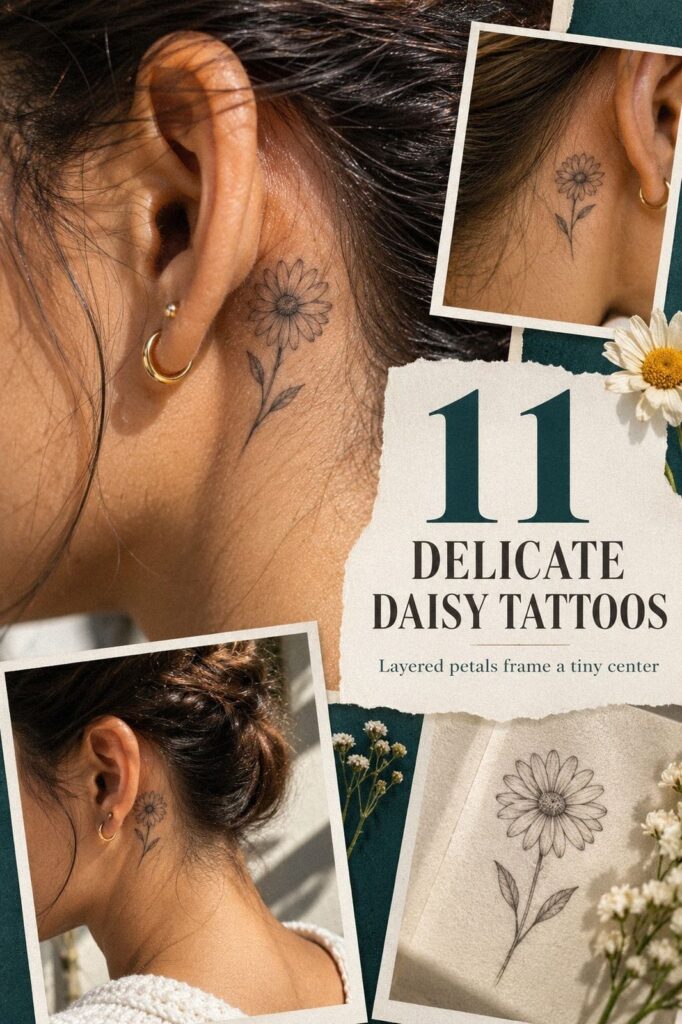
The safest first tiny daisy tattoo is a small black bloom with readable petals, thoughtful spacing, and a placement you won’t constantly rub. I learned that after choosing a design that was too delicate for its spot. These ideas keep the symbolism personal while giving your tattoo room to age with you. Start simple!
My one rule: choose the smallest version that still looks crisp from arm’s length. You’ll get better long-term value from a readable 1.5-inch flower than from a microscopic mark that loses its identity. If you’re comparing simplicity with a later touch-up, the minimal design is usually worth it.
- Trace a Tiny Daisy With Fine Linework
- Would a Wrist Daisy Fit Your Daily Life?
- Finger Placement: Visibility vs. Longevity
- The Yellow Center: Color Without Clutter
- Could a Daisy Behind Your Ear Stay Meaningful?
- Initials, Memory, and the Daisy
- Set the Daisy Above Your Ankle
- Would a Short Stem Improve the Shape?
- Collarbone: A Visible or Private Choice?
- Use Dotwork Without Crowding the Bloom
- Joy and Growth: Meaning Without a Quote
1Trace a Tiny Daisy With Fine Linework

On fair cool-pink skin, a fine-line daisy on the ribs looks delicate without disappearing. The rounded petals and dotted center should stay open, with enough breathing space between each mark for the design to remain crisp. It’s an understated choice, but the placement gives it a private, meaningful quality.
Ask for a small flower that measures roughly 1 to 2 inches rather than the tiniest possible mark. A 3RL needle grouping can create a graceful outline, though your artist may choose a different configuration for your skin and technique. You’ll want the center dots to remain visible, not blur into one dark spot.
Rib placement can feel fierce during the session because the skin sits close to bone and moves as you breathe. I’d skip an overly intricate design here. The sharpest version is a clean daisy with rounded petals, a compact center, and no crowded leaves.
The tattoo should be placed where your arm won’t constantly drag across it while you sleep. Follow the artist’s aftercare instructions, wash gently, moisturize with a fragrance-free product, and avoid sun exposure while it settles. Surface healing often takes about 2 to 3 weeks, while complete healing can take 2 to 3 months.
If you like this restrained look, compare it with these tiny wildflower tattoo ideas. You’ll see how a daisy can stay symbolic without becoming ornate, and that balance is what makes this option timeless.
Keep the Petals Readable
I wouldn’t remove petals just to make the flower smaller. A readable petal outline gives the daisy its identity, and you’ll notice the difference when the tattoo has settled. If the center, petals, and gaps all compete, the design won’t feel polished for long.
Your artist can simplify the bloom without making it plain. You’ve still got options: six rounded petals, five slightly pointed petals, or a tiny side-facing flower. The strongest choice is the one that matches your skin, placement, and tolerance for future touch-ups.
For another restrained floral direction, browse these small flower tattoo ideas for women. You don’t need to copy a reference exactly. Let it show you which shapes still look crisp at a small scale.
2Would a Wrist Daisy Fit Your Daily Life?
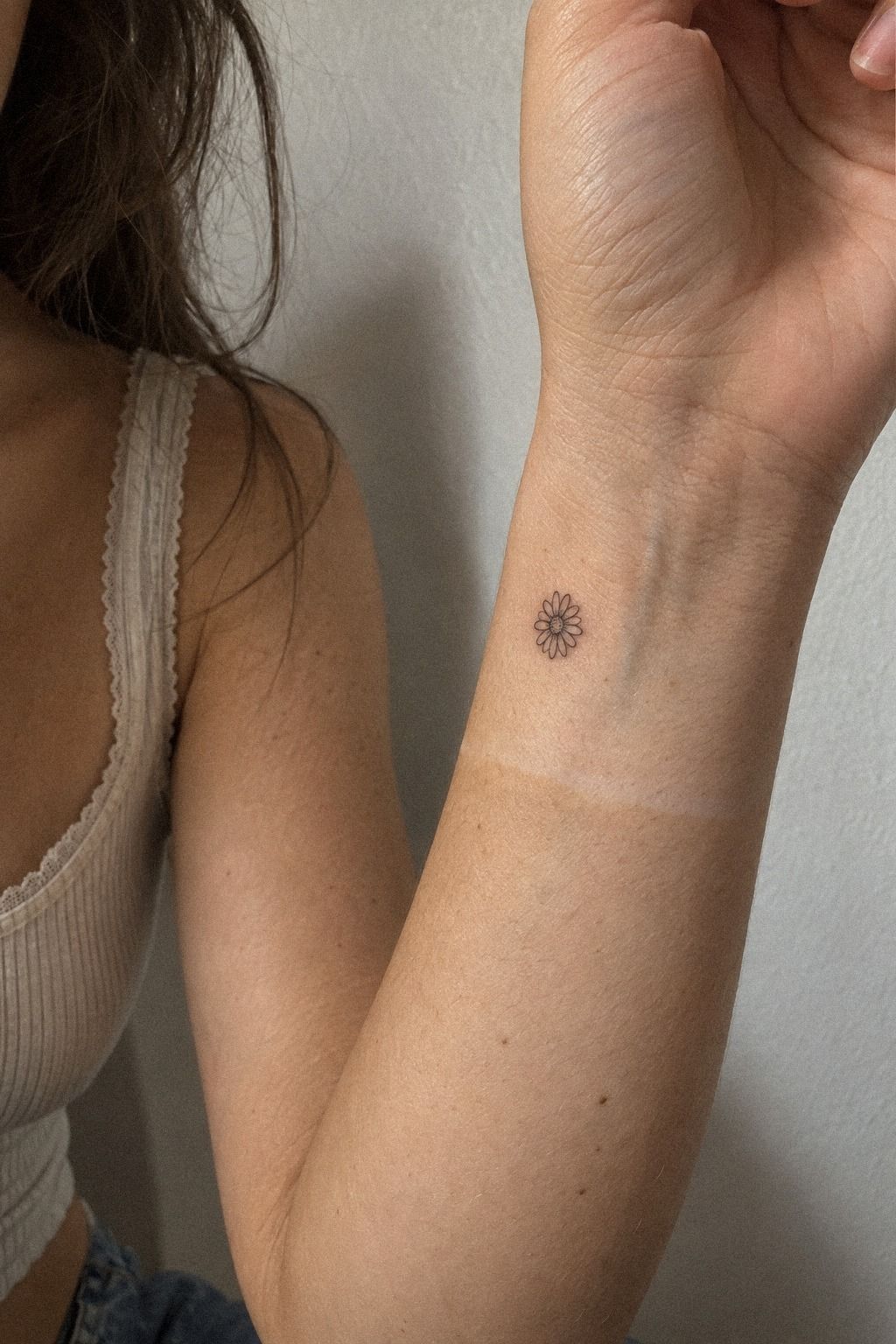
A wrist daisy has a bright, personal energy because you’ll see it while typing, driving, or reaching for your coffee. That visibility can be empowering, but you should decide whether you want a tattoo that becomes part of nearly every daily gesture. You’ll notice it constantly!
A wrist placement works well when you want a sleek flower that feels close and easy to show. I’d keep the petals slightly larger than you first imagine because frequent hand movement, washing, and UV exposure can soften very fine marks.
Before you book, wear a temporary version for several days. You’ll learn whether the position catches on sleeves, whether you like seeing it at work, and whether the design still feels personal after the novelty fades. That small test can save your budget.
The wrist can also be more exposed than the thigh or shoulder. If you want visibility but less rubbing, ask your artist about moving the flower slightly higher toward the inner forearm. For another compact direction, compare it with this small daisy tattoo placement guide.
Test the Wrist Before Booking
Look at the design from the angle you’ll actually see it. A temporary stencil may look perfect when your wrist is turned toward you but less balanced when your hand is relaxed. You’re choosing a mark that will follow your gestures, not just one that photographs well.
I’d also check how your watch, bracelets, or work habits might affect the location. You don’t have to avoid the wrist completely, but you’ll want to know what will touch it during the first few weeks. A slightly higher placement can feel more practical without losing the visual impact.
3Finger Placement: Visibility vs. Longevity

A finger daisy is bold because the placement is small, visible, and exposed to constant movement. On medium olive skin, the design can look sleek with rounded petals and a compact dotwork center. The best version is dainty, not a miniature bouquet squeezed into a narrow space.
You’ll want to choose the side of the finger or the top knuckle carefully. The side may experience more rubbing, while the top can catch sunlight and movement. Carbon-black ink gives the flower a strong starting point, but no tiny finger tattoo is completely protected from fading.
I’d avoid putting initials, dates, and a stem into this particular space. The flower already has a sharp, personal presence. A single daisy with five or six readable petals will age more gracefully than an intricate design that looks impressive only when it’s freshly finished.
Finger placement can be more uncomfortable than an upper arm or thigh because there’s less padding. Sessions are usually short, but you’ll still need to keep the area clean and avoid picking at flakes. And because you use your hands constantly, aftercare takes more attention than people expect.
If you love the symbolism but want more space, compare the finger with a small daisy tattoo placement guide. You can keep the same crisp flower while moving it to a location that gives the lines a little more protection. That may be the better cost-to-longevity choice.
Let Finger Ink Stay Minimal
Finger tattoos can be expressive, but they’re also demanding. I’d rather see a single daisy silhouette with open skin around it than six tiny additions that blur together.
You’re not losing meaning by leaving out the stem. You’re protecting the shape that made you choose the idea.
If you’re drawn to visible floral ink, these tiny flower tattoos for women can help you compare scale. You’ll find that some designs need more surface area than their first sketch suggests.

4The Yellow Center: Color Without Clutter

A fine-line daisy with one color accent feels unique without losing the flower’s recognizable shape. On golden tan skin, a small muted yellow pigment in the center can echo the natural look of a daisy while the black outline keeps everything sharp. The effect is vibrant, but still controlled.
Ask your artist whether the color will remain visible on your skin tone after healing. A spot of yellow, muted ochre, or soft coral may need thoughtful saturation and contrast. You’ll want to avoid stacking several pale colors into a design that has very little surface area.
The inner forearm is a practical place for this idea because it offers a smoother, more protected location than the hand. It’s also easier for you to monitor during healing. I’d choose one color accent over a full rainbow palette.
One deliberate detail looks polished; five competing colors look fussy.
A color daisy can carry a personal reference, such as a favorite flower, childhood memory, or meaningful season. Vegan tattoo ink is widely used by artists, but formulas vary, so discuss allergies and ingredients before the appointment. Your artist should also explain how color may shift as the skin heals.
The final design should still work in black and white. That’s my test for a strong color tattoo.
If the outline loses its charm when the accent is removed, the drawing probably needs more structure. For another symbolic option, look through these tiny lotus flower tattoos and compare the visual value before you decide.
The yellow center should support the flower, not become the whole story. A single color accent can feel elegant when the petals remain clear. You’ll get a more timeless result if the black outline still carries the design on its own.
Color behaves differently across skin tones and can look less vivid after healing. You shouldn’t judge the final effect from a fresh photograph. Ask for healed examples, and don’t be afraid to choose muted saturation if you want the daisy to stay understated.
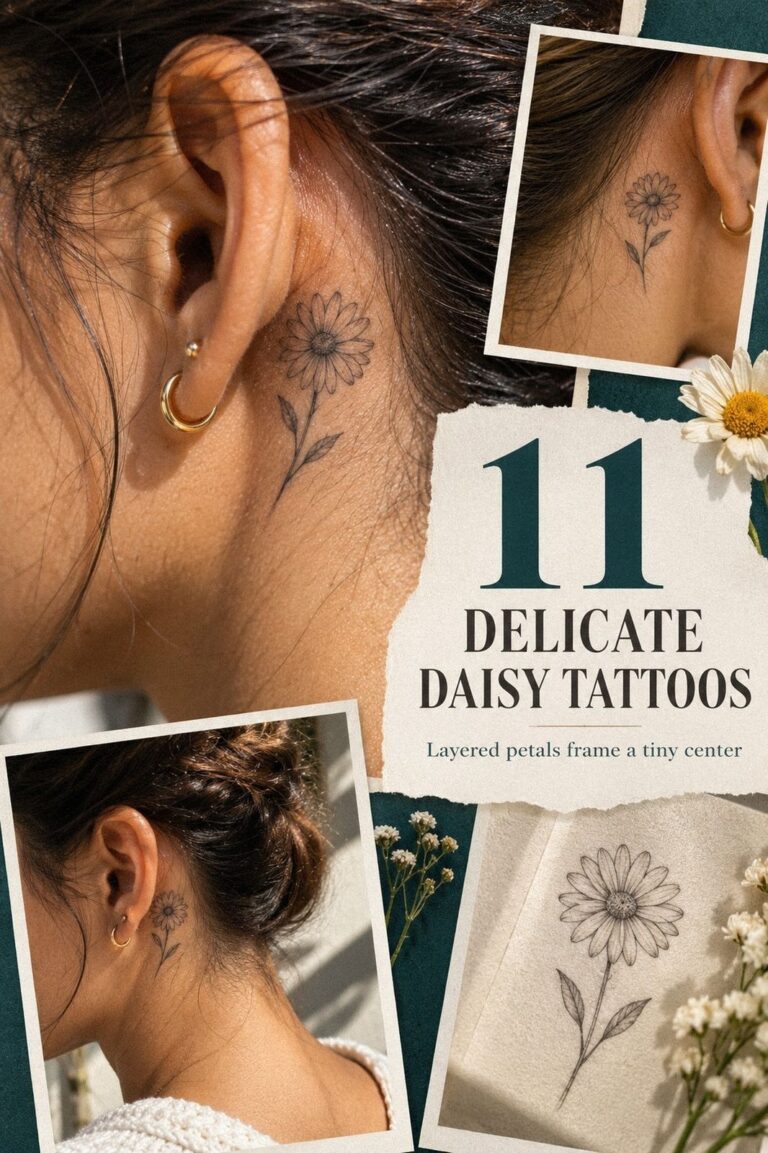
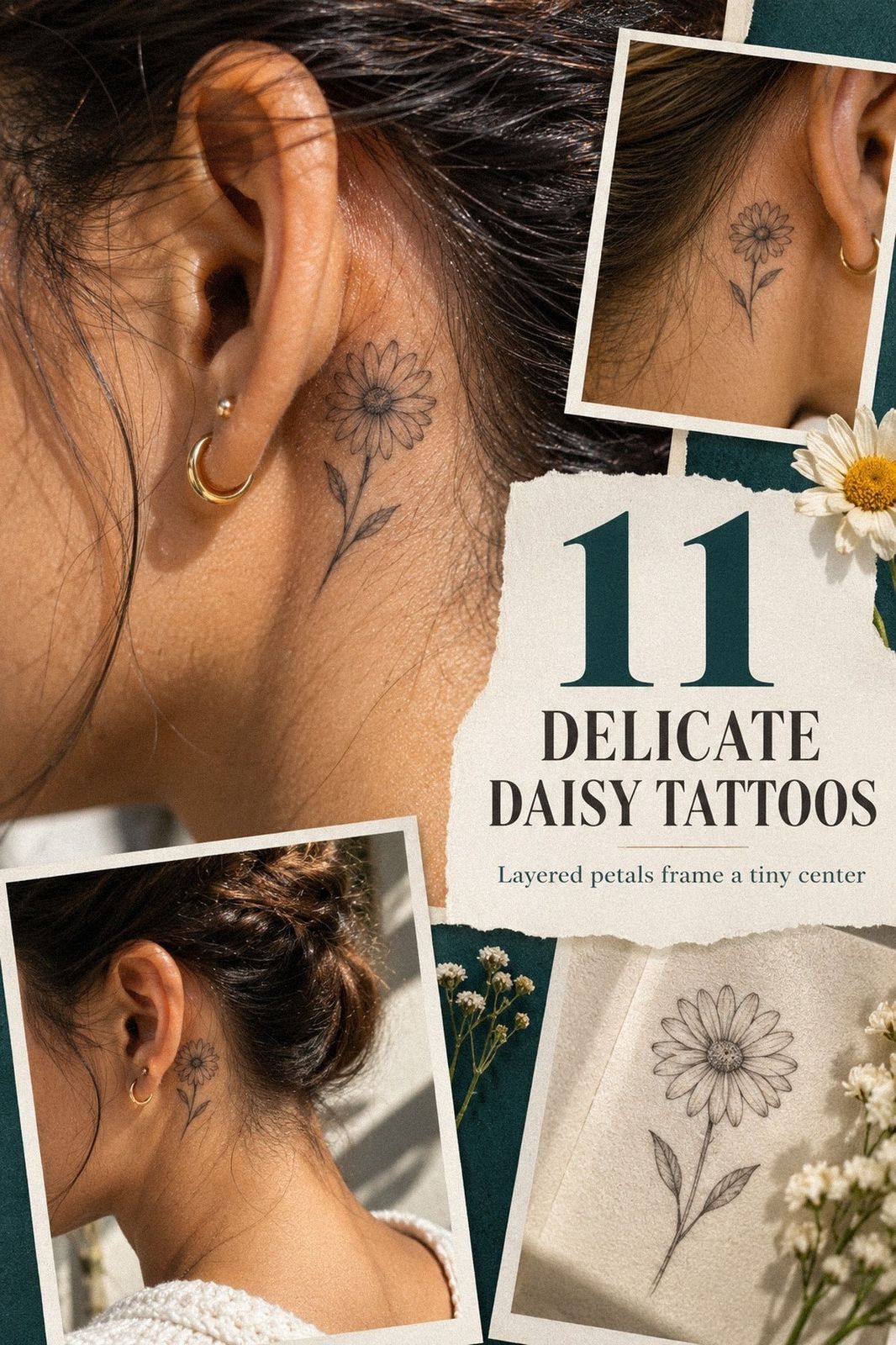
5Could a Daisy Behind Your Ear Stay Meaningful?

A behind-the-ear daisy has an edgy, discreet quality that changes depending on your hairstyle. You can reveal it with a tuck of hair or keep it private most of the time. That contrast makes the placement feel stylish without demanding attention.
Because the area is compact, I’d choose a clear silhouette rather than an ornate cluster. A behind-the-ear placement may suit you if you want a small reminder that isn’t immediately visible in every outfit.
The skin can be sensitive, and hair products may complicate early aftercare. You’ll need to keep the area clean, avoid scratching, and follow your artist’s instructions closely. I’d also think about headphones, glasses, helmets, or anything else that touches the spot.
A tiny daisy here can feel romantic when it represents renewal, friendship, or a private promise. If you’re unsure, try a temporary design first and compare the placement with these tiny flower tattoos for women. The extra reference may help you decide whether the price feels worth it.
Think About What Touches the Skin
Behind the ear looks discreet, but the location isn’t invisible to friction. Early aftercare can become harder if hair, headphones, or glasses keep brushing the tattoo. You’ll want to plan the appointment around a few quieter days, especially if you wear your hair down.
This placement can also feel ethereal when the daisy is barely visible beneath the hairline. It’s a meaningful option for someone who wants symbolism without constant display. You don’t have to make the flower larger just to prove it’s there.
6Initials, Memory, and the Daisy

A daisy with initials can mark a person, place, or memory without becoming a full sentence on your skin. On deep ebony skin, the flower should be drawn with strong contrast and a clear silhouette. Bold black ink around the petals can help the design stay readable, while the initials remain small and balanced.
Place the letters beneath the flower or along one short stem rather than forcing them inside the center. The center already has dotted detail, and extra lettering there can blur the visual hierarchy. You’ll want the daisy to remain the main subject, with the initials acting as a quiet second layer.
I’d use one or two letters at most. A full name may require a larger tattoo than you first imagined, and shrinking it too far can make the text less legible over time. This is where an empowering, personal idea benefits from restraint.
Ask your artist to show healed examples on a range of skin tones. Lighting can make fresh ink appear more defined than healed ink, so portfolio variety matters. But the right artist won’t treat deep skin as a limitation; they’ll adjust contrast, spacing, and placement with confidence.
Before you choose the letters, try the design at its intended size on paper. Stencil transfer paper lets you see whether the flower and initials feel balanced on your shoulder.
If you prefer pure floral symbolism, compare this idea with tiny flower tattoos for women. That extra comparison can protect your budget from a rushed decision.
That balance matters!
Let the Initials Stay Quiet
The lettering should feel like a secret detail, not a second focal point. A one-letter addition can be more powerful than a crowded memorial design because you’ll still recognize the daisy first. You’re giving the symbol space to carry the emotion.
If you’re uncertain about names or dates, leave them out during the first consultation. Try the flower alone, then ask the artist to place the letters beside it digitally or on paper. You can always add complexity later, but you can’t easily undo a cramped composition.
7Set the Daisy Above Your Ankle
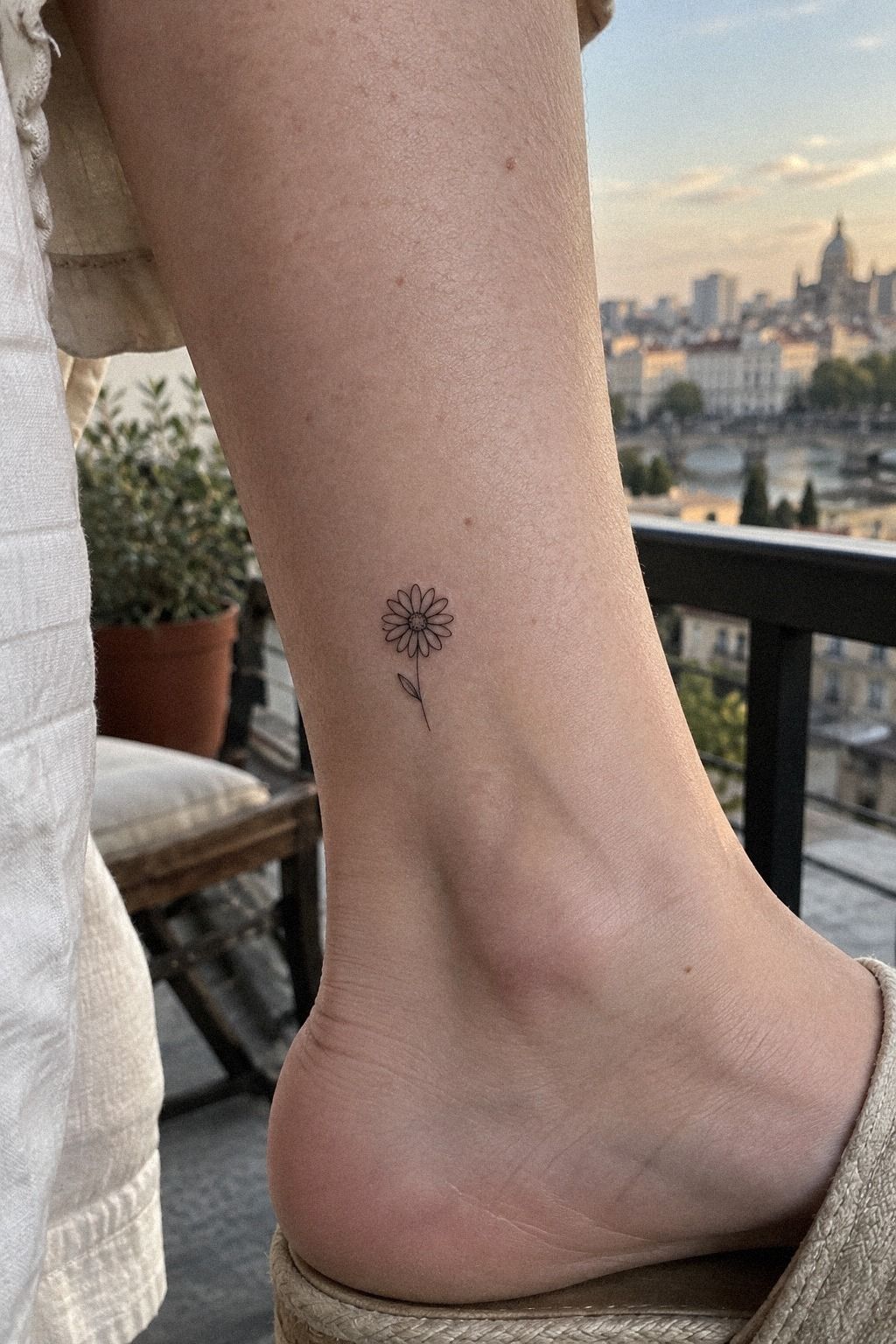
An ankle daisy can look playful and polished at the same time.
8Would a Short Stem Improve the Shape?

A tiny daisy with a stem has a more flowing shape than a standalone flower. On medium warm ivory skin, the fine black stem can lead the eye down the thigh without making the design feel large. The rounded bloom stays whimsical, while the stem adds direction and a little movement.
The thigh gives your artist more space and tends to be more tolerable than ribs, feet, or hands. You’ll want to think about whether the flower points upward or toward the knee. That small choice changes the visual rhythm when you walk, sit, or look down at it.
I’d keep the stem short and slightly curved. A perfectly straight stem can look stiff, while a long winding stem can make the daisy feel more botanical than minimal. One leaf may work, but two leaves often start competing with the flower.
Your artist may use a single-needle technique for the stem, but the final line should match your skin and the artist’s approach. Ask how they expect it to heal, especially if you’re choosing an extremely fine mark. And remember that sunscreen matters once the area has healed.
For a romantic variation, pair the stem with one tiny dot instead of text. That gives the tattoo a symbolic, timeless finish without adding clutter.
If you like flowers with a more flowing structure, see these tiny cherry blossom tattoo ideas for another direction. The value is in the shape, not the number of details.
Let the Stem Follow Your Movement
A stem should guide the flower rather than make it look taller than intended. Short curved stem designs tend to feel graceful because they follow the body’s natural direction. You’ll notice the difference when the tattoo is viewed while standing instead of lying flat.
I’d avoid adding a quotation beneath it. A dot, tiny leaf, or small gap can create enough visual punctuation. You’re choosing a daisy because the symbol already feels complete, so let the linework stay confident.
9Collarbone: A Visible or Private Choice?
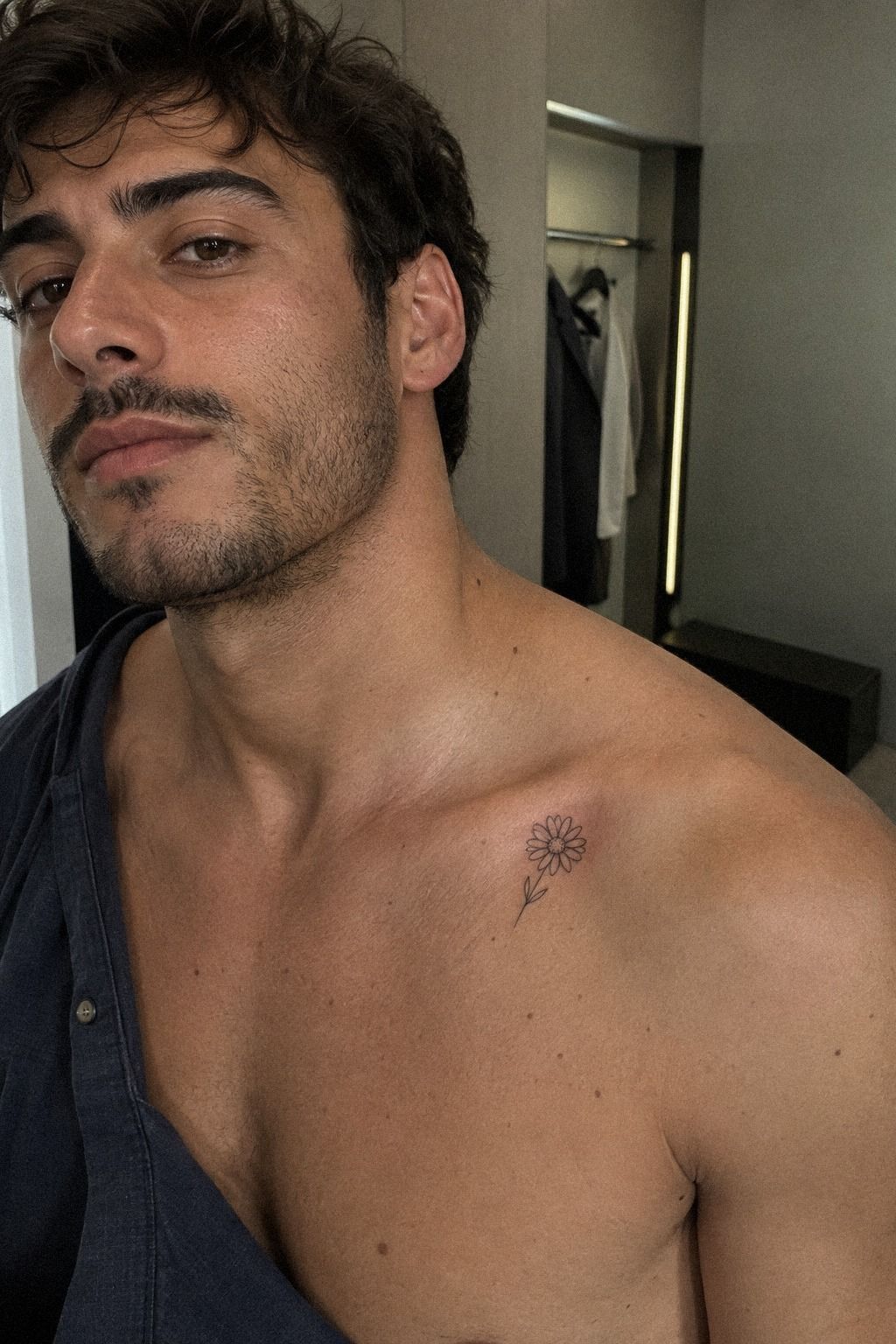
A collarbone daisy has a sharp, visible quality that can look elegant with masculine or feminine styling.
10Use Dotwork Without Crowding the Bloom

Dotwork can give a tiny daisy a textured center without adding heavy shading. A dotwork center feels intricate when each point has space around it, but a dense cluster may soften into one dark patch. You’ll want the healed version to retain separate points, especially if the flower is under 2 inches.
On the ankle, use the technique sparingly. A few deliberate dots can make the center feel expressive, while too many marks can compete with the petals. I’d rather see a crisp, restrained pattern than a complicated one that loses clarity after healing.
Here are practical US tattoo benchmarks to keep in mind:
Costs vary by artist and region, and a tiny design can still meet a studio’s minimum. Healing skin may look dull, flaky, or slightly uneven before the final result settles. Don’t judge the tattoo in the first few days, and don’t pick at peeling areas.
I’d choose dotwork over grey shading when you want texture but not a heavier appearance. The technique can feel delicate, expressive, and crisp when the spacing is right.
If you want a larger comparison set, browse these small daisy tattoo ideas before booking. Knowing the likely cost makes the appointment easier to plan.
Give Every Dot a Purpose
Dotwork looks strongest when the pattern has a clear limit. A sparse dot pattern can make the center feel polished without competing with the petals. You’ll want the artist to leave enough skin visible that the flower still reads as a daisy from a normal distance.
If you’re choosing a tiny design, ask whether an open center would work better than shading. Sometimes the most striking result is a few clean dots and nothing more. You don’t need texture everywhere for the tattoo to feel finished.
11Joy and Growth: Meaning Without a Quote

A daisy symbolizing joy and growth can stay simple while carrying a clear emotional reason. On deep brown skin with a warm undertone, the solid black center gives the bloom a grounded point of contrast. Rounded petals around it create a bright, powerful shape that won’t need extra decoration.
The calf is a practical placement because it offers more padding than the ankle or foot. You’ll want to consider how the design faces when you stand, not only how it looks in a seated photo. A daisy aimed outward can feel more visible, while one angled inward feels more private.
I’d avoid adding a quote to this idea. The flower already says enough, especially if it marks recovery, a new chapter, or a person who helped you grow. A short stem or a few dots can add meaning without turning the tattoo into a crowded emblem.
Your artist should use contrast thoughtfully and show healed work on deeper skin tones. Blackwork saturation can create a powerful anchor, but the surrounding skin needs enough open space for the petals to stay distinct. And once it’s healed, sunscreen will help protect the lines from UV-related fading.
This is the most symbolic option in the list, but it doesn’t need to look solemn. A daisy can be playful, empowering, and personal at once.
If you want to explore a more decorative floral arrangement later, these tiny floral sleeve tattoo references offer a natural next step. For many people, that emotional value makes the design worth it.
Keep the Meaning in the Flower
A meaningful tattoo doesn’t need a paragraph of explanation. Joy-and-growth symbolism can stay understated when the shape, placement, and timing already carry the story. You’ll know what it means, even when nobody else asks.
I’d choose one emotional reference and let the rest remain open. A daisy can mark recovery, friendship, family, or a fresh beginning without spelling out every detail. That flexibility is part of what makes the flower so timeless.
Why I’d Keep a Tiny Daisy Simple
I’ve changed my mind about tiny tattoos more than once. At first, I thought the smallest possible design would be the most elegant, so I kept removing petals, dots, and space until the flower was barely readable.
That was the wrong direction. A tattoo doesn’t become more meaningful because it becomes harder to see.
The strongest daisy designs have a clear center, open petals, and enough line spacing to survive normal skin changes. I’d rather see a 1.5-inch flower with confident structure than a 0.75-inch flower packed with initials, leaves, shading, and a date. The smaller option sounds discreet, but it can become muddy when every mark is competing for room.
Placement matters just as much as the drawing. Ribs, feet, hands, and sternum can feel more intense because they’re close to bone, while the forearm, thigh, calf, and shoulder are often more tolerable.
That doesn’t mean one location is right for everyone. Your skin, pain threshold, work, clothing, and willingness to protect the tattoo all belong in the decision.
I also wouldn’t choose an artist from a fresh-photo portfolio alone. Ask for healed examples and look closely at line spacing, center dots, and how black ink settled.
A polished fresh tattoo can be enchanting, but the healed result is the honest test. If you’re going to keep seeing this flower for years, that evidence matters more than a dramatic studio photograph.
The daisy works because it can be delicate without being weak, symbolic without being literal, and bold without becoming loud. You don’t need to force a trend into it.
Choose the placement that fits your life, give the artist enough space to draw cleanly, and let one strong flower do the emotional work. That’s where the timeless quality comes from.
What People Always Want to Know
How much does a tiny daisy tattoo usually cost?
A tiny daisy tattoo usually costs about $100 to $300 in the US, depending on the artist, region, placement, and detail. Many studios have a minimum of roughly $50 to $100, while hourly rates often sit near $100 to $250. Your final cost depends on the artist’s minimum and the design’s complexity.
Are tiny daisy tattoos a good idea for a first tattoo?
Yes, they can be an excellent first tattoo because the design is small, readable, and easy to personalize. Choose a placement such as the forearm, thigh, shoulder, or calf if you want a more tolerable session and simpler aftercare. I’d prioritize healed examples over the lowest price.
How do I choose a tattoo artist for a tiny daisy tattoo?
Review healed portfolio photos, not only fresh work. Look for clean linework, consistent dot spacing, strong contrast, and experience with your skin tone. The studio should also explain hygiene, stencil placement, aftercare, and realistic expectations for fine lines.
You’ll get better value from the right specialist than from a rushed bargain.
How much do tiny daisy tattoos hurt?
Pain depends on the person and placement. Ribs, feet, hands, and sternum are often more sensitive, while the forearm, thigh, shoulder, and calf can feel more tolerable.
A tiny design usually means a shorter session, but location still matters. You know your own threshold best.
How long does a tiny daisy tattoo take to heal?
The surface usually heals in about 2 to 3 weeks, while complete healing can take roughly 2 to 3 months. Wash gently, moisturize as directed, avoid picking, and stay away from swimming and direct sun during early healing. Your artist’s instructions should take priority over general advice.
What’s the best placement for a tiny daisy tattoo?
The forearm is a practical choice for visibility and easier aftercare, while the thigh or shoulder offers more privacy and padding. Avoid placing extremely fine lines where constant rubbing, UV exposure, or bending could make them fade sooner. If you’re comparing options, this small flower tattoo guide can help you think through the choice.
Where I’d Start First
If I had to pick one, I’d start with the tiny daisy with a short stem on the thigh. You’ll get readable petals, more comfortable placement, and enough space for the design to age without crowding.
Pin that idea for later and compare it with more tiny flower tattoo inspiration. That’s the one I’d choose!