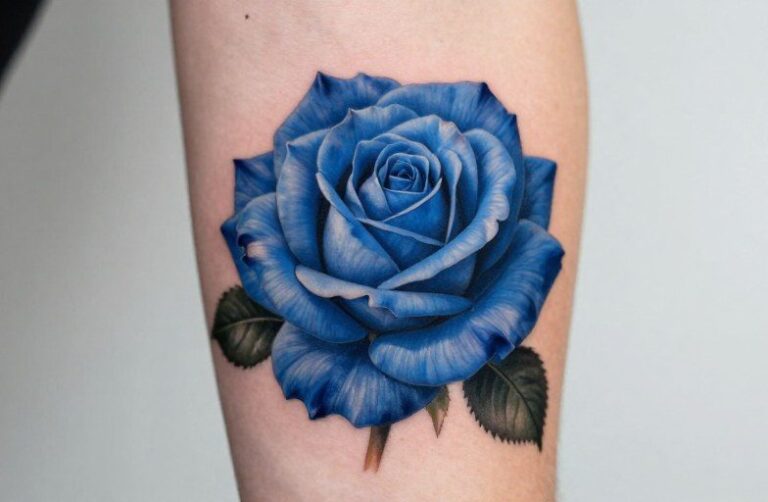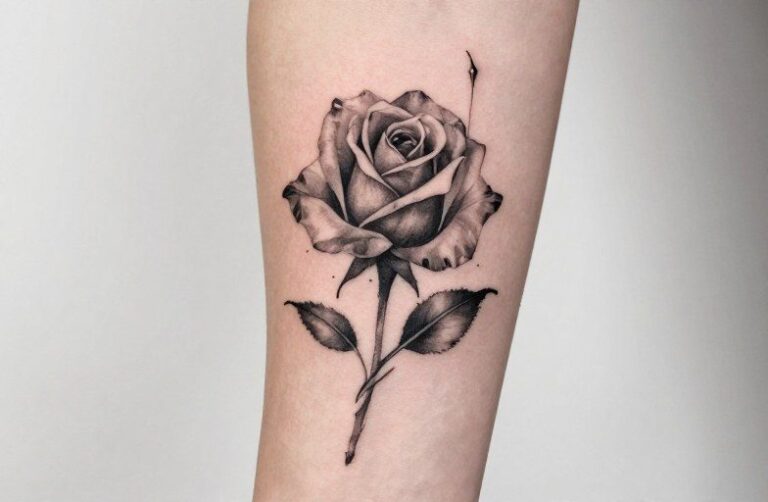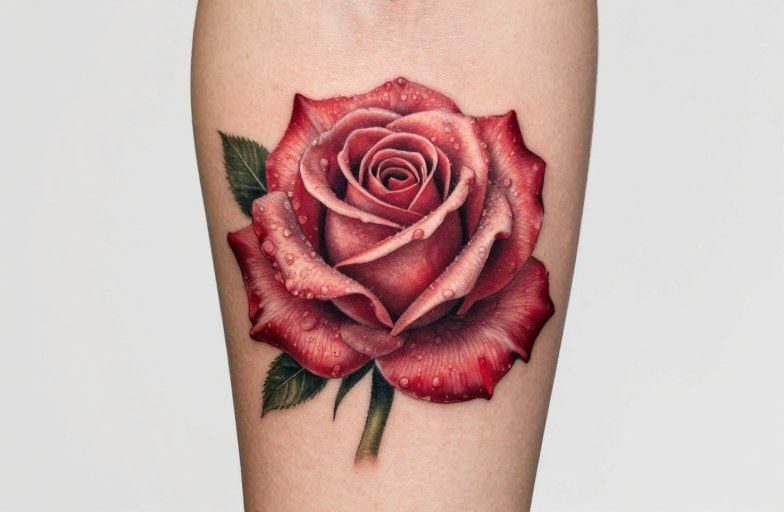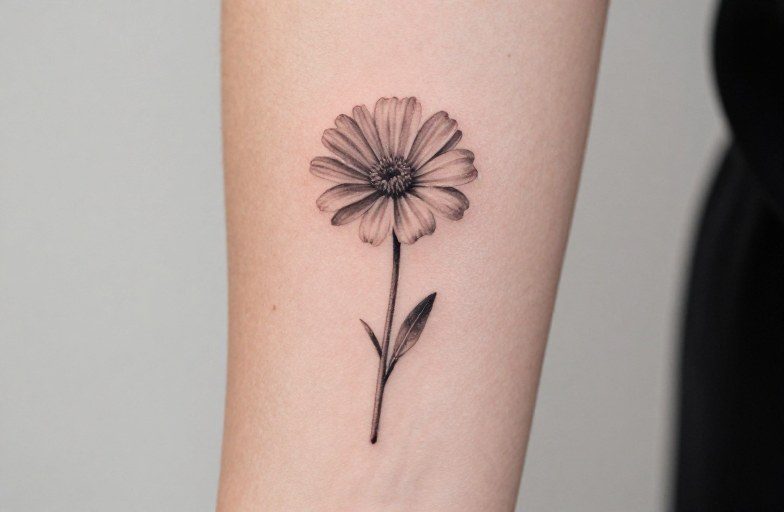
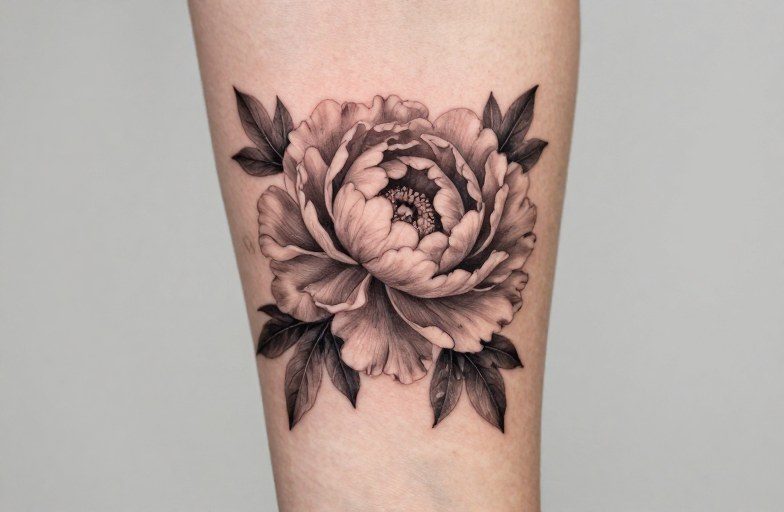
A peony flower tattoo most commonly signals romance, prosperity, good fortune, and honor. Beyond the surface beauty, the bloom’s full, layered petals and brief but intense flowering season have made it a lasting symbol of resilience, the idea that something delicate can still push through hard conditions and open fully.
Symbolism & Core Meaning
The peony packs more symbolic weight than most floral designs. Its reputation comes from how the flower actually behaves: the buds are tight and almost woody, then burst into extravagant, soft blooms that last barely a week. That contrast between toughness and vulnerability is the heart of its appeal.
Romance and Partnership
In Chinese tradition, the peony is called the “king of flowers” and is often linked to happy marriage and romantic devotion. A tattoo here works well for someone marking a partnership, an anniversary, or a belief in love that requires patience to unfold. Red and pink tones amplify this reading.
Wealth and Social Standing
The same cultural roots tie the peony to material abundance and high status. Gold or yellow peonies, or designs paired with coins or other prosperity symbols, lean into this meaning. It’s less about literal cash and more about the aspiration toward a life of comfort and dignity.
- Red peonies: passion, deep love, respect
- White peonies: shame or apology in some Eastern readings; purity or new beginnings in Western contexts
- Black and grey peonies: mourning, memory, or a stripped-down focus on form over color symbolism
- Yellow/gold peonies: prosperity, success, optimism
Personal & Modern Meanings
Today, people gravitate toward peonies for reasons that don’t always match the traditional script. The flower’s visual drama helps, it photographs well, fills space elegantly, and pairs cleanly with other elements.
Recovery and Survival
The peony’s growth cycle has made it a quiet emblem for people who’ve weathered difficult periods. The plant dies back to the ground each winter and returns reliably, sometimes for decades. That return-from-nothing quality resonates with anyone rebuilding after loss, illness, or major life change. No single color owns this meaning; the structure itself carries it.
Femininity Without Fragility
There’s a current trend of choosing peonies to reclaim feminine symbols from the idea of weakness. The flower looks soft but the plant is stubborn, almost weedy in its persistence. That duality appeals to people who want to mark strength that doesn’t present as hardness.
Common Variations & Styles
How the peony is rendered changes both the visual impact and the symbolic emphasis. This is where the tattoo moves from concept to actual skin.
Japanese Irezumi vs. Neo-Traditional
Japanese-style peonies follow specific rules: bold outlines, limited color palettes, specific leaf shapes with serrated edges, and placement as part of larger narratives (often with lions, koi, or wind bars). The meaning here is collective, part of a traditional vocabulary. Neo-traditional work keeps the bold lines but loosens the rules, allowing more personal color choices and compositional freedom. The meaning shifts toward individual expression.
Fine Line and Single-Needle
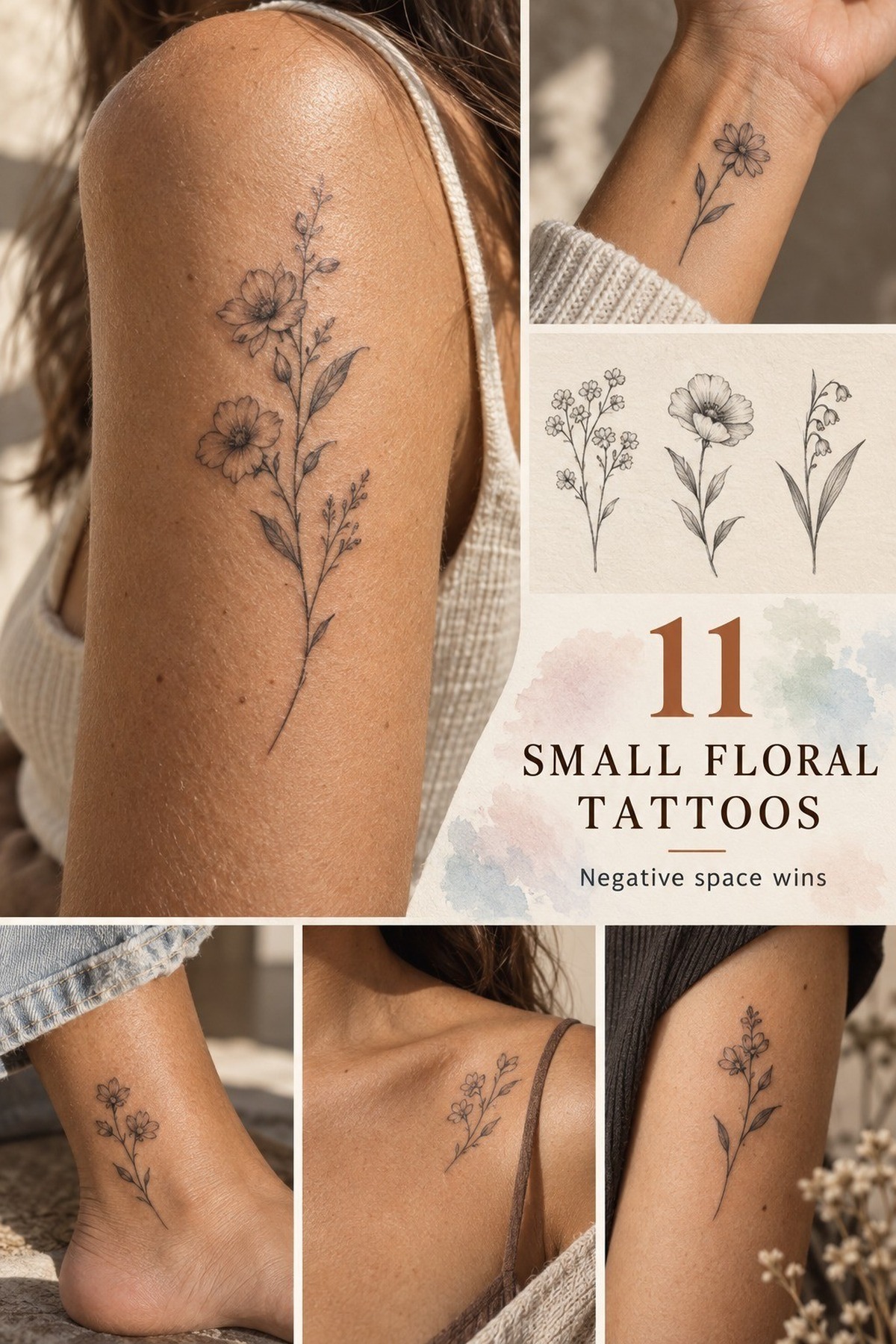
Delicate linework peonies have surged in popularity, especially for collarbone, rib, and behind-the-ear placements. The tradeoff is real: fine lines blur faster, and the peony’s layered petals can become indistinct mush if the artist doesn’t build enough contrast. For meaning, this style reads as intimate, private, sometimes tentative, very different from the declarative weight of a traditional back piece.
- Watercolor backgrounds: add movement and emotional looseness, but fade unpredictably
- Peony + snake: temptation, transformation, or the coexistence of beauty and danger
- Peony + skull: memento mori, the fleeting nature of beauty and life
- Closed bud vs. full bloom: potential vs. fulfillment, youth vs. maturity
How It Ages on Skin
Peonies are demanding tattoos to maintain. The intricate petal layering that makes them beautiful fresh is exactly what fights against time and sun.
Color saturation drops noticeably within five to seven years, especially pinks and soft reds that lack strong underlying magentas. Yellows and pale peaches often turn muddy. Black and grey holds structure longer but can lose the subtle gradations that define the flower’s ruffled form.
Placement matters enormously. A peony on the outer arm or calf, exposed to sun regularly, will degrade faster than one on the upper thigh or torso. The ribs and sternum, popular for peony placements, actually age reasonably well due to limited sun exposure, though the skin’s movement there can distort fine details over time.
Touch-ups are almost inevitable for color peonies. Budget for that from the start, or commit to black and grey with heavy black backing to create contrast that lasts.
History & Cultural Roots
The peony’s tattoo history is inseparable from its cultivation history. Native to Asia, Southern Europe, and Western North America, the flower has been bred in China for over 1,400 years. Its path into tattooing follows the spread of Japanese irezumi and, later, Western adoption of Eastern floral motifs.
Chinese Origins
The city of Luoyang was often considered the peony capital, with imperial gardens devoted to the flower. Its association with wealth and honor was literally cultivated, rare varieties commanded enormous prices and were given as tribute. This history feeds the tattoo’s connection to aspiration and high regard.
Japanese Adaptation
In Japanese tattooing, the peony (botan) is commonly associated with the shishi, or lion-dog protector. The pairing is often linked to the idea of a gentle appearance hiding ferocious capability, the peony’s beauty contrasting with the lion’s strength. This combination remains a staple in traditional Japanese tattooing worldwide.
Western tattooing adopted the peony more recently, largely through the 1980s and 1990s as Japanese tattoo influence spread and as botanical illustration styles gained traction. The meaning loosened in translation, becoming more personal and less culturally fixed.
Religious & Spiritual Angles
The peony carries limited direct religious doctrine but appears in spiritual contexts through association rather than command.
In some Buddhist art, the peony’s brief, perfect bloom illustrates the concept of impermanence, the flower as a meditation on transience. This aligns with broader Buddhist visual teaching tools, though the peony is less central than the lotus.
Christian interpretations, when they occur, tend to read the peony through its medicinal history. The root was used for pain relief and protection against evil spirits in medieval European practice, leading to occasional association with healing and spiritual protection. This is a softer, less defined connection than the flower’s Eastern symbolism.
For modern spiritual seekers, the peony often functions as an earth-based symbol of cyclical renewal, death, dormancy, return, bloom, without requiring formal religious attachment.
The Takeaway
The peony tattoo offers genuine symbolic depth without the cliché burden of some flower choices. Its meanings, love, honor, prosperity, resilience, the beauty of brief intensity, are specific enough to matter and flexible enough to adapt. The key is matching the style and placement to which meaning you actually want to emphasize: traditional Japanese work for cultural weight and collective symbolism, fine line for personal intimacy, bold color for declarative presence, black and grey for endurance and memorial tone.
Go in knowing the maintenance reality. A peony is not a low-effort tattoo to keep crisp. But that commitment, the need to care for it over years, oddly fits the flower’s own meaning: something worth having requires attention, returns only if you tend to it.
Frequently Asked Questions
Does the color of a peony tattoo change the meaning?
Yes, significantly. Red and pink lean toward romance and passion, white can signal apology or purity depending on cultural context, and yellow or gold point to prosperity. Black and grey strips away color symbolism to focus on form, memory, or mourning.
Where’s the best placement for a peony tattoo?
Upper thigh, torso, and inner arm age well with limited sun exposure. Outer arm and calf work for visibility but fade faster. Ribs and sternum are popular for intimacy though skin movement there can slowly distort fine details.
How does a peony tattoo compare to a lotus for meaning?
The lotus carries stronger, more uniform spiritual associations, purity, enlightenment, rising above. The peony is more socially and emotionally varied: romance, status, resilience, beauty’s brevity. Choose lotus for spiritual clarity, peony for layered personal symbolism.
Can men get peony tattoos or are they seen as feminine?
The peony has long appeared in masculine Japanese irezumi, often paired with lions or warriors. Modern Western adoption skews feminine in presentation, but the flower itself has no gender lock, style and pairing determine the reading, not the bloom alone.