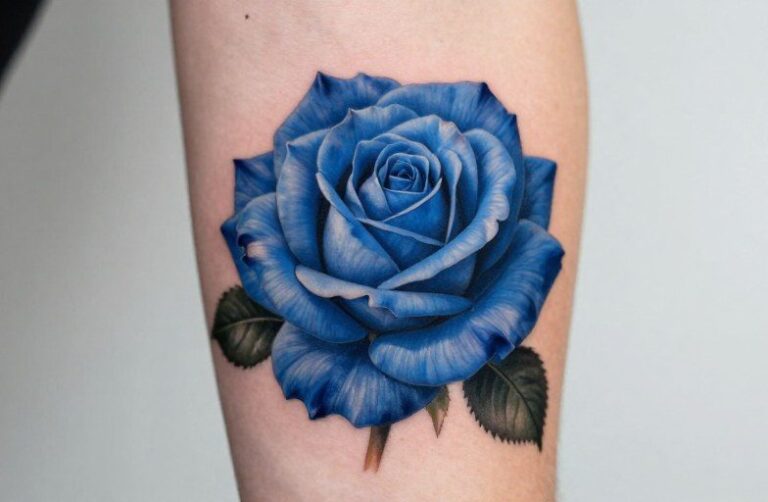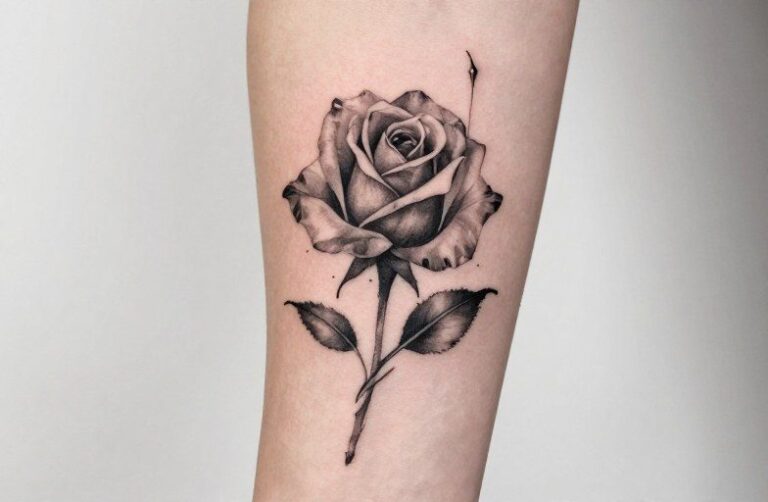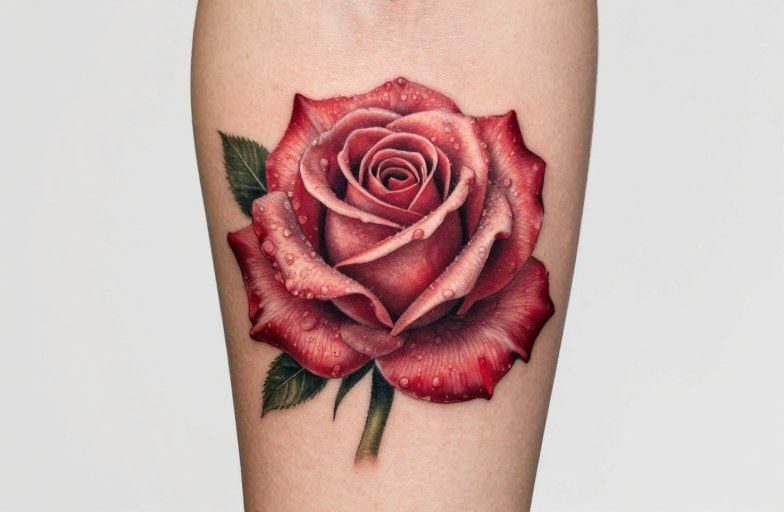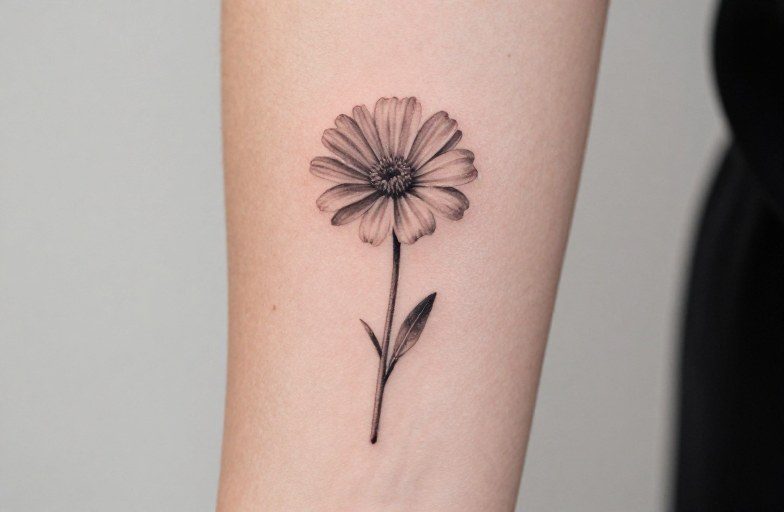
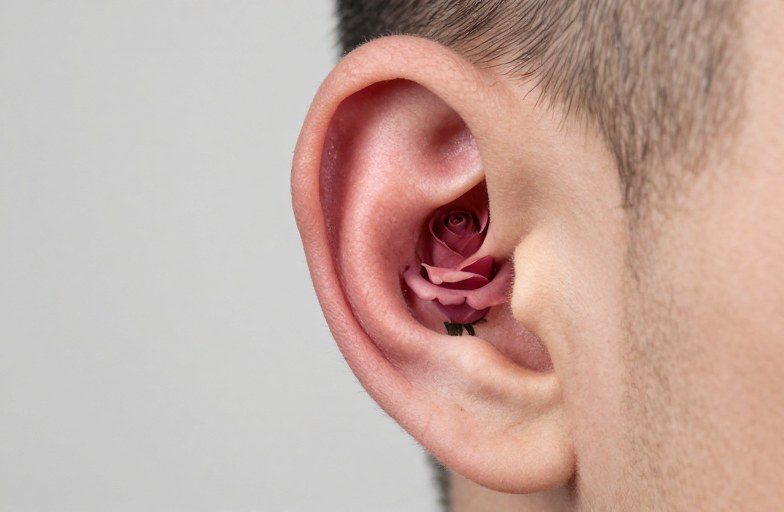
A rose tattoo tucked behind the ear generally signals something held close. Beauty that isn’t broadcast. Love or loss kept private. A quiet reminder of your own resilience. The placement itself matters: the ear sits near the pulse, the voice, the memory. A rose there can mean you are listening to something others don’t hear, or guarding something that still matters.
Color vs Black and Grey
What Color Changes
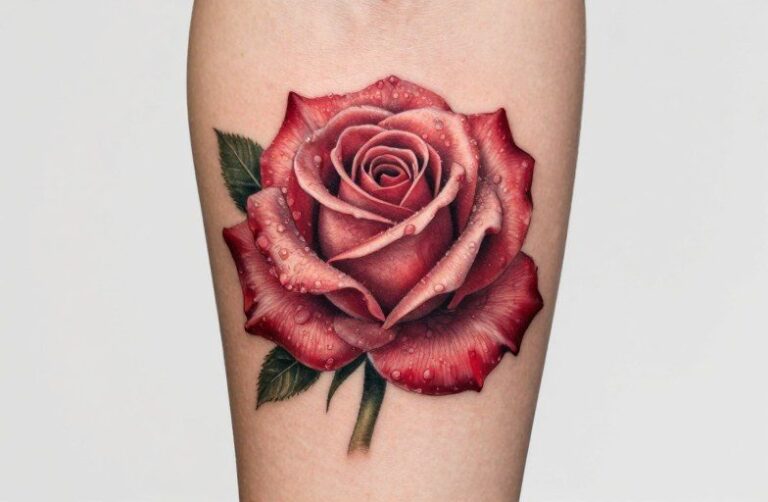
Red roses behind the ear lean into romantic symbolism, passion, blood, the heart. That bright pop against skin also draws the eye when hair moves, so the hidden aspect becomes more of a reveal. Darker reds and burgundies soften this; they read as mature, sometimes memorial.
Yellow and pink shift the tone entirely. Yellow roses traditionally carry friendship and joy, though behind the ear that brightness can feel almost ironic, cheerfulness in a hidden spot. Pink splits the difference: gentler than red, less funereal than white, often chosen for family bonds or self-love rather than romantic love.
White roses behind the ear carry funeral and wedding associations simultaneously. In this placement, that ambiguity can work in your favor, or it can confuse. Most artists suggest white only if you have specific personal symbolism, not for the color alone.
Black and Grey’s Different Weight
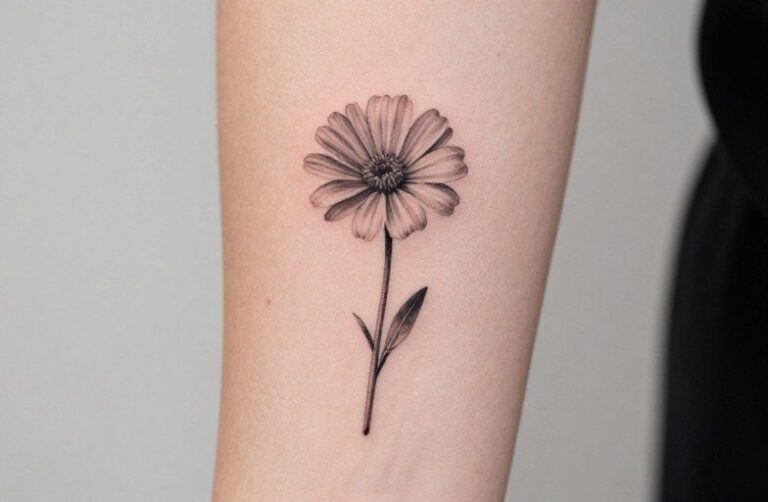
Black and grey roses behind the ear age more gracefully than color in this specific placement. The skin behind the ear is thin, moves constantly with jaw and neck motion, and sees irregular sun exposure. Saturated color can blur or fade unevenly here within a few years. Grey wash holds sharper edges longer, and the muted palette suits darker meanings, grief, remembrance, or simply aesthetic preference for shadow over shine.
Single-needle black and grey work can achieve incredible detail in small spaces, but requires an artist comfortable with tight, unstable skin. Bold black traditional roses survive better long-term but need more space than micro-realism to read clearly. Ask to see healed photos of behind-the-ear work from at least a year prior, not just fresh tattoos.
History and Cultural Roots
European and Maritime Traditions
Rose tattoos appear in European folk art for centuries, commonly associated with devotion and secrecy. Sailors wore roses as reminders of left-behind lovers, though this was usually on the chest or forearm, not specifically behind the ear. The gesture of tucking a flower behind the ear, often linked to feminine fashion in the early twentieth century, suggested availability or romantic attachment depending on which side. The tattoo placement borrows that same semi-hidden language, though the direct historical connection is less certain than some sources claim.
Chicano and Latin American Influence
In Chicano tattoo culture, the rose behind the ear became a specific marker, often linked to family remembrance and religious devotion. The Virgin of Guadalupe is frequently depicted with roses; placing one near the ear connects spiritual listening with earthly beauty. This tradition emphasizes fine-line black and grey work, sometimes with script banners that curve along the jaw or neck. The style has spread beyond its origins, but the specific combination of placement, rose, and fine-line script remains recognizably rooted in Chicano tattoo history.
Personal and Modern Meanings
Why People Choose This Placement
Behind the ear, the rose detaches from its cliché associations. On a forearm or shoulder, it is decorative first. Hidden here, it demands a reason.
- Survived betrayal or heartbreak: the rose still grows, but you have moved it where only you see it daily
- Quiet pride in femininity or queerness: reclaimed from traditional symbolism into deliberate, self-directed beauty
- Memory of someone who spoke into that ear: a parent, partner, friend whose voice came from that side
- Commitment to listening more than speaking: the rose as reminder, not decoration
- Simply liking how it looks with hair up: meaning does not need to be heavy to be worthwhile
The modern trend of matching behind-the-ear roses for couples or friends works because the placement is equal, visible when chosen, hidden when practical. It avoids the performative quality of hand or neck tattoos while still feeling intimate.
Gender and Reclamation
The rose behind the ear was historically coded feminine in ways that some found limiting. Modern wearers, across gender identities, reclaim it. For some men and transmasculine people, the placement specifically rejects the idea that hidden, floral, or delicate tattoos are only for women. For some women and transfeminine people, it reclaims deliberate, chosen beauty after experiences of being made to feel decorative. The rose does not change; the power to place it does.
Placement and Positioning
Exact Positioning Matters
“Behind the ear” covers more territory than most people realize. Higher up, toward the temple, the skin is thinner and curves more dramatically. Roses here tend toward smaller, simpler designs. Lower, where the ear meets the jaw, there is slightly more flat surface and slightly more pain tolerance, though the whole area is sharp.
Centered directly behind the earlobe is the most common choice. Hair falls naturally over it. It is easy to show by tucking hair back or hide by letting it fall. This spot also frames the face when visible, drawing attention to cheekbone and eye rather than competing with them.
Extending the Design
Some extend the rose downward with a stem that follows the jawline or curls toward the neck. This reads as more committed, less like a first tattoo. Others add small companion elements, thorns, a single fallen petal, tiny script, that start behind the ear and disappear into the hairline. These extensions work best planned from the start; adding later often looks patched-together on this small canvas.
Consider your hair growth patterns. If you shave the sides regularly, the tattoo becomes public more often than you might expect. If your hair is very fine or thin, hiding it completely may be harder. Plan for your actual life, not your ideal one.
Symbolism and Folklore
Classical and Medieval Roots
In Greek myth, roses are often linked to Aphrodite, though the specific stories vary. The rose became broadly associated with love, beauty, and the divine across multiple traditions rather than one fixed origin. The thorns have been interpreted as the necessary cost of beauty, or as protection, depending on the teller. Behind the ear, both readings fit: something beautiful that cost you, or something beautiful that guards you.
The Latin phrase “sub rosa,” meaning under the rose, indicated confidentiality. Medieval meeting rooms sometimes painted roses on the ceiling to remind participants that discussion was private. Tucking a rose behind the ear echoes that: what you hear stays there, what you feel stays close. This is Roman tradition, not Celtic as some sources mistakenly claim.
Cross-Cultural Resonance
In some Middle Eastern and Persian poetic traditions, the rose symbolizes the soul’s unfolding, each petal a layer of self revealed only to those who look closely. Behind the ear, this becomes almost literal: only those near enough to speak softly will see it. In some Buddhist contexts, the rose represents the transient nature of beauty and desire, a reminder that what blooms also fades. A fading rose behind the ear, then, is not failure but honesty.
Design Tips and Pairings
Size and Detail Reality
Behind the ear, roses smaller than a quarter rarely age well. Lines blur together; petals become blobs. Aim for at least silver-dollar size, with enough negative space between petals that the shape stays readable as it softens. Single-needle detail looks stunning at six months, questionable at six years. Bold traditional holds up but needs more room.
Shading behind the ear requires special attention to how you sleep during healing. This area presses against pillows, traps moisture, and is hard to keep truly clean without disturbing the work. Plan your healing setup before you book. A travel pillow that keeps pressure off the side of your head helps enormously.
What Pairs Well
- Dagger or knife: classic beauty and pain pairing, works well with the rose angled as if being cut or protecting
- Script or dates: curved along the hairline or jaw, small and simple, this area cannot handle dense text
- Bees or butterflies: pollinators drawn to the rose, small enough to scatter around the main design
- Thorn-only stems: extending down the neck, contrasting the bloom’s softness with defensive sharpness
- Matching pair: one rose behind each ear, sometimes mirrored, sometimes different colors for different meanings
Pairing with other ear-area work, conch piercings, helix rings, requires coordination. A rose behind the ear competes visually with elaborate jewelry; choose one to lead, or keep both minimal.
What to Remember
A rose behind the ear works because the placement does symbolic labor. It is not shouting; it is whispering. The meaning depends on what you are keeping close, grief, love, pride, a reminder to yourself that you survived. The rose is old symbolism; hiding it there is newer, and that tension gives it weight.
Choose color if you want the occasional flash of visibility, black and grey if you want it to last and to stay subtle. Size it for aging, not for social media. And pick an artist who has done this specific spot enough to know how the skin moves when you talk, chew, turn your head. The best rose behind the ear looks like it grew there, not like it was placed there.
Before you commit, sit with the design. This is a placement you will see in mirrors unexpectedly, feel when you brush your hair back, catch when someone stands close enough to whisper. Make sure the rose you choose belongs to that intimacy.
Frequently Asked Questions
Does a rose behind the ear hurt more than other placements?
It is sharp but quick. The skin is thin and close to bone, so you will feel the needle distinctly, but the small size means most designs finish in under an hour. The jaw movement during healing is more annoying than the tattoo itself.
Will a behind-the-ear rose affect job prospects?
It is one of the easiest tattoos to hide professionally. Hair down covers it completely in most workplaces. However, certain industries with strict grooming codes, military, some healthcare settings, may still have policies against any visible ink, so check before you commit.
How much does a rose behind the ear typically cost?
Small, simple designs often run $150 to $300 depending on your city and the artist’s hourly rate. Complex black and grey work or color may reach $400 to $500. Minimum shop charges often apply even for very small tattoos because of setup time and sterile supplies.
How long does a behind-the-ear tattoo take to heal?
Surface healing takes two to three weeks, but full settling of the skin can take two months. The behind-the-ear area is challenging because you sleep on it, wear glasses or headphones, and move your jaw constantly. Expect more touch-ups than average for this placement.
Can I get a behind-the-ear rose covered up later?
Cover-ups in this area are difficult. The space is small, the skin is unforgiving, and there is little room to expand the design. Laser removal is possible but expensive and painful near the ear. Choose your original design as if it is permanent, because it nearly is.